Smoking and Facelift Surgery: Why Nicotine Can Destroy Your Results Before and After Surgery
Written by Dr. Emmanuel De La Cruz, MD Double Board-Certified Plastic Surgeon | Houston, Texas
Written by Dr. Emmanuel De La Cruz, MD Double Board-Certified Plastic Surgeon | Houston, Texas
If there is one habit that can significantly increase the risk of complications after facelift surgery, it is smoking.
Patients often spend months researching facelift techniques, comparing deep plane facelifts to SMAS facelifts, and selecting the right surgeon. Yet many underestimate the profound impact smoking and nicotine exposure can have on surgical outcomes.
Whether the nicotine comes from cigarettes, cigars, vaping, nicotine gum, nicotine patches, nicotine pouches, or smokeless tobacco, the effect on blood vessels and wound healing is largely the same.
For facelift patients, smoking is not simply a lifestyle issue—it is a major surgical risk factor.
In facial rejuvenation surgery, the surgeon relies on healthy blood flow to support healing tissues. Smoking compromises that blood supply and increases the risk of complications that can permanently affect both appearance and recovery.
Understanding how smoking affects facelift surgery before and after the procedure can help patients make informed decisions and achieve safer, more predictable results.
Understanding when surgery becomes necessary is explained in our Ultimate Facelift Guide.
1 of 2
During a facelift, the skin and underlying tissues are carefully elevated, repositioned, and secured to restore a more youthful appearance.
Although modern facelift techniques are designed to preserve blood supply, the skin temporarily relies on smaller vessels during the healing process.
Healthy circulation is essential for:
When blood flow is compromised, tissues may struggle to heal properly.
This is where smoking becomes dangerous.
For patients considering surgery, understanding what a facelift fixes is critical.
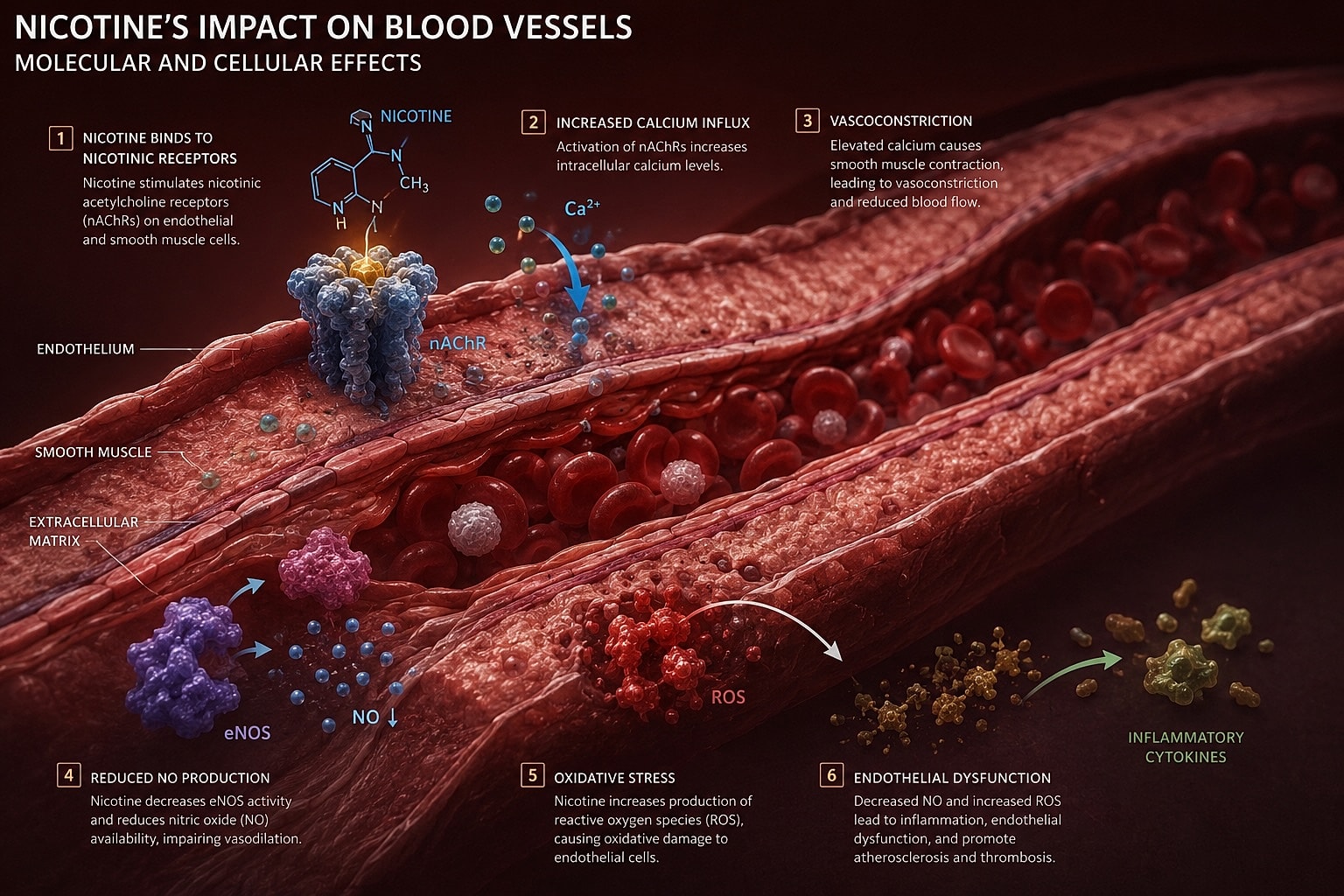
Nicotine causes vasoconstriction, meaning it narrows blood vessels.
When blood vessels constrict:
Facelift surgery already places temporary stress on blood circulation within the elevated skin flaps.
Adding nicotine to the equation can further reduce blood supply to healing tissues.
This effect may persist even after a patient stops smoking because long-term tobacco use can cause chronic damage to the vascular system.

Smoking affects more than blood vessels.
Carbon monoxide from cigarette smoke binds to hemoglobin more readily than oxygen.
As a result:
Facelift patients depend on optimal oxygen delivery during the postoperative healing phase.
Even minor reductions in oxygen availability may contribute to wound-healing complications.
One of the most serious complications associated with smoking is skin flap necrosis.
Skin flap necrosis occurs when portions of the elevated skin lose their blood supply and begin to die.
Early warning signs may include:
Severe cases may result in:
In facelift surgery, the area behind the ear and around the hairline is particularly vulnerable because these regions rely heavily on healthy circulation during healing.
Smokers have a significantly higher risk of skin flap necrosis compared with non-smokers.
Another common complication is wound dehiscence, or wound separation.
When incisions cannot heal properly:
Facelift incisions are carefully placed within natural contours of the ear and hairline to minimize visibility.
Poor healing can compromise these aesthetic advantages.
Many patients undergo facelift surgery to improve their appearance.
Unfortunately, smoking often works against that goal.
Smoking is associated with:
The quality of a facelift scar depends heavily on blood supply and collagen production.
Smoking negatively affects both.
Ironically, smoking contributes to many of the facial aging changes that prompt patients to seek facelift surgery in the first place.
Chronic smoking accelerates:
Smokers often develop:
Even after a successful facelift, continued smoking can accelerate the aging process and shorten the longevity of the result.
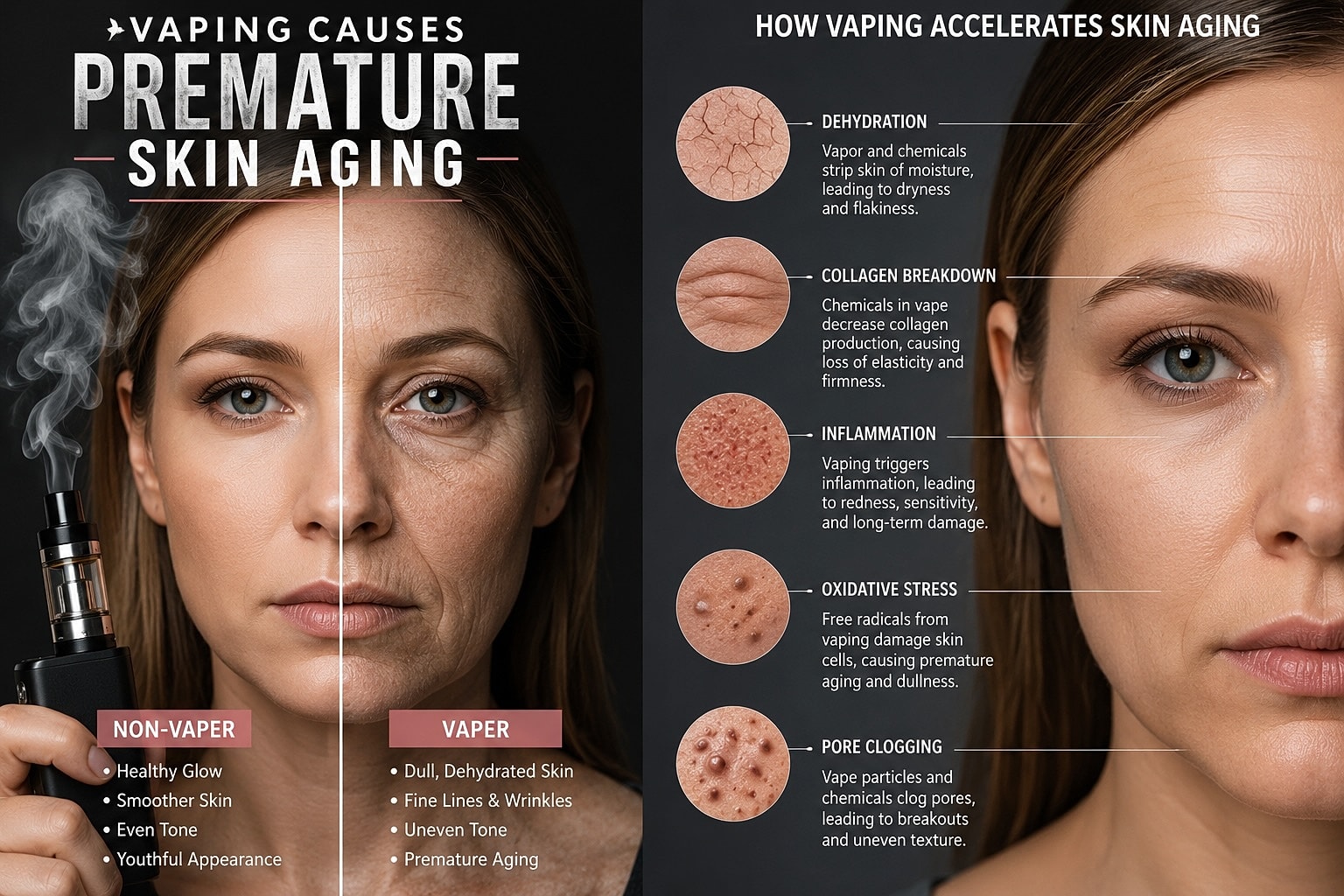
Many patients assume vaping is safer than smoking.
From a facelift perspective, nicotine remains the primary concern.
Most vaping products contain nicotine, which can:
Patients frequently substitute vaping for cigarettes before surgery without realizing that nicotine exposure remains present.
For surgical purposes, vaping should be treated similarly to smoking.
Many patients attempt to quit smoking using nicotine replacement products.
While these products eliminate many harmful chemicals found in cigarettes, they still deliver nicotine.
Examples include:
Because nicotine itself causes vasoconstriction, these products may still negatively affect healing.
Patients should discuss smoking cessation strategies with their surgeon well before surgery.
Although recommendations vary, many facelift surgeons require patients to stop all nicotine-containing products for several weeks before surgery.
This includes:
Some surgeons may also perform nicotine or cotinine testing before surgery to verify compliance.
The goal is to restore circulation and reduce the risk of wound-healing complications.
Some patients successfully quit before surgery but resume smoking shortly afterward.
This can be a critical mistake.
The healing process continues for weeks and months after a facelift.
Early postoperative smoking may:
The period immediately following surgery is often when tissues are most vulnerable.
Revision facelift surgery is already more complex than primary facelift surgery.
Previous surgery may create:
Smoking further compounds these challenges.
Patients considering revision facelift surgery should be particularly vigilant about nicotine avoidance.
At our practice, patient safety always comes first.
Smoking and nicotine exposure are among the most important modifiable risk factors associated with facelift complications.
For this reason, patients are advised to completely avoid all nicotine-containing products before and after surgery.
Careful patient selection, thorough preoperative evaluation, and strict adherence to postoperative instructions help minimize risk and optimize outcomes.
Facelift surgery is one of the most technically demanding procedures in aesthetic plastic surgery. Unlike procedures that focus on a single area of the body, facelift surgery requires the surgeon to restore harmony across the face and neck while preserving each patient's natural appearance.
Dr. Emmanuel De La Cruz is a double board-certified plastic surgeon who specializes in advanced aesthetic surgery and facial rejuvenation. Patients travel from across Texas and throughout the United States because of his reputation for delivering natural-looking results, meticulous surgical technique, and unwavering commitment to patient safety.
His approach to facelift surgery is based on a simple philosophy: patients should look refreshed, youthful, and well-rested—not pulled, tight, or unnatural.
Patients choose Dr. De La Cruz for:
Every facelift consultation begins with a detailed assessment of facial aging, skin quality, facial volume loss, neck laxity, jawline definition, prior procedures, smoking history, and overall facial balance. This allows each treatment plan to be tailored to the patient's unique anatomy and goals rather than applying a one-size-fits-all approach.
Because successful facelift surgery involves far more than tightening skin, Dr. De La Cruz focuses on restoring youthful facial contours, improving jawline and neck definition, and creating results that continue to look natural for years to come.
The goal is not to make patients look different. The goal is to help them look like a younger, more confident version of themselves.
About the Medical Reviewer Dr. Emmanuel De La Cruz is a double board-certified plastic surgeon specializing in advanced facial rejuvenation and body contouring procedures. 👉 [Learn more about Dr. Emmanuel De La Cruz]

Smoking reduces blood flow, decreases oxygen delivery to tissues, and impairs wound healing. Because facelift surgery relies on healthy blood circulation for skin flap survival and proper healing, smoking significantly increases the risk of complications.
Yes. Smoking can increase the risk of poor wound healing, skin flap necrosis, widened scars, delayed recovery, and less predictable aesthetic outcomes. Continued smoking may also accelerate facial aging and shorten the longevity of facelift results.
Most facelift surgeons recommend stopping all nicotine-containing products for several weeks before surgery. This includes cigarettes, cigars, vaping products, nicotine gum, nicotine patches, and nicotine pouches. Your surgeon will provide specific recommendations based on your medical history and surgical plan.
Yes. Many vaping products contain nicotine, which causes blood vessel constriction and reduces blood flow to healing tissues. From a surgical perspective, vaping may carry many of the same healing concerns as traditional smoking.
Potentially. Nicotine itself can cause vasoconstriction and impair circulation. Although nicotine replacement products may help patients quit smoking, they can still affect healing and should be discussed with your surgeon before surgery.
Skin flap necrosis occurs when portions of the elevated skin lose their blood supply and fail to heal properly. This complication can lead to delayed wound healing, tissue loss, scarring, pigmentation changes, and, in severe cases, additional surgery. Smoking is one of the most significant risk factors for skin flap necrosis
Warning signs may include:
Patients should contact their surgeon immediately if they notice concerning changes.
Yes. Smoking can impair wound healing and increase the risk of wound dehiscence, which occurs when an incision partially or completely separates during recovery.
Smoking reduces blood flow and interferes with collagen production. These effects may result in wider scars, prolonged redness, delayed scar maturation, and less favorable scar quality compared with non-smokers.
Yes. Smoking accelerates collagen breakdown, skin thinning, wrinkle formation, skin laxity, and volume loss. These changes can contribute to premature facial aging and may shorten the longevity of facelift results.
While smoking after complete healing may not directly affect the surgical incisions, it continues to accelerate skin aging and collagen loss. Long-term smoking may contribute to recurrent facial laxity and reduce the longevity of facial rejuvenation procedures.
Yes. Revision facelift surgery is already more complex because of scar tissue and altered anatomy. Smoking further compromises blood supply and wound healing, increasing the risk of complications and making revision surgery more challenging.
Yes. Smoking cessation is one of the most effective ways to reduce the risk of wound-healing problems, skin flap necrosis, poor scarring, and other complications associated with facelift surgery.
Some surgeons perform nicotine or cotinine testing before facelift surgery, particularly in patients with a history of smoking or nicotine use. Testing helps verify compliance with preoperative smoking cessation requirements and may reduce the risk of complications.
Active smokers have a significantly higher risk of wound-healing complications, skin loss, poor scars, and less predictable outcomes. Many surgeons require patients to stop all nicotine-containing products before surgery to improve safety and optimize results.
About the Author
Dr. Emmanuel De La Cruz, MD is a double board-certified plastic surgeon in Houston, Texas, certified by the American Board of Plastic Surgery and the American Board of Surgery. He specializes in advanced facial rejuvenation procedures, including deep plane facelift, ponytail facelift (endoscopic facelift), neck lift, eyelid surgery, and facial fat transfer.
He has trained with internationally recognized leaders in facial surgery, including Chia Chi Kao in Beverly Hills and Giovanni Botti in Italy, allowing him to offer both minimally invasive and structural facelift techniques tailored to each patient.
In addition to his surgical expertise, Dr. De La Cruz is a portrait sculptor and painter, bringing an artistic understanding of facial balance, proportion, and harmony to his work. His approach focuses on achieving natural, refined, and undetectable results in facial rejuvenation.