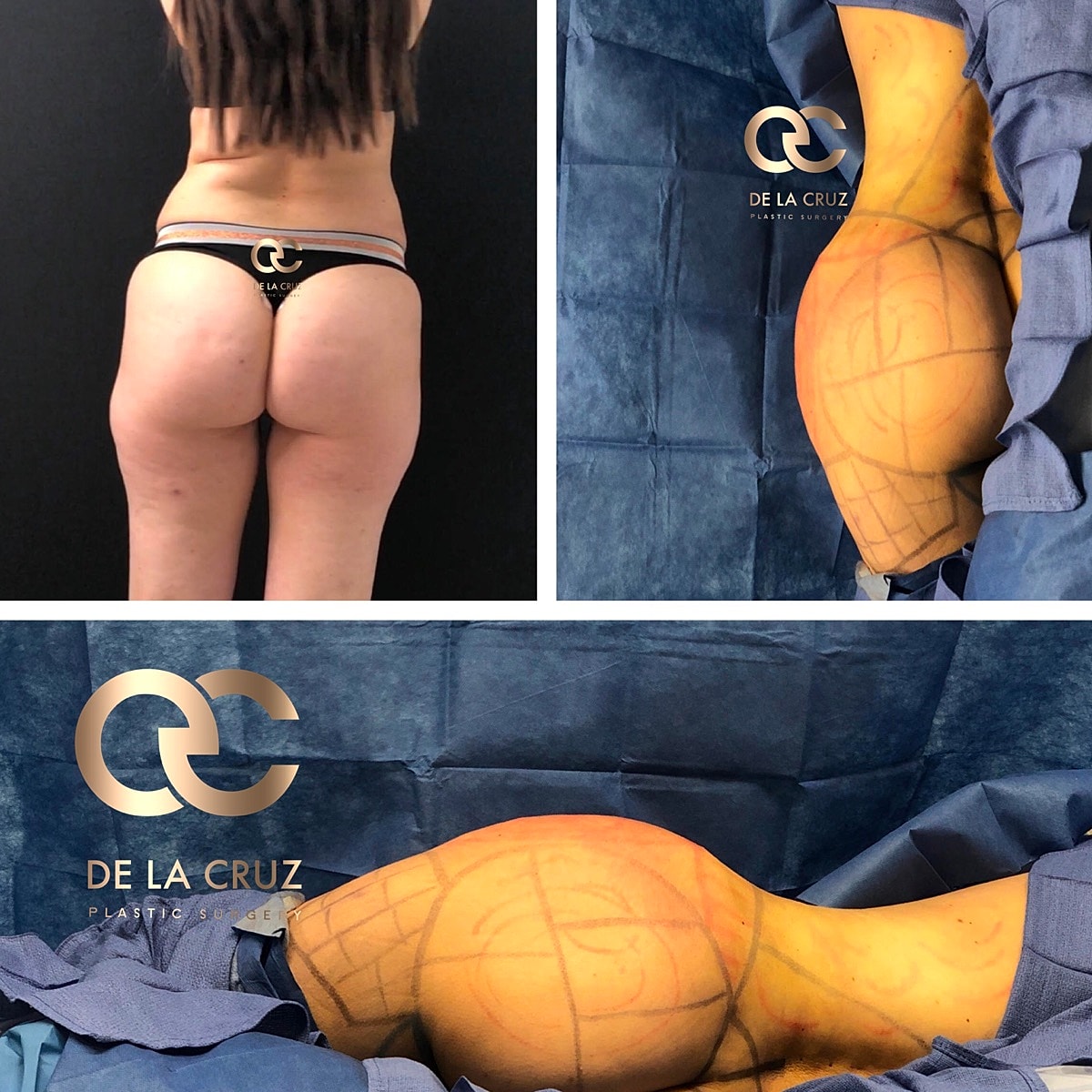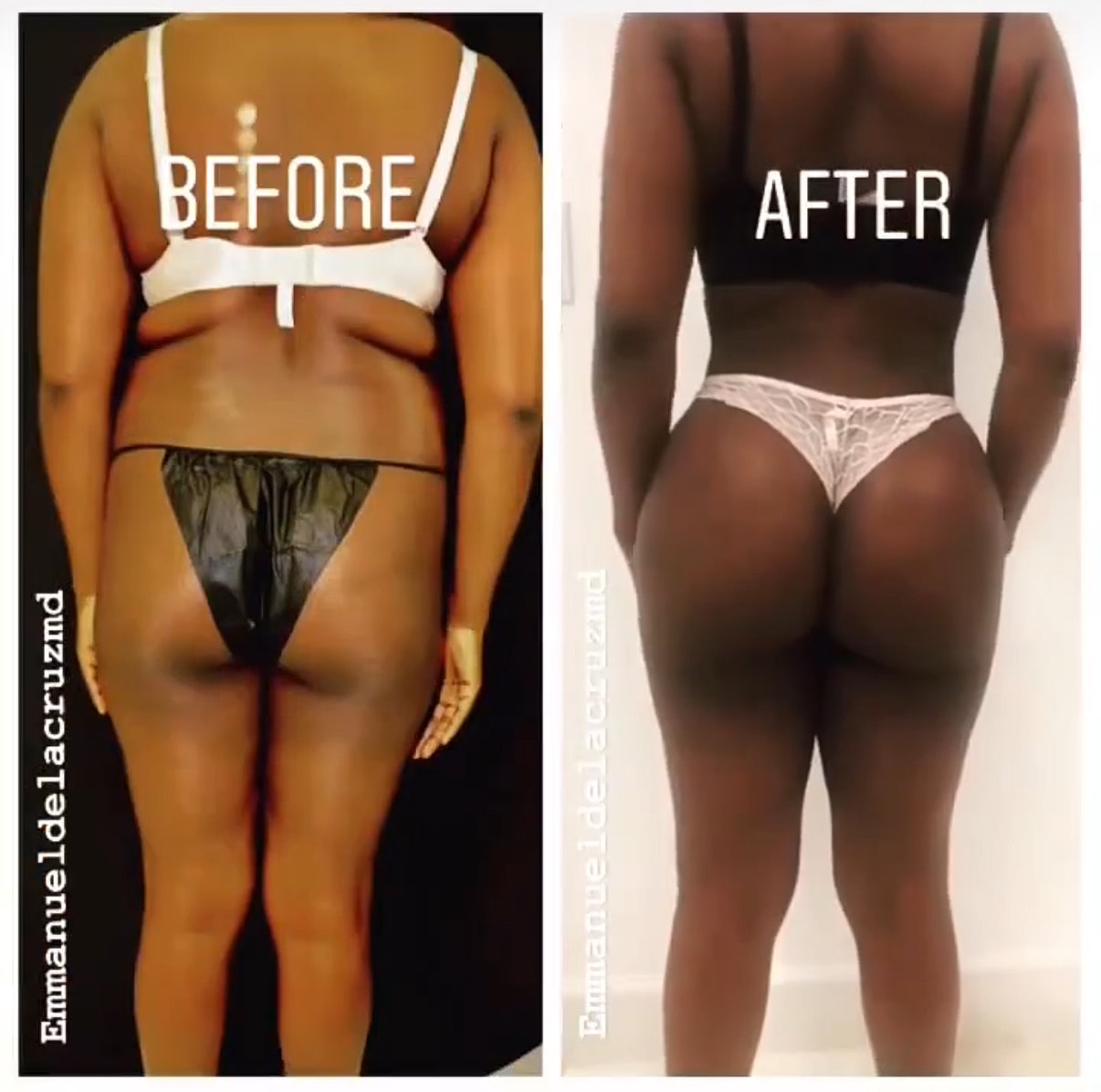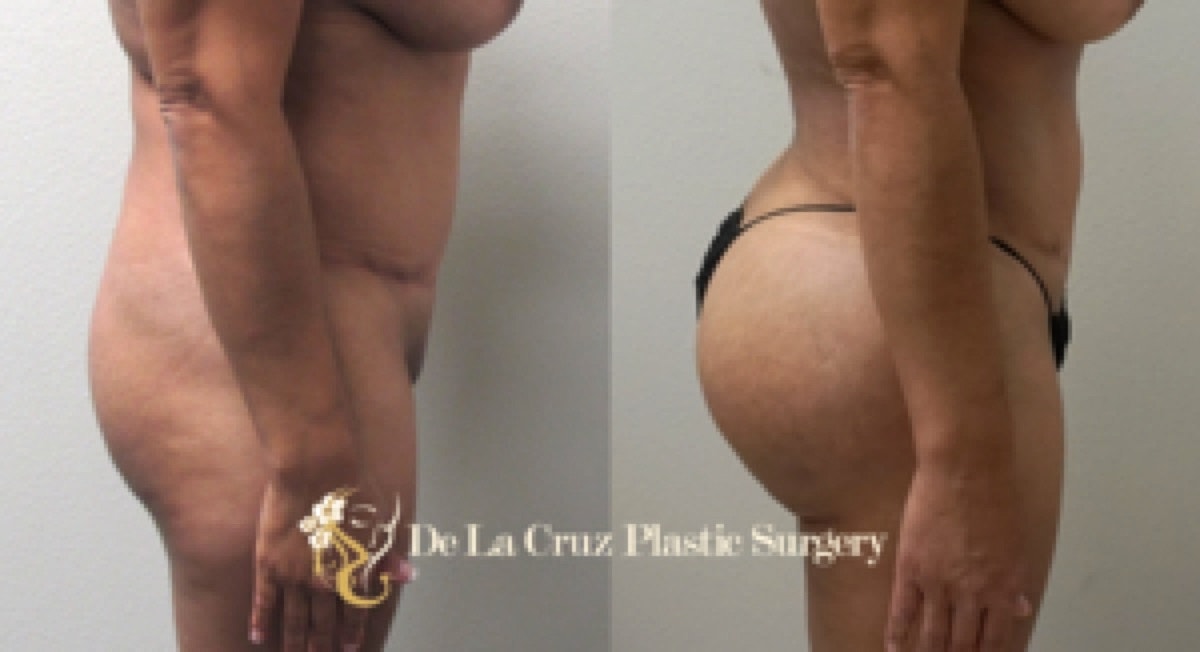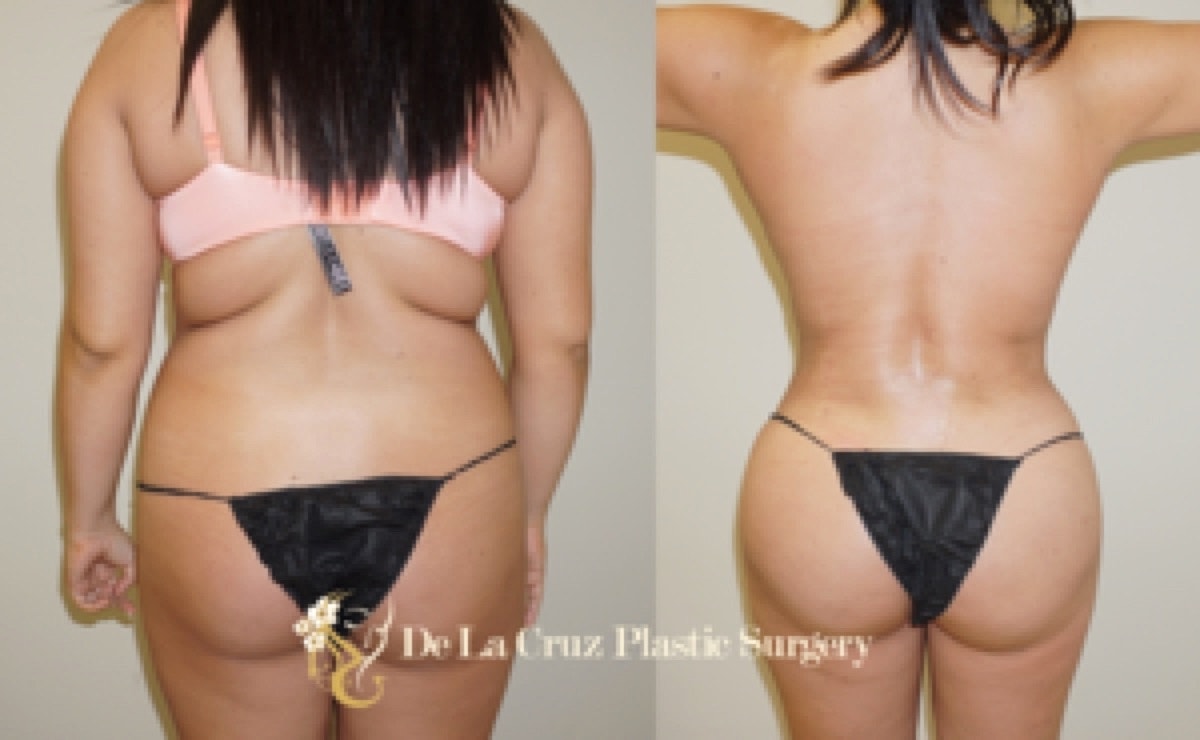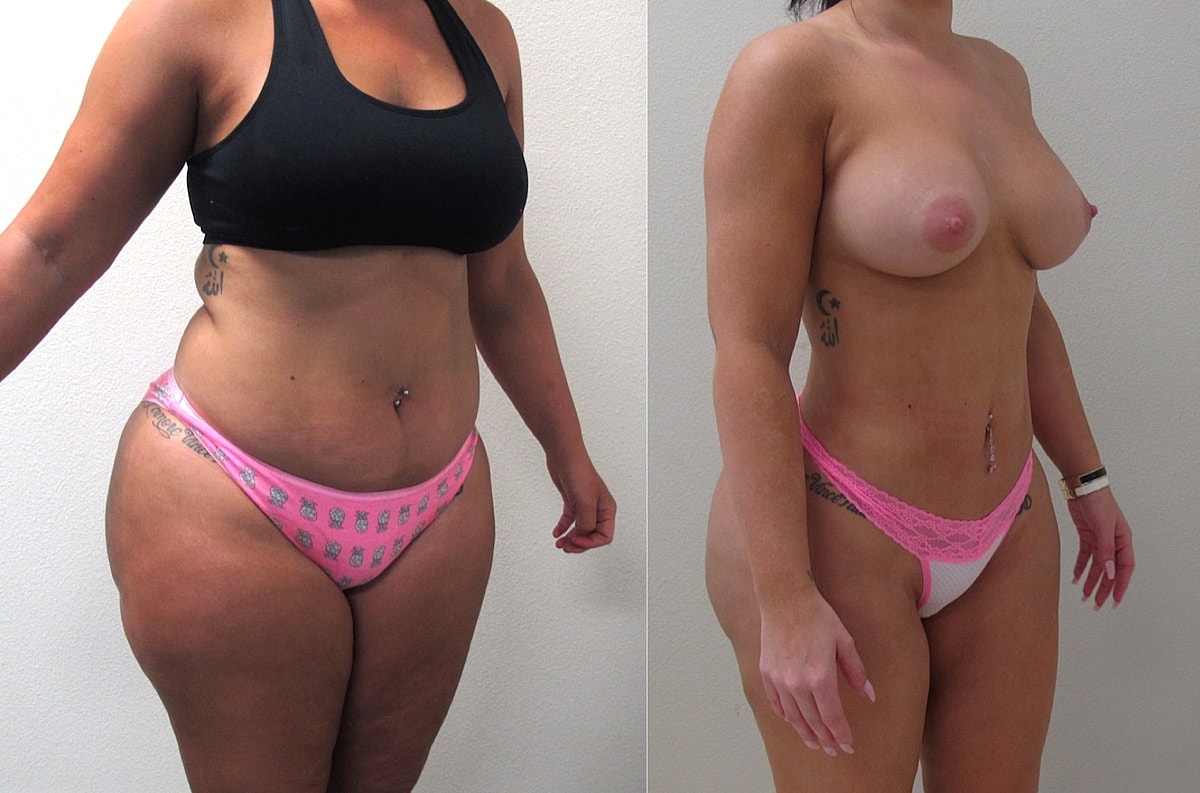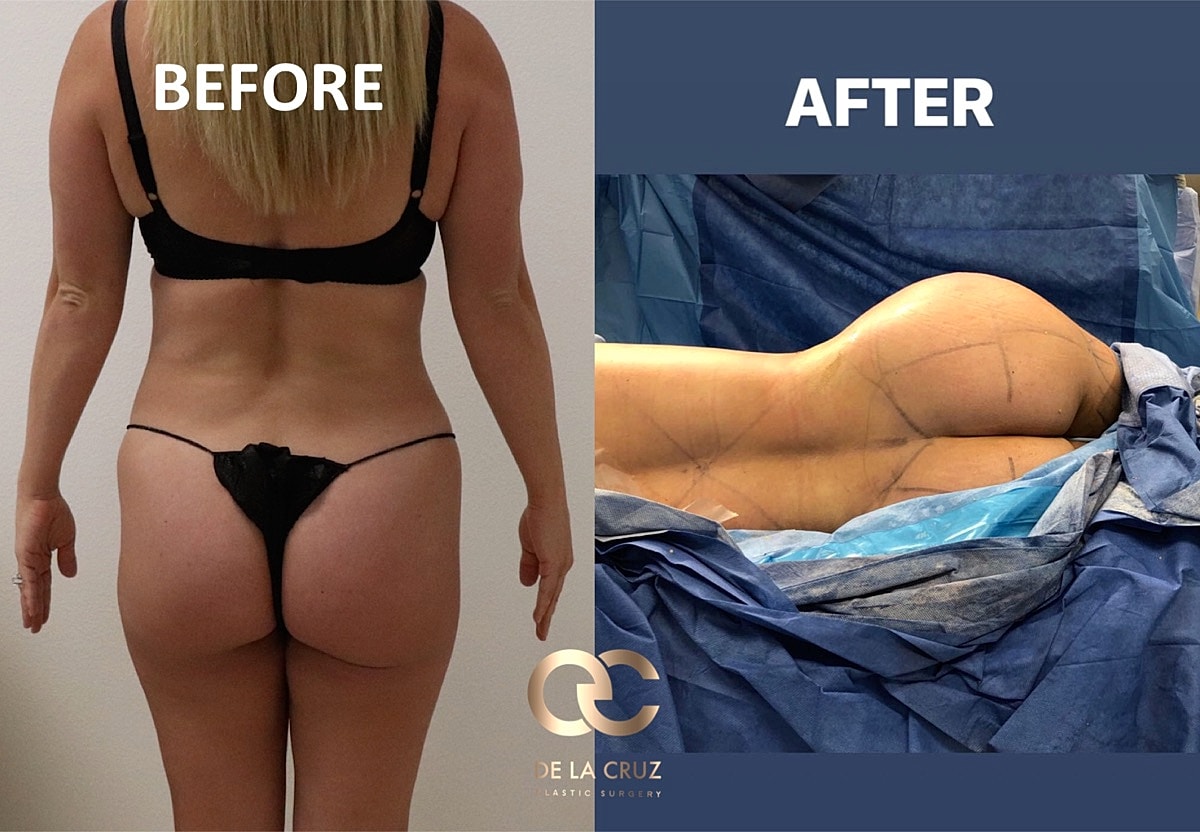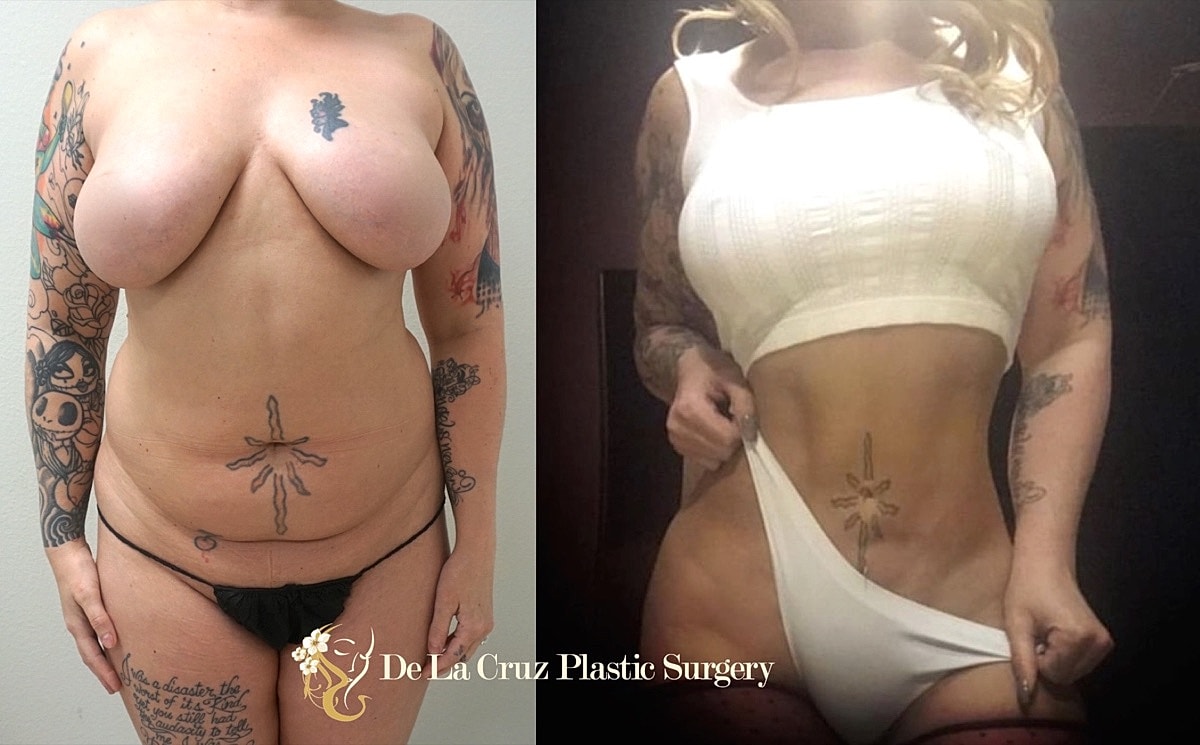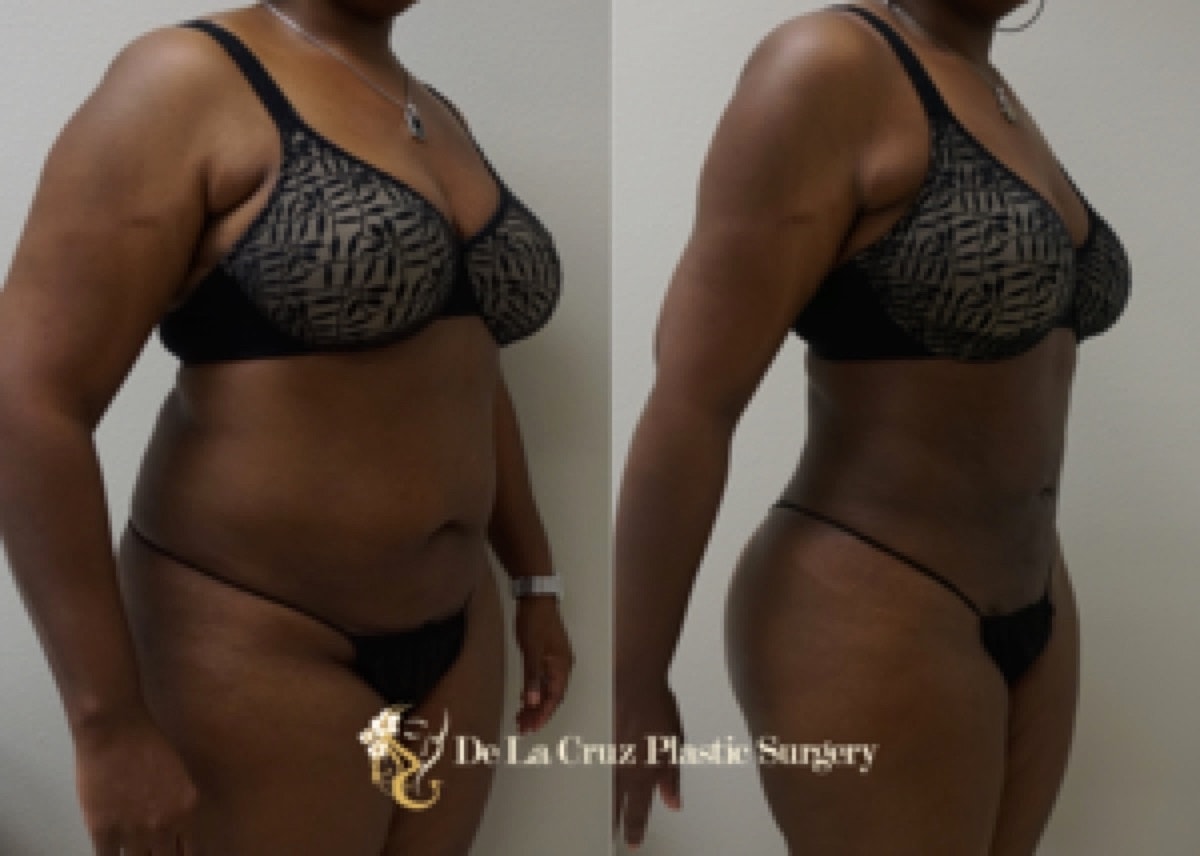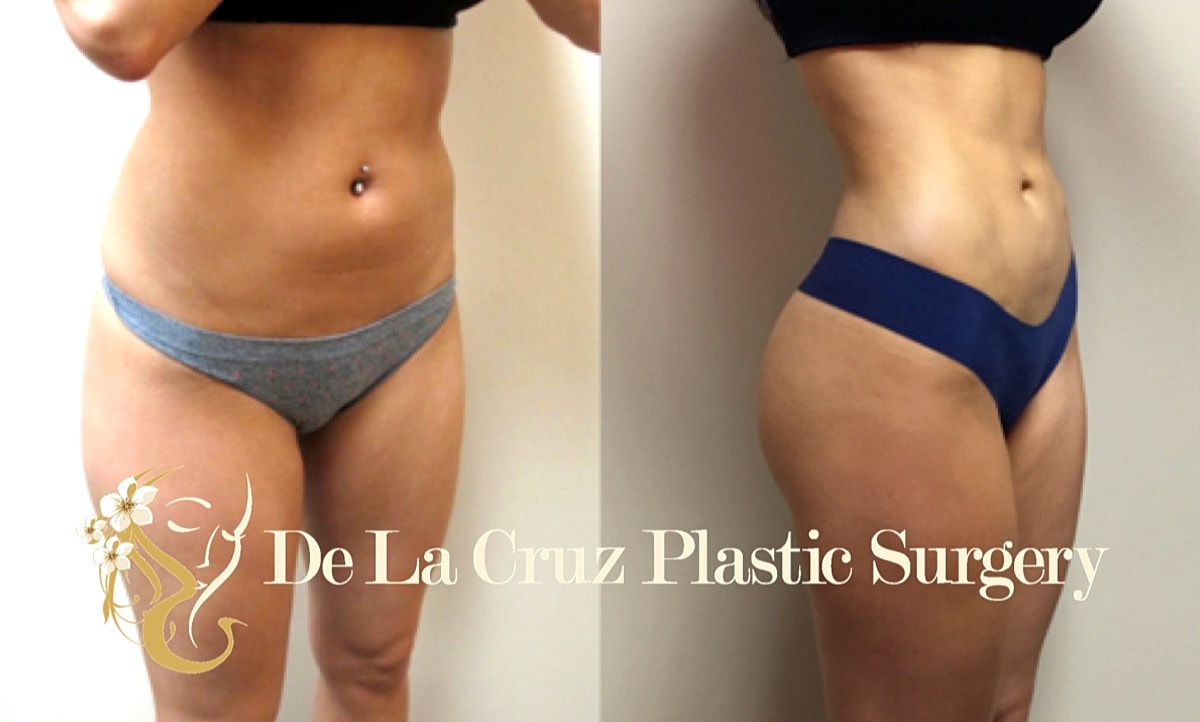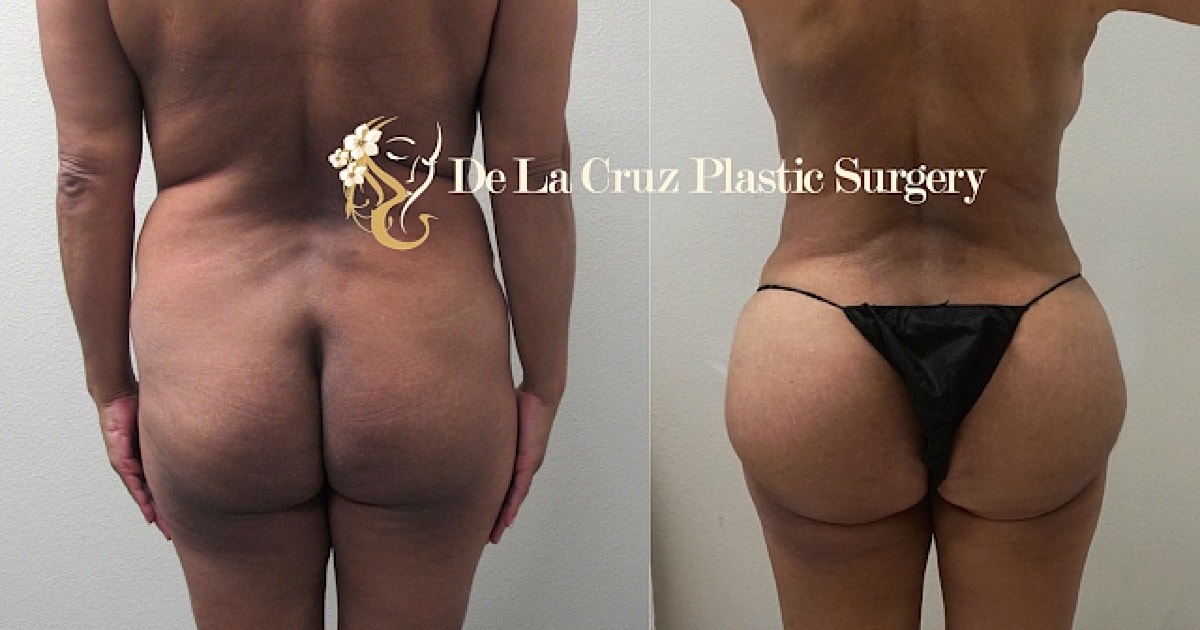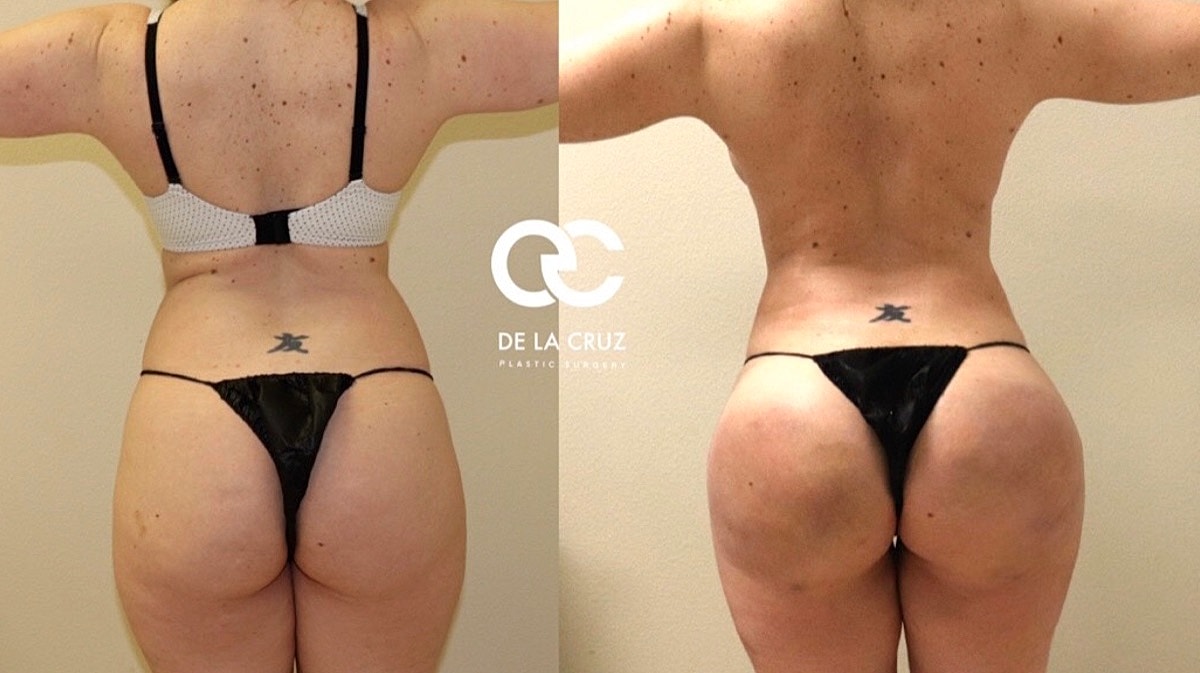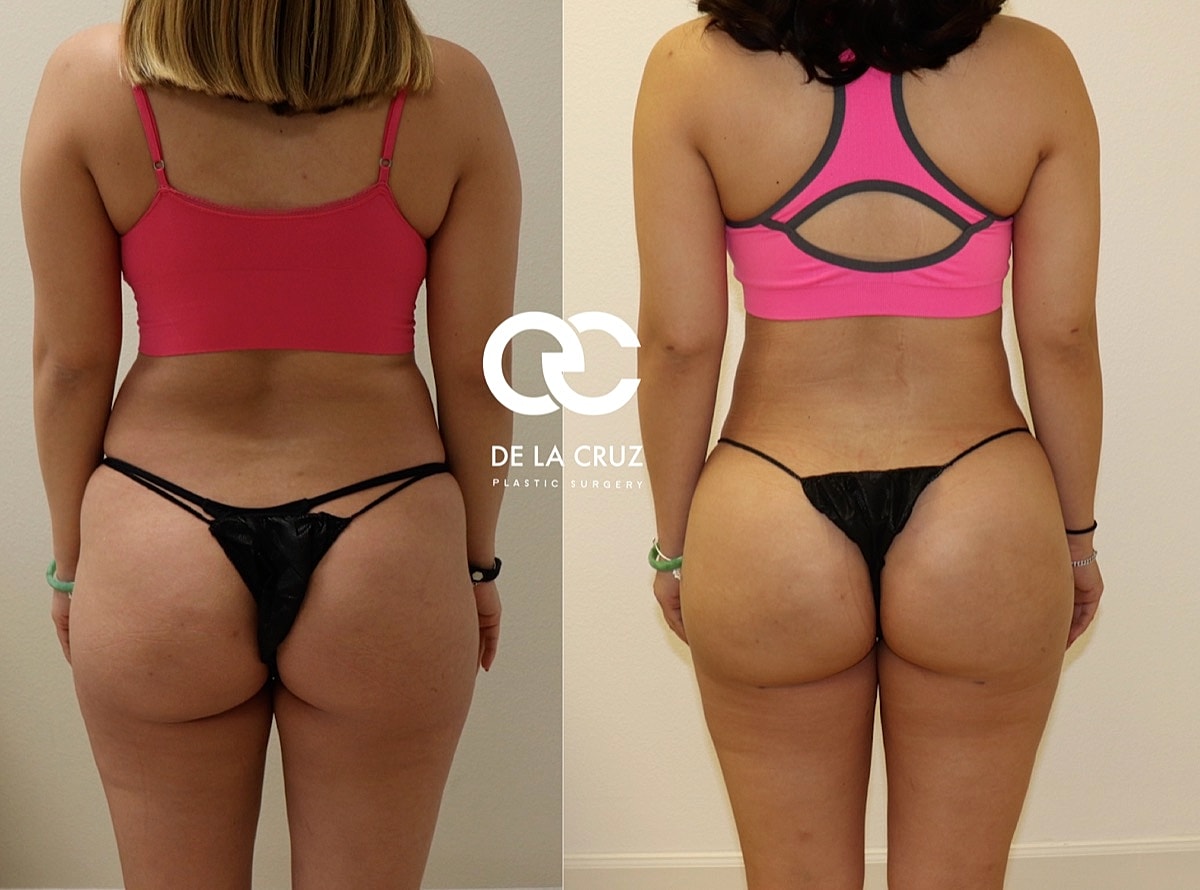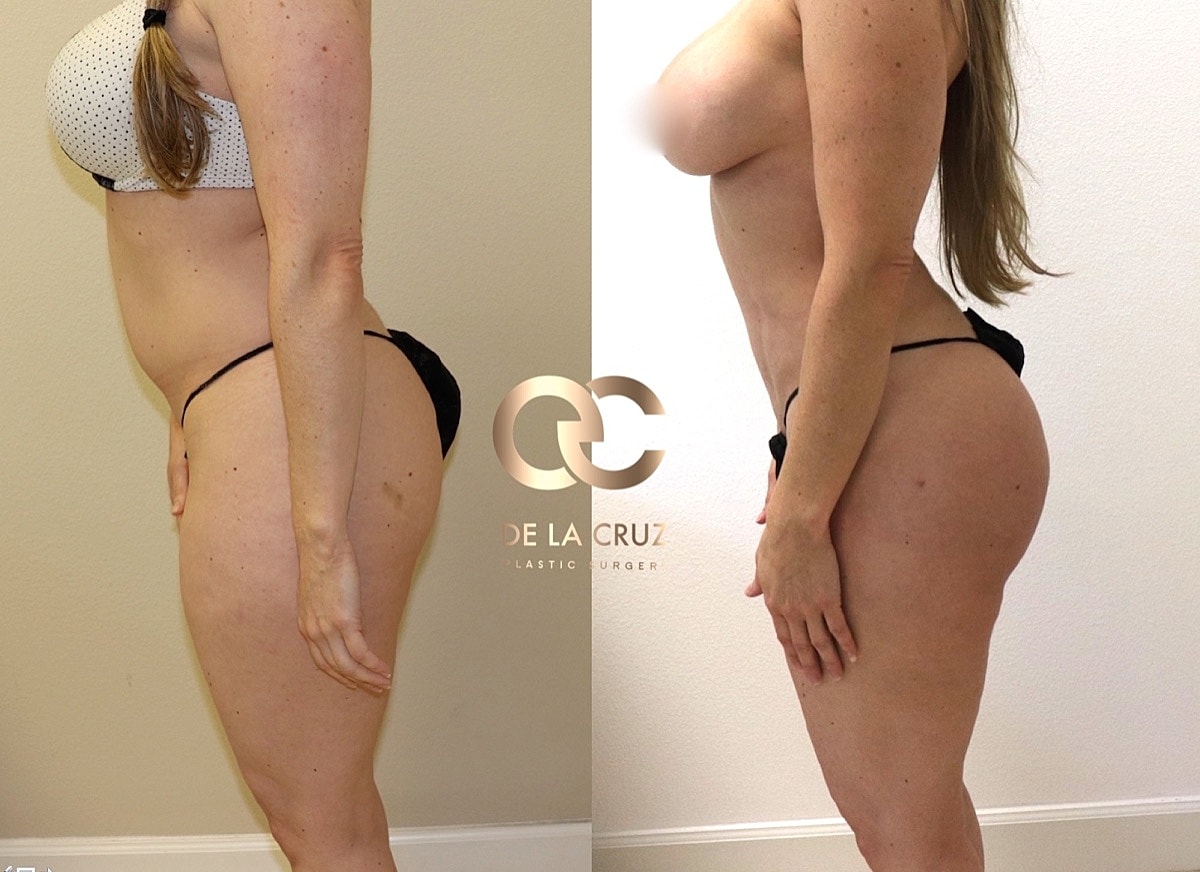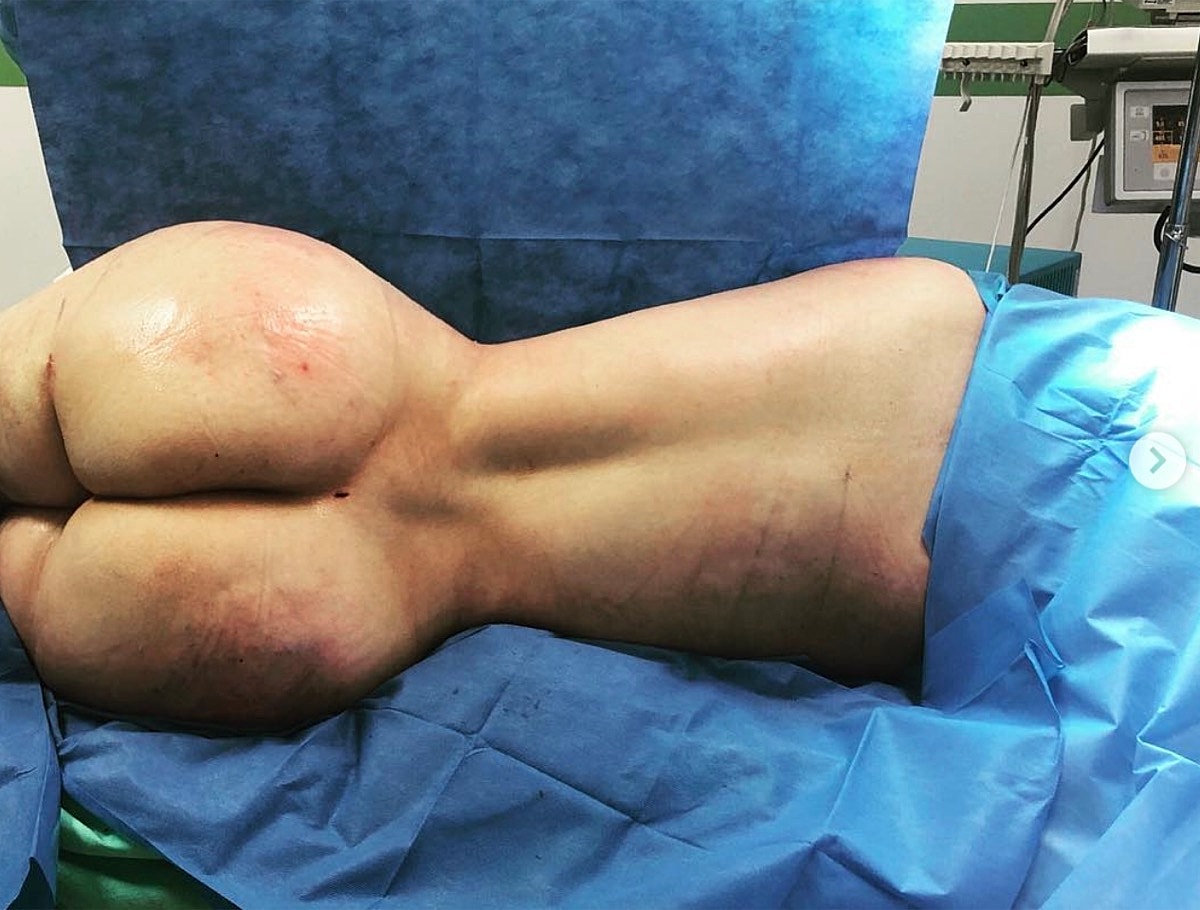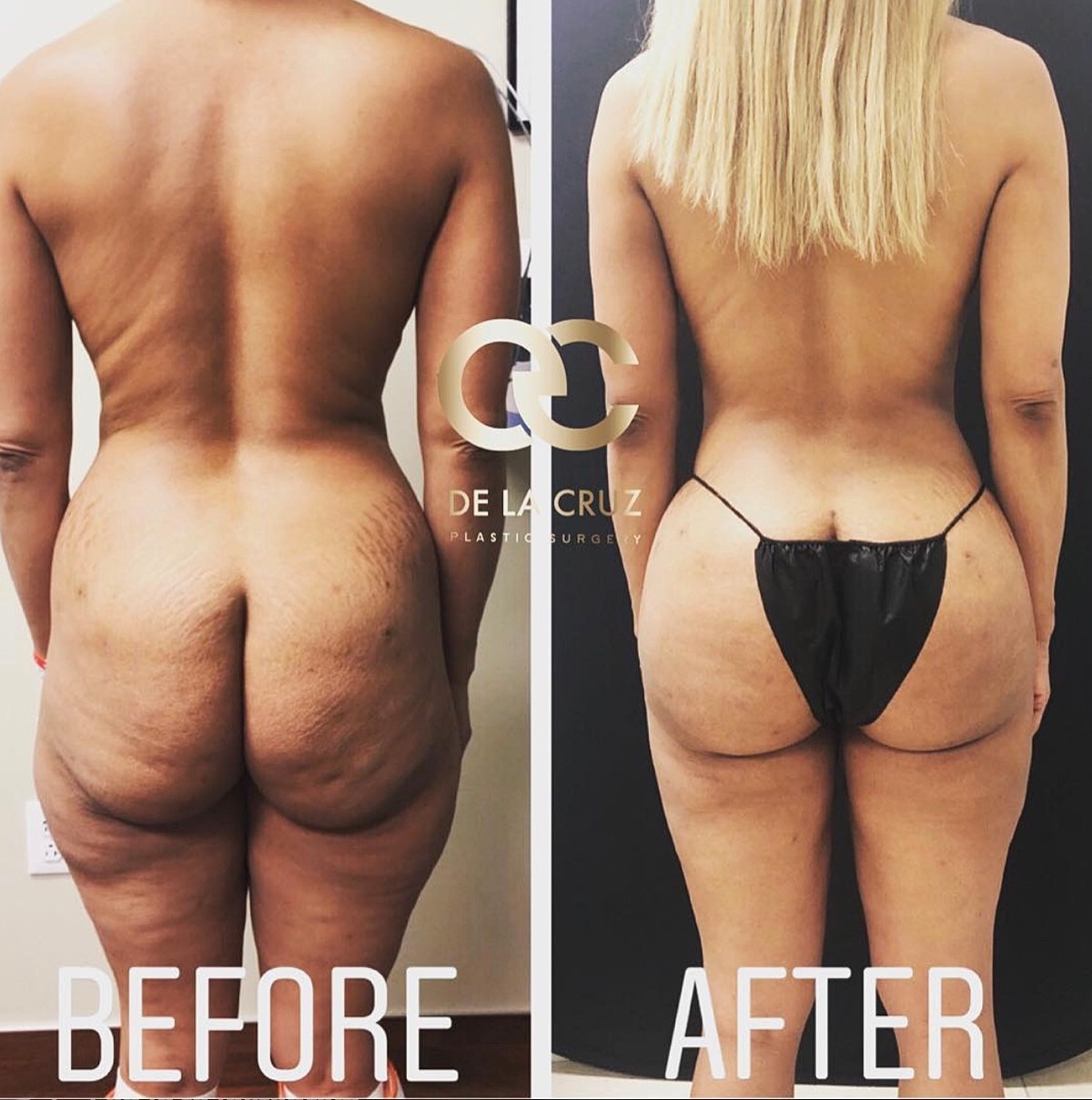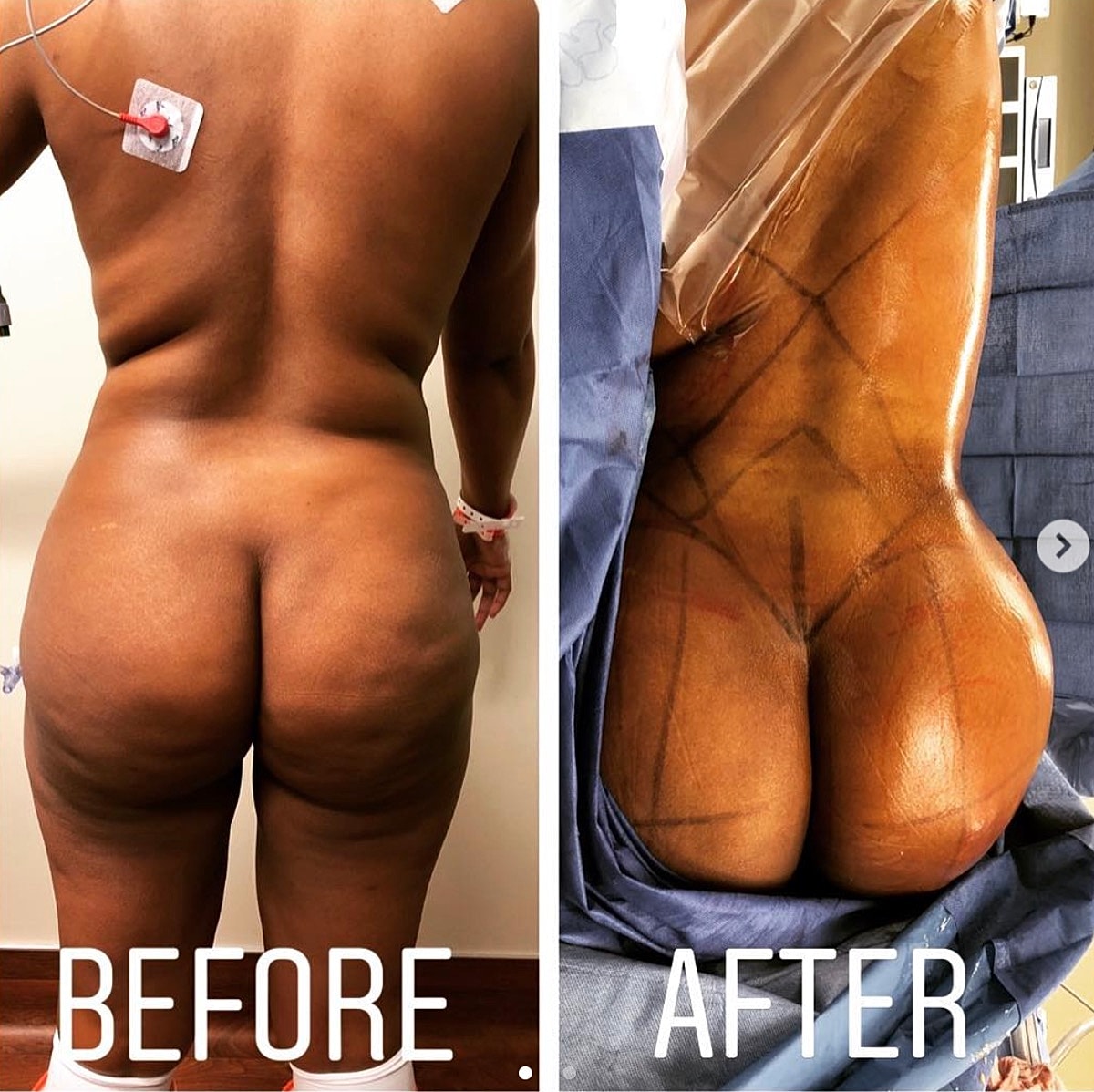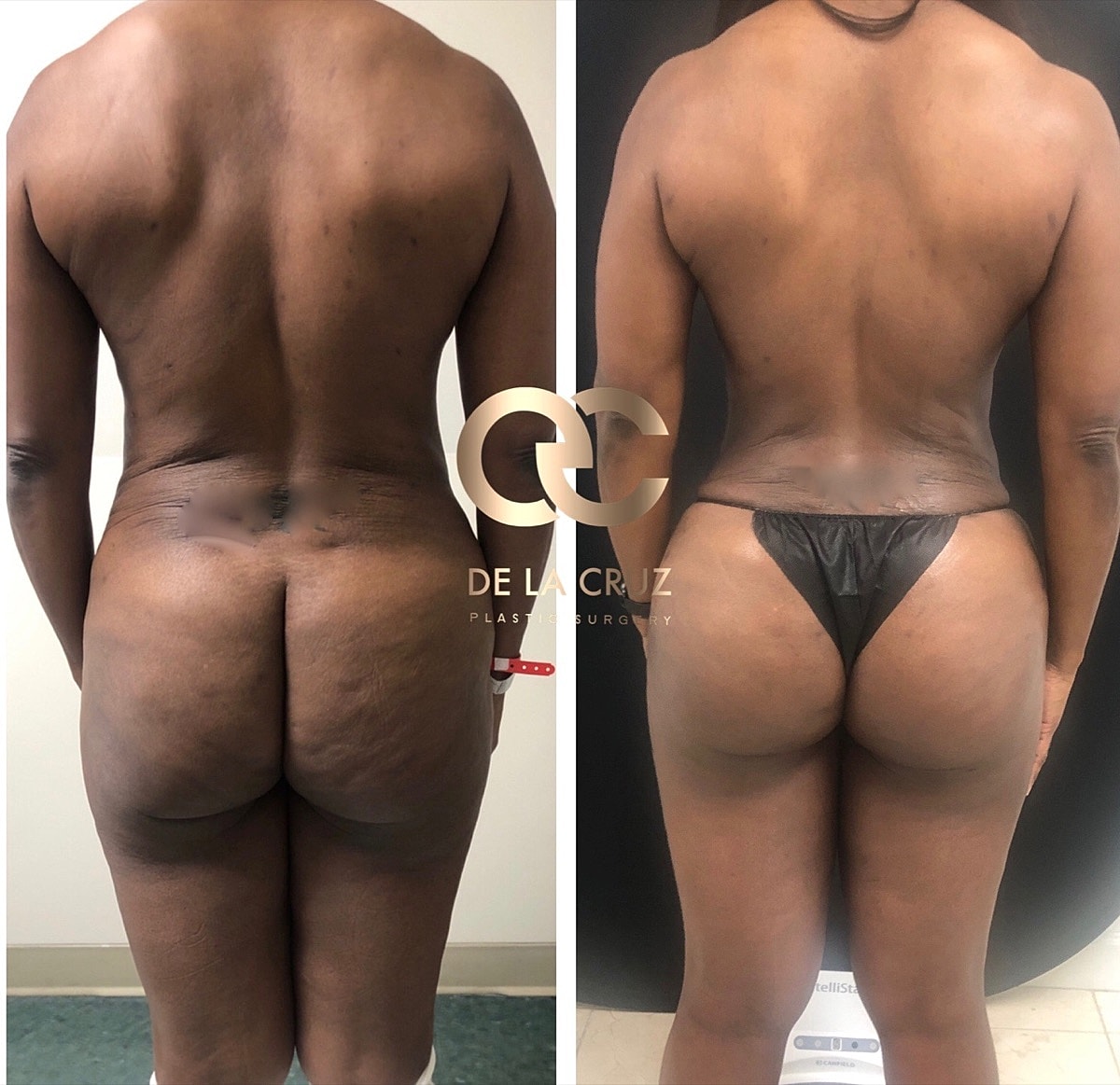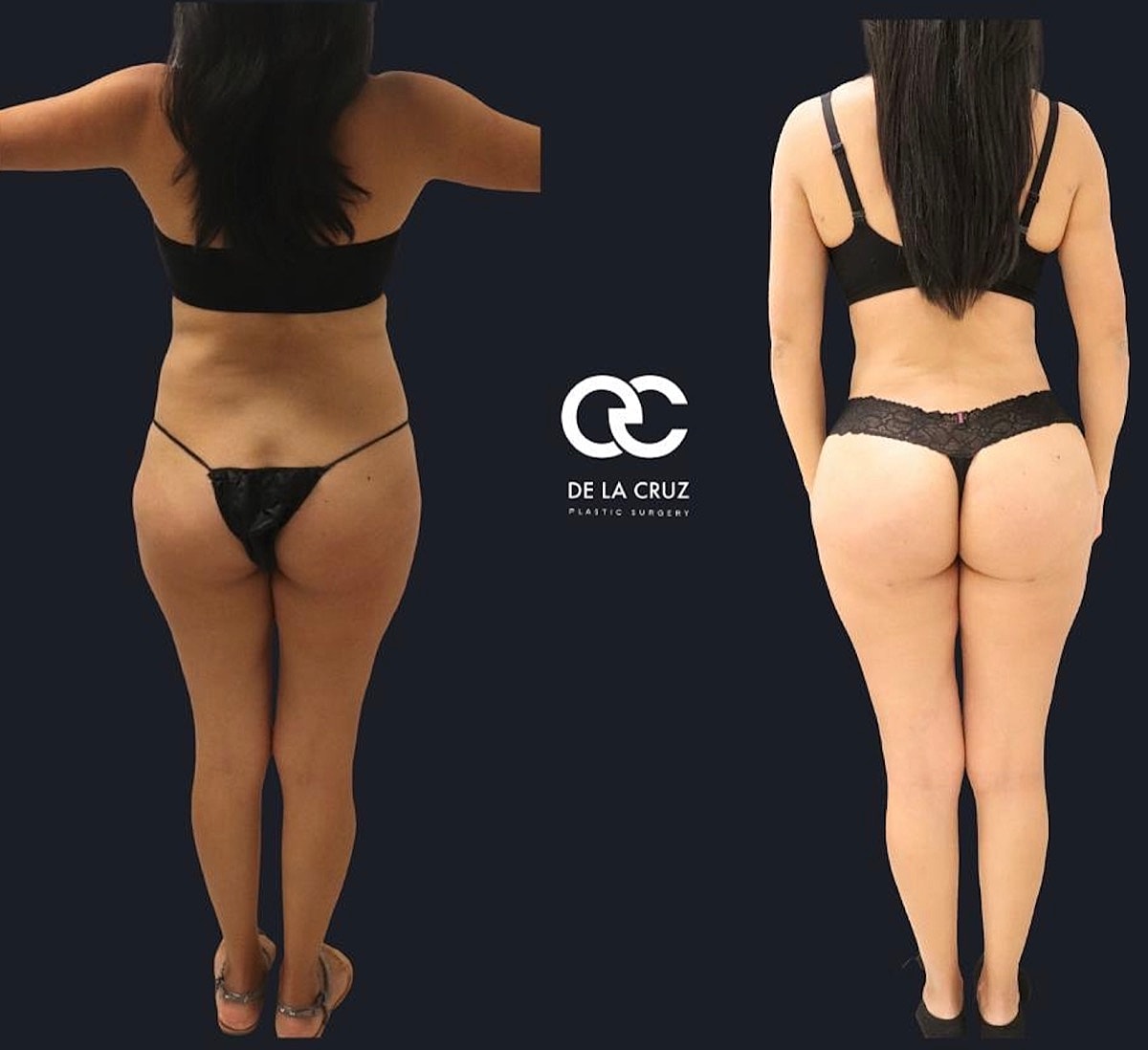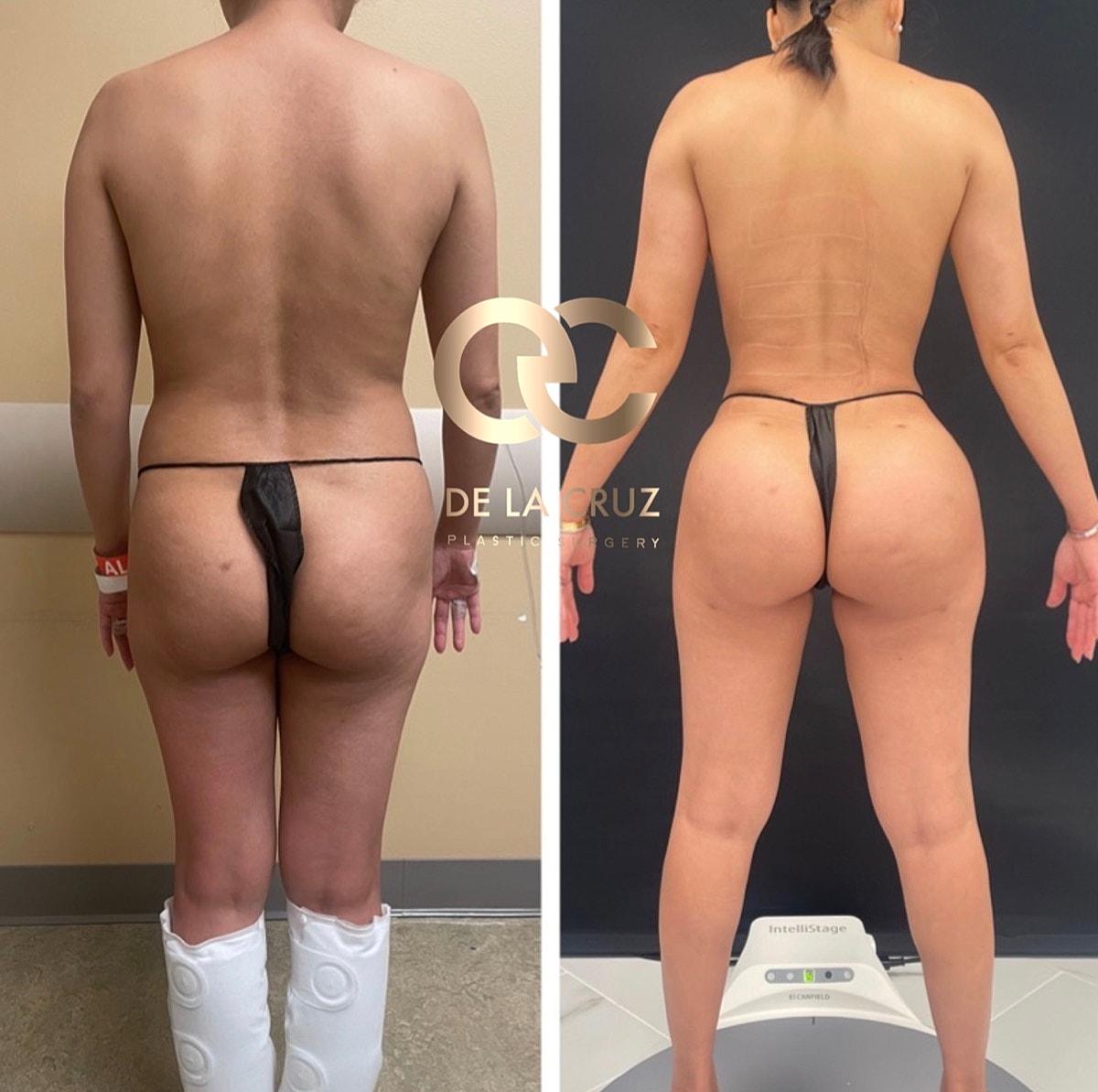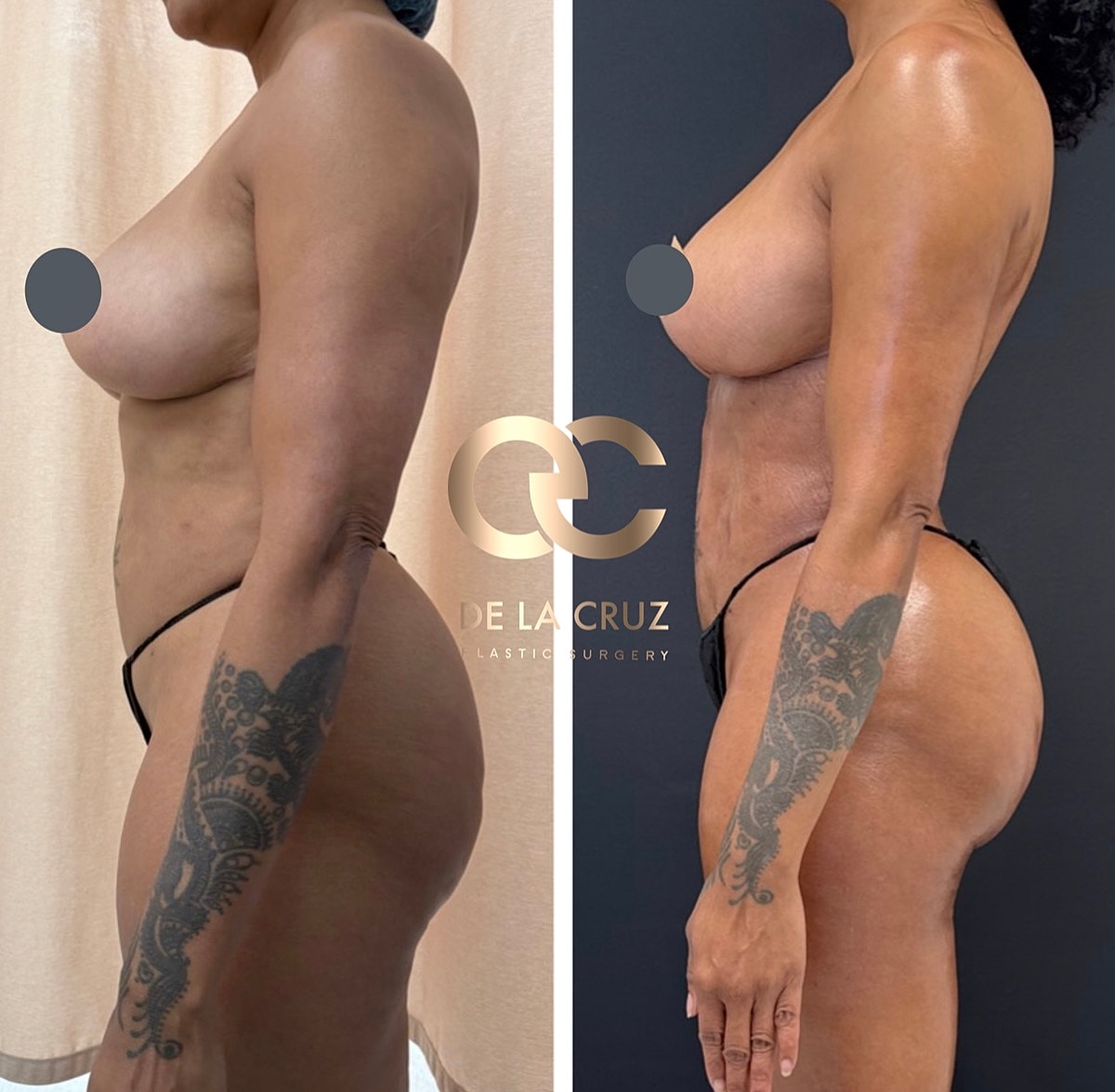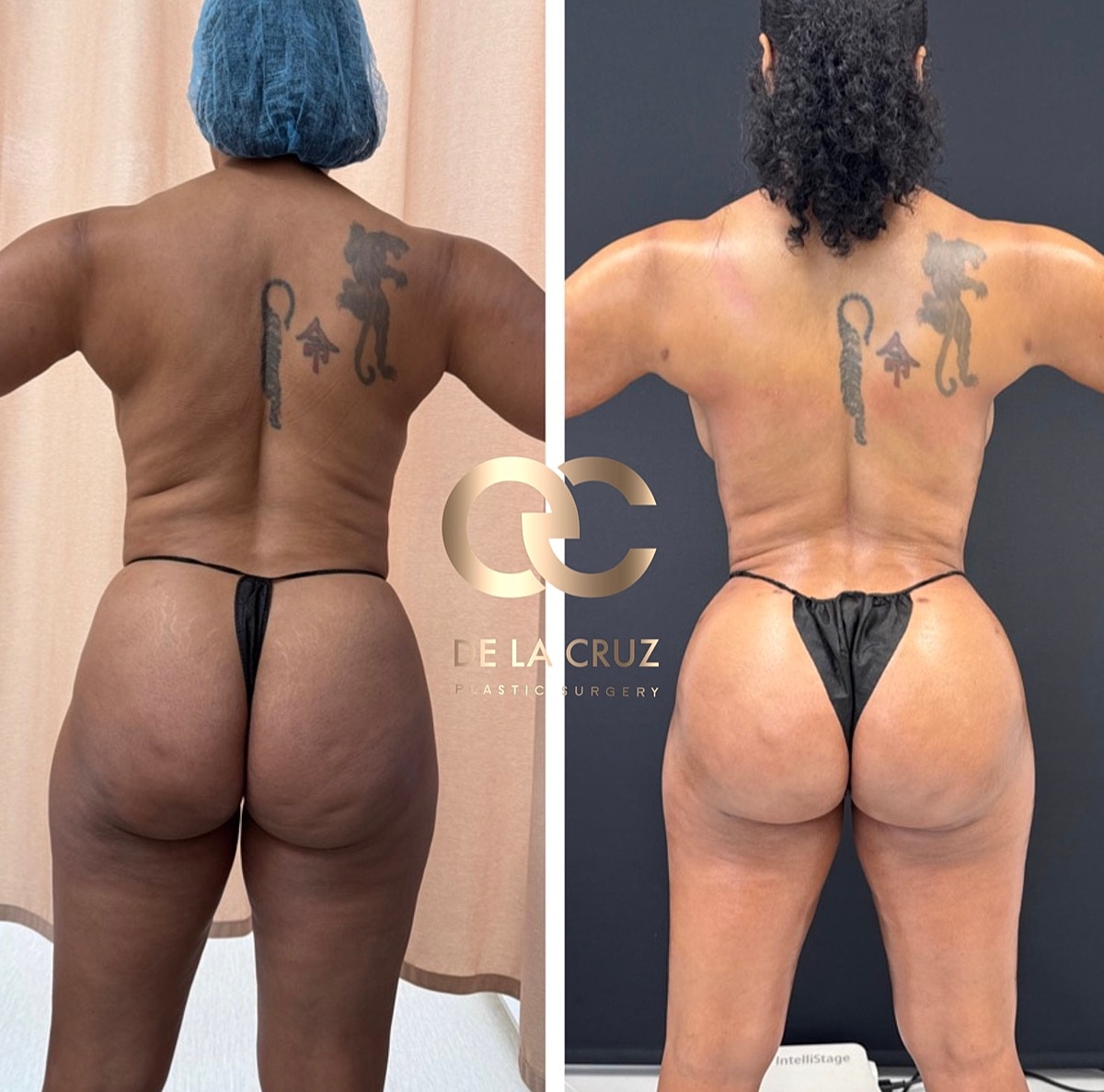
A Brazilian Butt Lift (BBL) is a body contouring procedure that enhances the shape and projection of the buttocks using a patient’s own fat. The procedure involves liposuction to harvest fat from areas such as the abdomen, flanks, back, or thighs, followed by purification and careful injection of the fat into the buttocks.
One of the most common questions patients ask is:
“How much fat is needed for a BBL in Houston?”
The answer varies from patient to patient because the amount of fat required depends on several factors including body anatomy, available donor fat, and the patient’s desired results.
1 of 24
During a Brazilian Butt Lift in Houston, surgeons must harvest more fat than the amount ultimately transferred. This is because the fat must be processed and purified before injection.
In many cases:
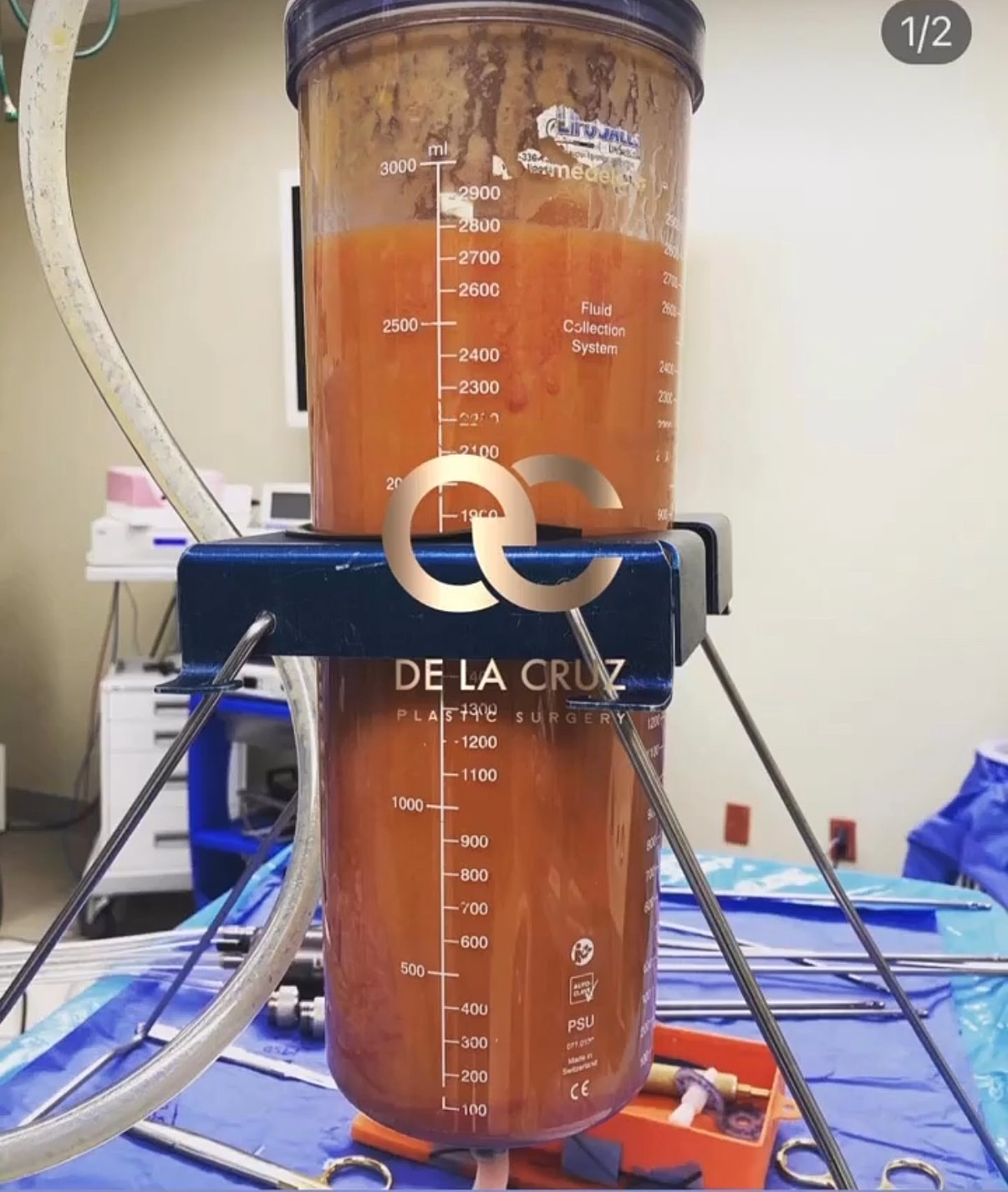
• 2,000–5,000 mL of fat may be removed during liposuction
• 500–1,000 mL of purified fat may be transferred into each buttock
These numbers vary depending on patient anatomy and surgical goals.
Because some fat cells naturally do not survive the transfer process, surgeons typically harvest additional fat to ensure sufficient volume for grafting.
After liposuction in Houston, the harvested fat contains:
• blood
• tumescent fluid
• damaged fat cells
Before fat grafting can occur, the fat must be purified and processed so that only healthy fat cells are injected.
Even after transfer, a portion of fat cells may be naturally absorbed by the body during healing. For this reason, surgeons often slightly overcorrect volume during surgery to account for this normal process.
Studies and clinical experience suggest that approximately 60–80% of transferred fat cells typically survive long term when proper surgical technique and postoperative care are followed.
The fat cells that survive establish a blood supply and become a permanent part of the body.
Maintaining a stable weight after surgery helps preserve long-term results.

The amount of fat required for a Brazilian Butt Lift varies depending on several important factors.
Available Donor Fat
Patients must have adequate fat in donor areas for liposuction.
Common donor areas include:
• abdomen • flanks (love handles) • lower back • thighs
Patients with more available donor fat may achieve larger augmentations.
Desired Buttock Projection
Some patients desire subtle enhancement, while others prefer more dramatic projection.
Larger augmentations require more harvested fat, but achieving balanced body proportions is usually more important than simply increasing size.
Body Contouring Goals
One of the unique advantages of a Brazilian Butt Lift is that the procedure improves multiple areas of the body simultaneously.
Liposuction performed on the:
• abdomen • waist • flanks • lower back
can create a more defined waistline, which enhances the overall buttock contour.
In many cases, the improved waist-to-hip ratio contributes more to the aesthetic result than the volume added to the buttocks.

Some patients who are very lean may not have enough donor fat for a Brazilian Butt Lift.
In these cases, possible options may include:
• Achieving a more subtle enhancement
• Harvesting fat from additional areas of the body
• Having the patient gain weight prior to the procedure
A consultation with an experienced plastic surgeon is the best way to determine candidacy.
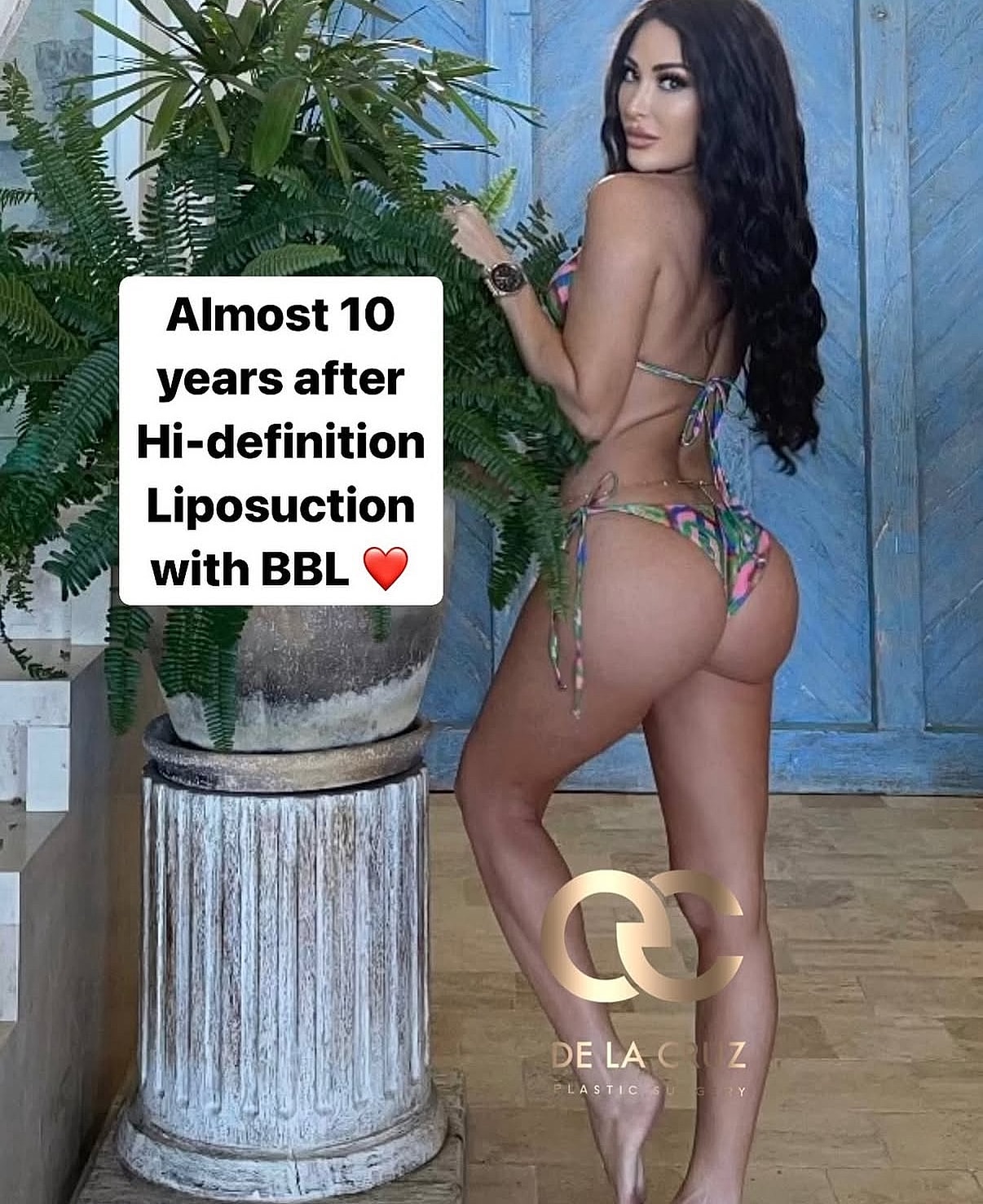

The success of a Brazilian Butt Lift depends heavily on the quality of harvested fat cells.
Modern liposuction techniques are designed to:
• gently remove fat
• preserve viable fat cells
• improve contour in donor areas
These factors help improve fat survival and overall aesthetic resul
Patients will notice changes in body contour immediately after surgery, but the final results develop gradually as swelling improves and the transferred fat stabilizes.
Typical BBL result timeline:
• Immediately after surgery: The buttocks appear fuller due to the transferred fat and postoperative swelling.
• First few weeks: Swelling is common and can temporarily affect the shape and size of the buttocks.
• 3–6 months: Most swelling has improved, and the transferred fat that has successfully developed a blood supply begins to stabilize. At this stage, patients start to see a more accurate representation of their results.
• First 6 months: The surviving fat cells are adapting to their new environment. During this period, some fat cells may shrink slightly as they stabilize.
• After 6 months: The surviving fat cells behave like normal fat cells. They can increase or decrease in size depending on weight changes and metabolism.
• 6 months to 2 years: The buttock contour may continue to subtly evolve as the fat cells mature. In some patients, the buttocks may gradually become slightly fuller over time.
Maintaining a stable weight and healthy lifestyle helps preserve long-term Brazilian Butt Lift results.
Patients seeking Brazilian Butt Lift (BBL surgery in Houston )often choose Dr. Emmanuel De La Cruz, a double-board-certified plastic surgeon certified by both the American Board of Plastic Surgery and the American Board of Surgery.
Dr. De La Cruz specializes in advanced body contouring, including liposuction, Brazilian Butt Lift (BBL), revision liposuction, and lipedema surgery. His approach focuses on precise liposuction and contour sculpting of the waist, flanks, and lower back to create balanced, natural-looking BBL results. He was awarded "The Best High-Definition Liposuction" by Dr. Alfredo Hoyos, the pioneer of High-definition liposuction.
He has lectured internationally on liposuction and contour correction techniques at major scientific meetings, including:
• American Society of Plastic Surgeons (ASPS)
• Total Definer Meeting – Cartagena, Colombia
• InMode Symposium – Miami and Beverly Hills
• AestheticStanbul – Istanbul, Turkey (invited by Dr. Foad Nahai)
Dr. De La Cruz has also contributed to the scientific literature on liposuction as the author of “Lipoplasty in the Overweight Patient,” published in the peer-reviewed journal Clinics in Plastic Surgery.
Through his clinical experience, research, and international lectures, Dr. De La Cruz is committed to safe, precise, and refined body contouring techniques.
Some lean patients may still be candidates if there is adequate donor fat in areas such as the abdomen, flanks, or thighs.
Approximately 60–80% of transferred fat typically survives long term, depending on surgical technique and postoperative care.
Yes. Because the transferred fat cells are living tissue, they behave like normal fat cells and can increase or decrease in size with weight changes.
If there is insufficient donor fat, the surgeon may recommend:
• achieving a more subtle buttock enhancement • harvesting fat from multiple areas • staging procedures in some cases
In certain situations, patients may not be ideal candidates for fat transfer.
The amount of fat transferred varies depending on the patient’s anatomy and desired results. In many cases, surgeons may inject 500–1,000 mL of purified fat per buttock, though this can vary between patients.
The fat cells that successfully survive the transfer become a permanent part of the body. Maintaining a stable weight helps preserve long-term results.
Fat used for a Brazilian Butt Lift is typically harvested from areas such as:
• abdomen • flanks (love handles) • lower back • thighs
Liposuction in these areas also improves body contour and enhances the waist-to-hip ratio.
The amount of fat that can be safely transferred depends on several factors including the patient’s anatomy, available donor fat, and safety considerations. Experienced surgeons focus on balanced contour and safe fat grafting techniques rather than simply maximizing volume.
Yes. Larger buttock augmentation typically requires more harvested fat. This often means liposuction from multiple areas of the body to obtain enough viable fat cells.
In some cases, patients may choose to undergo a second fat grafting procedure to increase volume or refine contour. This is sometimes referred to as a BBL revision or secondary fat transfer.
About the Author
Dr. Emmanuel De La Cruz, MD is a double-board-certified plastic surgeon in Houston, Texas, certified by both the American Board of Plastic Surgery and the American Board of Surgery. He specializes in advanced liposuction and body contouring procedures, including high-definition liposculpture, Brazilian Butt Lift (BBL), revision liposuction, and treatment of lipedema.
Dr. De La Cruz is internationally recognized for his expertise in high-definition liposuction and contour sculpting techniques, which play a critical role in achieving balanced, natural-looking results in procedures such as liposuction and Brazilian Butt Lift surgery. His work focuses on precise body contour sculpting to enhance overall body proportions.
He has lectured internationally on liposuction techniques, fat grafting, and contour irregularity correction, presenting at major scientific meetings including the American Society of Plastic Surgeons (ASPS), the Total Definer Meeting in Bogotá, Colombia, the InMode Symposium in Miami and Beverly Hills, and AestheticStanbul in Istanbul, Turkey, where he was invited to lecture by renowned plastic surgeon Dr. Foad Nahai.
Dr. De La Cruz has also contributed to the scientific literature on liposuction and body contouring. He is the author of “Lipoplasty in the Overweight Patient”, published in the peer-reviewed journal Clinics in Plastic Surgery.
Through his clinical work, research, and international lectures, Dr. De La Cruz focuses on advancing safe, precise, and refined techniques in liposuction, BBL surgery, and modern body contouring.