What Is a Facelift? (Rhytidectomy Explained) | Techniques, Anatomy, Risks & Results
Written by Dr. Emmanuel De La Cruz, MD Double Board-Certified Plastic Surgeon | Houston, Texas
Written by Dr. Emmanuel De La Cruz, MD Double Board-Certified Plastic Surgeon | Houston, Texas
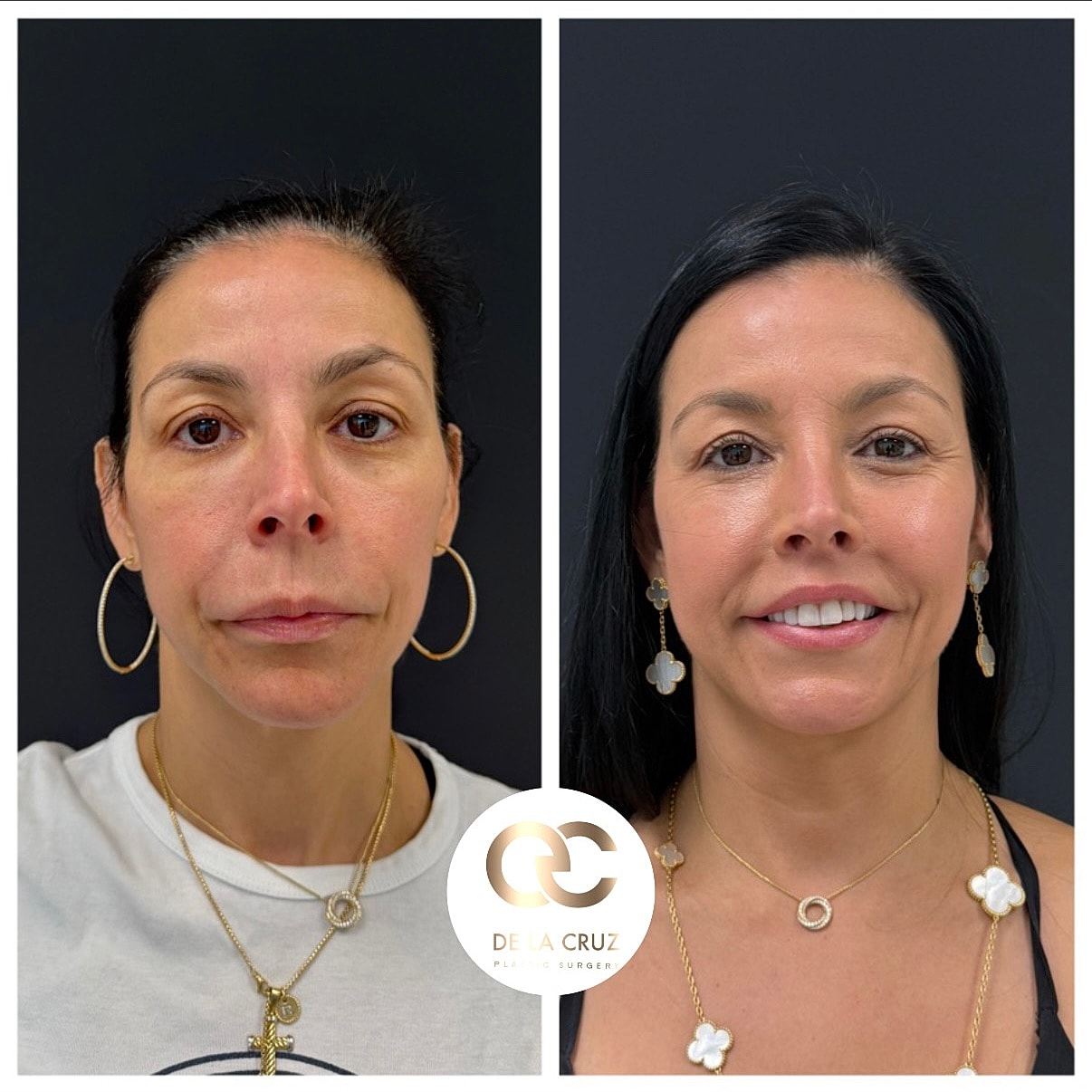
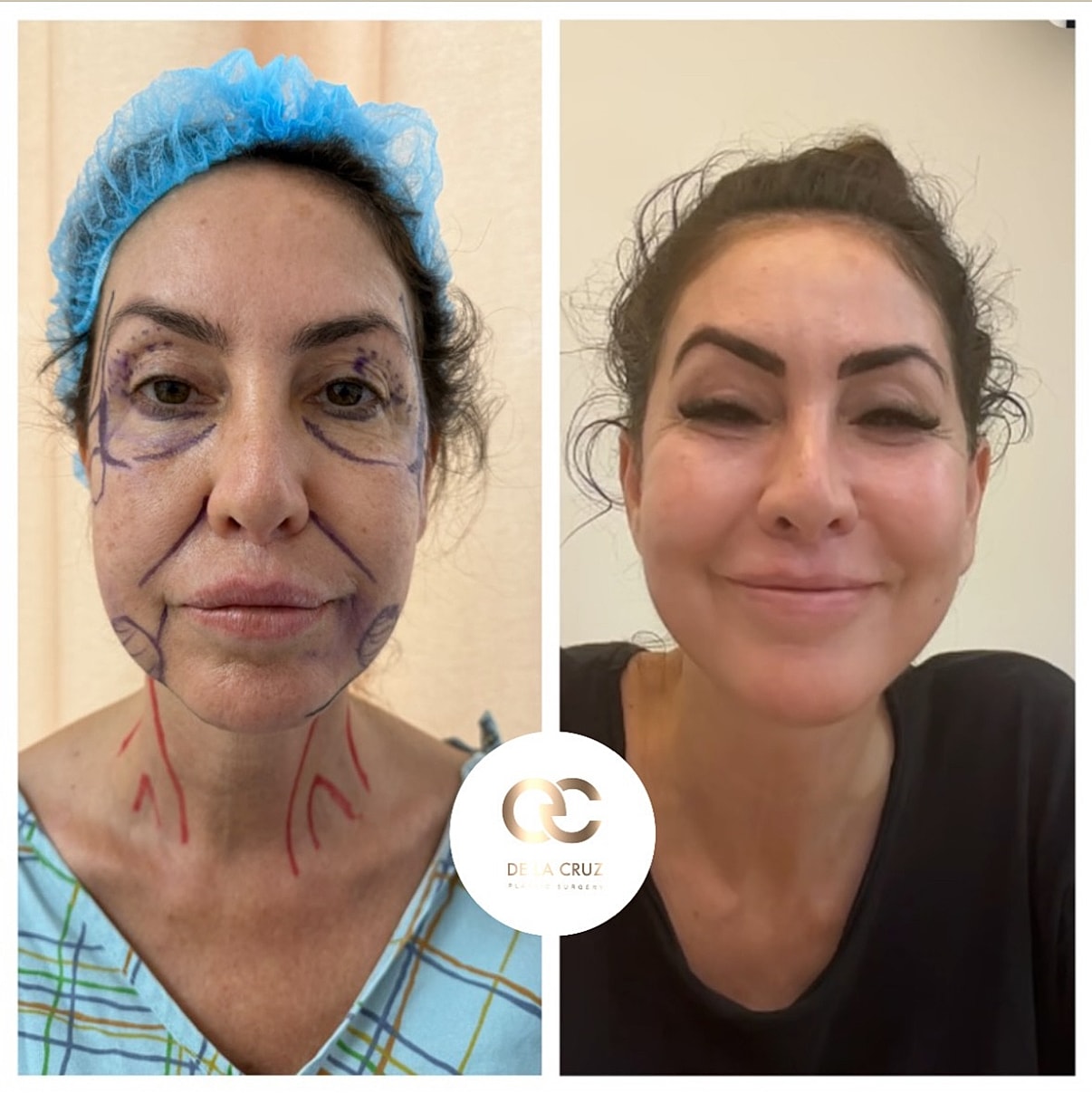
A facelift, or rhytidectomy, is a surgical procedure designed to reposition and restore the deeper structures of the face and neck, creating a more youthful, natural appearance.
Unlike non-surgical treatments that temporarily improve the surface, a facelift corrects the underlying structural changes of aging, including tissue descent, ligament laxity, and loss of jawline definition.
👉 For a complete overview of techniques and outcomes, see the Ultimate Facelift Guide.
1 of 2
Facial aging is not just skin deep—it is a structural process involving multiple layers:
A facelift is specifically designed to correct descent, which is the primary driver of visible aging.
👉 Learn more about what aging changes a facelift addresses in What Does a Facelift Fix?
Modern facelift surgery focuses on repositioning the SMAS (Superficial Musculoaponeurotic System)—the foundational support layer of the face.
This involves:
The result is not a “pulled” look, but a restored facial architecture.
👉 See how this compares across techniques in Deep Plane Facelift vs SMAS Facelift.

The Deep Plane Facelift releases key facial ligaments and repositions the face as a single unit.
This allows for:
👉 Learn more about this technique on the Deep Plane Facelift page.
This technique tightens or folds the SMAS layer without full ligament release.
👉 Compare outcomes in Deep Plane vs SMAS Facelift.
A less invasive option for early aging with:
A facelift targets the lower face and neck, including:
Ideal candidates:
Most patients are between 40–70, but candidacy depends on anatomy—not age alone.
A facelift typically lasts 10–15 years or longer, depending on:
Advanced techniques such as the deep plane facelift often provide more durable results.
👉 See full longevity details in How Long Does a Facelift Last?

Non-surgical treatments like fillers and RF tightening can improve early aging, but they do not reposition deep structures.
A facelift remains the gold standard for:
Recovery typically follows this timeline:
Most patients resume normal activity within 2–3 weeks.
👉 See full recovery details in Facelift Recovery Timeline.
Facelift surgery is safe when performed by a qualified plastic surgeon, but risks include:
Evidence shows:
To achieve optimal results, facelifts are often combined with:
👉 See how volume restoration enhances results in Facial Fat Transfer with Facelift.
Facelift cost varies depending on:
Typical range:
👉 See detailed pricing in Facelift Cost in Houston.
Facelift surgery is one of the most technically demanding procedures in plastic surgery.
Results depend on:
👉 Learn how to evaluate expertise in How to Choose the Best Facelift Surgeon.
About the Medical Reviewer Dr. Emmanuel De La Cruz is a double board-certified plastic surgeon specializing in advanced facial rejuvenation and body contouring procedures. 👉 [Learn more about Dr. Emmanuel De La Cruz]
Dr. Emmanuel De La Cruz is a double board-certified plastic surgeon specializing in advanced facial rejuvenation.
His approach combines:
This allows for:

The primary purpose of a facelift is to restore youthful facial contours by repositioning sagging tissues, improving the jawline, midface, and neck. It addresses structural aging rather than just surface wrinkles.
A traditional facelift typically tightens the SMAS layer, while a deep plane facelift releases facial ligaments and repositions deeper structures, resulting in more natural and longer-lasting outcomes.
Most modern facelifts include neck rejuvenation, addressing loose skin and muscle banding. In some cases, a separate neck lift may be performed for optimal results.
Yes, especially with advanced techniques like the deep plane facelift, which can reposition the malar fat pad and restore cheek volume and contour.
A well-performed facelift should not change your identity. It restores a more youthful version of your natural facial structure without making you look like a different person.
Botox relaxes muscles and fillers restore volume, but neither can reposition sagging tissue. A facelift corrects the underlying structural cause of aging, providing more comprehensive and long-lasting results.
Facelift procedures typically take 3 to 6 hours, depending on the technique used and whether additional procedures are performed.
Most patients report mild to moderate discomfort, which is well controlled with medication. Tightness and swelling are more common than pain.
Initial improvements are visible within weeks, but final results typically develop over 3 to 6 months as swelling fully resolves.
Yes. Facelift techniques can be tailored to preserve masculine facial features, including jawline definition and hairline placement.
Patients with mild sagging may benefit from a mini facelift, while those with more significant aging typically require a full or deep plane facelift for optimal results.
Facelifts can be performed under general anesthesia or monitored anesthesia care (MAC), depending on the patient and procedure.
Yes. Many patients undergo a secondary facelift after several years to maintain their results as aging continues.
About the Author
Dr. Emmanuel De La Cruz, MD is a double board-certified plastic surgeon in Houston, Texas, certified by the American Board of Plastic Surgery and the American Board of Surgery. He specializes in advanced facial rejuvenation procedures, including deep plane facelift, ponytail facelift (endoscopic facelift), neck lift, eyelid surgery, and facial fat transfer.
He has trained with internationally recognized leaders in facial surgery, including Chia Chi Kao in Beverly Hills and Giovanni Botti in Italy, allowing him to offer both minimally invasive and structural facelift techniques tailored to each patient.
In addition to his surgical expertise, Dr. De La Cruz is a portrait sculptor and painter, bringing an artistic understanding of facial balance, proportion, and harmony to his work. His approach focuses on achieving natural, refined, and undetectable results in facial rejuvenation.