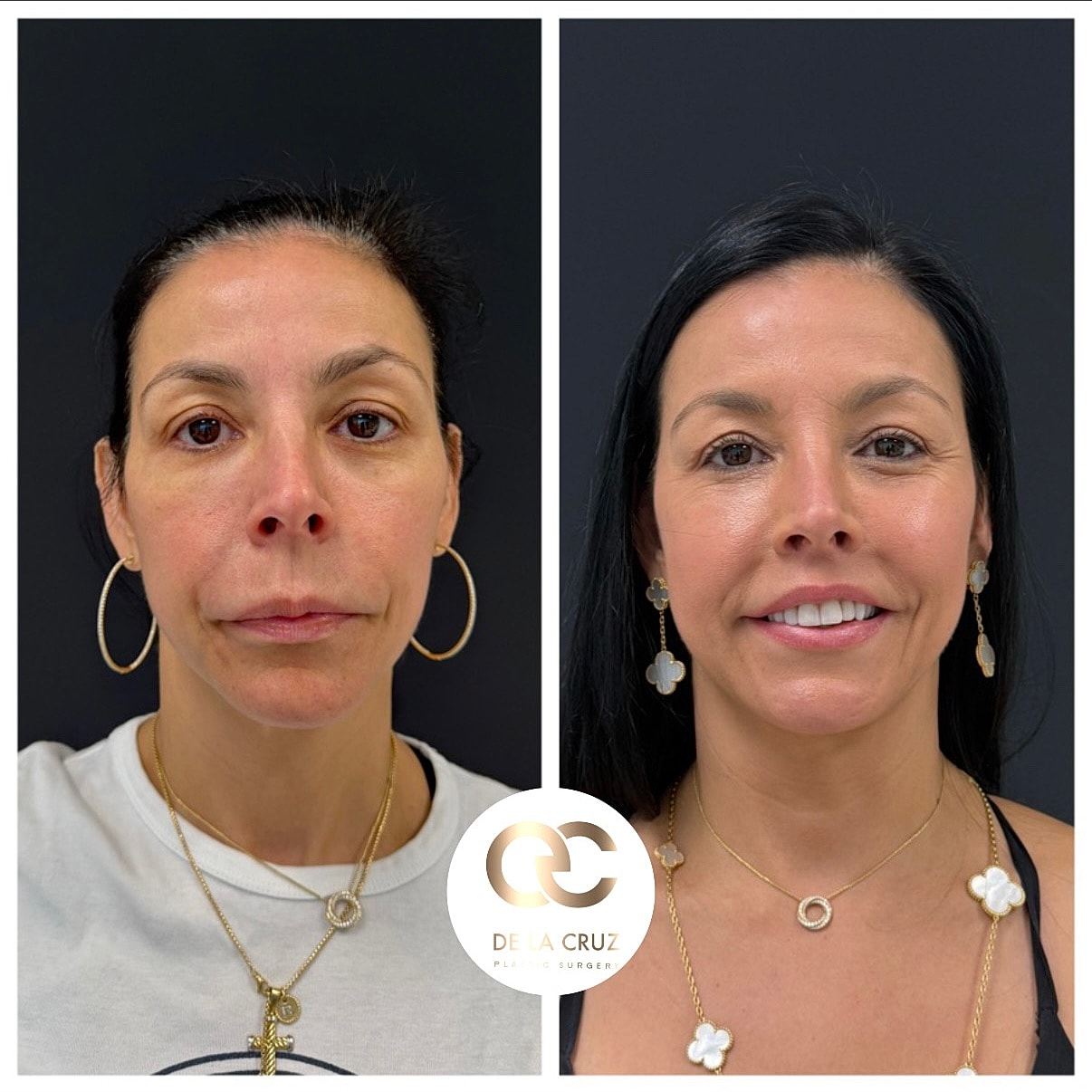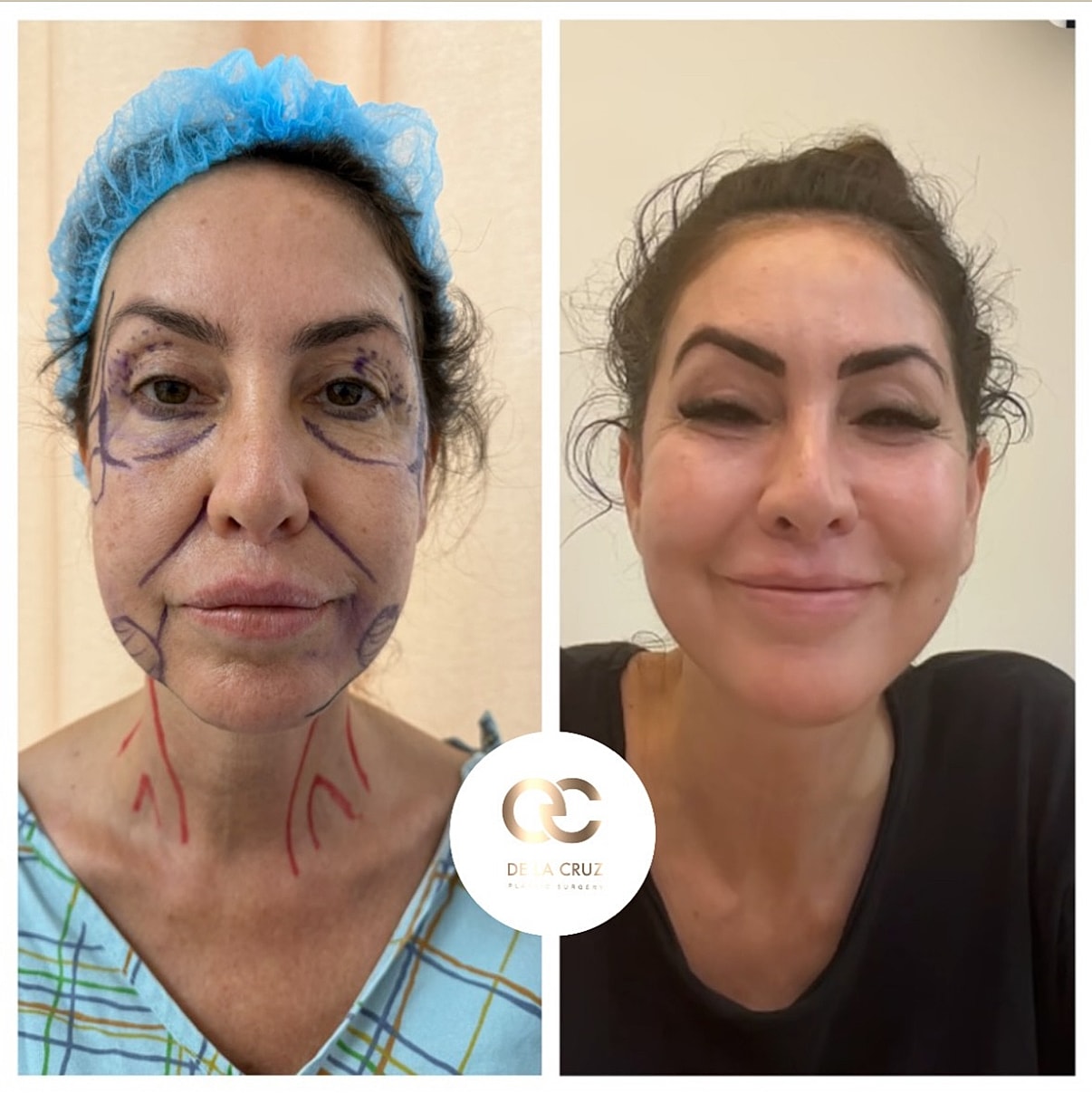
ULTIMATE FACELIFT GUIDE (
Medically Reviewed by Dr. Emmanuel De La Cruz, MD Double Board-Certified Plastic Surgeon in Houston, Texas
Medically Reviewed by Dr. Emmanuel De La Cruz, MD Double Board-Certified Plastic Surgeon in Houston, Texas
Everything You Need to Know About Facelift Surgery, Recovery, Cost, Results & Choosing the Best Surgeon
Many patients ask: how long is facelift recovery, and the answer depends on multiple factors. While most patients are socially presentable within 10 to 14 days, the complete facelift recovery time extends over several months. Understanding the full facelift swelling timeline is essential to setting expectations, especially for patients wondering when will I look normal after facelift surgery.
1 of 2
If you are researching facelift surgery, you are likely asking the most important questions:
This Ultimate Facelift Guide is designed to answer every one of those questions—clearly, honestly, and with surgical precision.
A facelift is not simply about tightening skin. It is a structural restoration of facial anatomy, designed to reposition deeper tissues, redefine the jawline, and restore youthful balance—while maintaining a natural, undetectable appearance.
This guide will walk you through:
A facelift, or rhytidectomy, is a surgical procedure designed to improve visible signs of aging in the lower face and neck.
Unlike non-surgical treatments, a facelift works by:
👉 This is a critical concept:
Aging is not just skin deep.
The face ages in layers—and the most important changes occur beneath the skin.
This is why modern facelifts focus on:
Repositioning tissue, not simply tightening skin
One of the most common questions patients ask is: What Does a Facelift Fix?
A facelift primarily addresses structural aging of the lower face and neck.
1. Sagging Skin
Over time, skin loses elasticity and begins to sag.
A facelift removes excess skin and re-drapes it smoothly, creating a more youthful appearance without tension.
2. Jowls
Jowls form when facial fat descends and accumulates along the jawline.
A facelift:
👉 This is often the most dramatic improvement after surgery.
3. Deep Nasolabial Folds
These lines run from the nose to the corners of the mouth.
A facelift improves them by:
⚠️ Important:A facelift softens these folds but may not completely eliminate them.
4. Marionette Lines
These lines extend downward from the corners of the mouth and can create a tired or sad appearance.
A facelift lifts the lower face, reducing these lines and restoring a more neutral, refreshed expression.
5. Neck Laxity (“Turkey Neck”)
A facelift often includes a neck lift, addressing:
👉 Result:A sharper, more elegant neck contour.
6. Loss of Facial Definition
Aging causes the face to lose structure.
A facelift restores:
What a Facelift Does NOT Fix
Understanding limitations is essential for realistic expectations.
A facelift does NOT directly correct:
Fine wrinkles and skin texture
Volume loss
Upper face aging
Eyelid aging
👉 These may require:
This is one of the most important distinctions in modern facial aesthetics.
The Core Difference
👉 Fillers treat volume👉 Facelift treats gravity and structure
Fillers
Fillers:
However:
Facelift
A facelift:
Why Fillers Cannot Replace a Facelift
Trying to “lift” the face with filler often leads to:
👉 This is sometimes referred to as “filler fatigue”
👉 Gold standard for advanced facial aging
SMAS Facelift
👉 Still widely used but more technique-dependent
Ponytail Facelift (Endoscopic Facelift)
👉 Best for younger patients with early aging
🧠 Clinical Insight
Modern facelift surgery is no longer about pulling skin.
It is about:
This is what creates:
Learn More:
Many patients focus on:
But the reality is:
👉 Results depend more on:
You may be a good candidate if you have:
Typical age range:
However:👉 The decision is based on anatomy—not age alone.

One of the most searched questions is:
👉 How long is facelift recovery?
Week 1
Week 2–3
1–3 Months
6 Months+
👉 Key insight:
Most patients underestimate how long swelling lasts.

Most patients will look normal after facelift:
National (Elite Surgeons)
🧠 Key Insight
Cost reflects:
👉 The difference is not just price—it is outcome and safety
So how long does a facelift last?
A well-performed facelift can last:
👉 10–15 years or longer
However:
👉 A facelift resets the clock—it does not stop it.
The Best Age for a Facelift would be:
Ideal candidates:
👉 Earlier intervention = more natural results
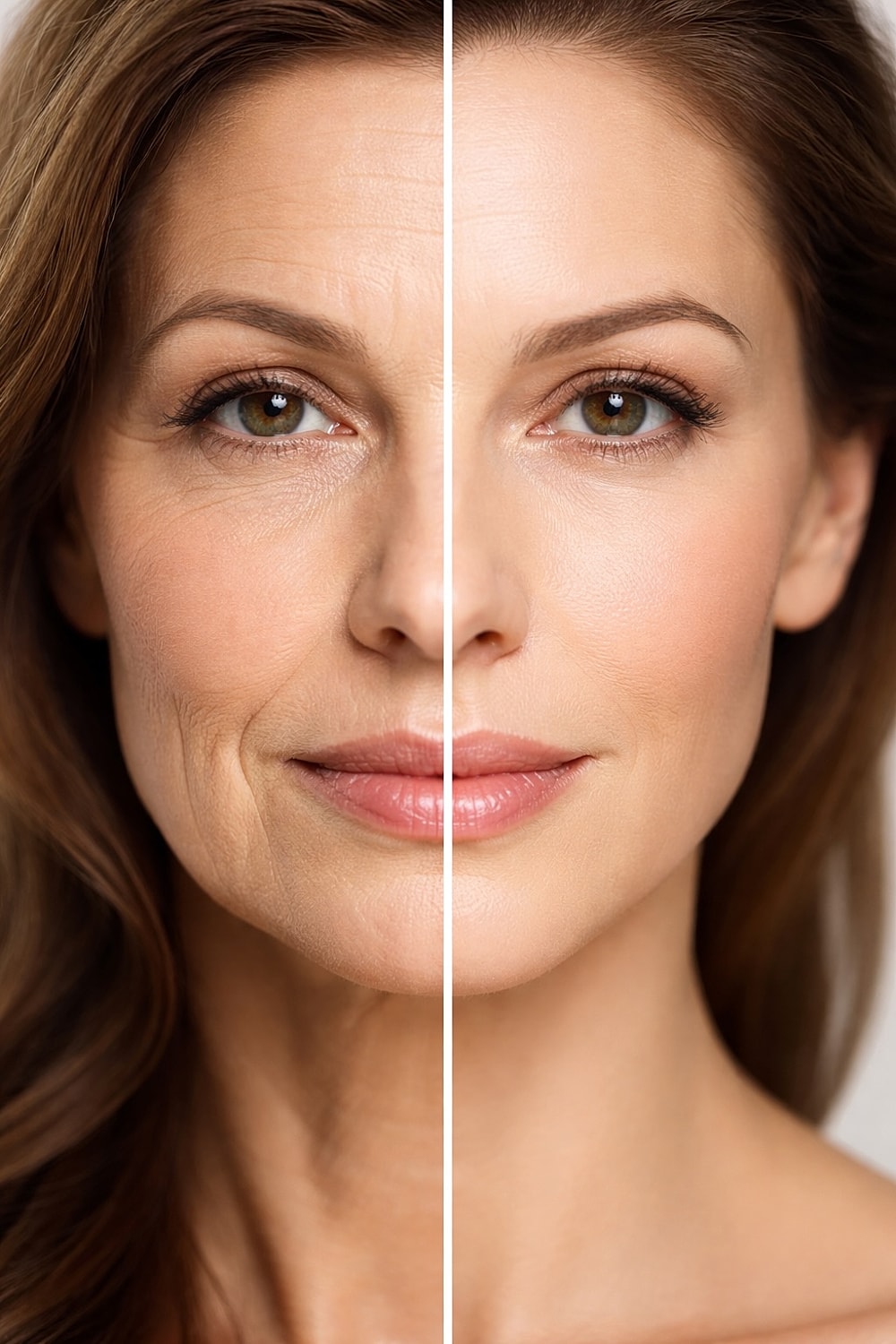
At a fundamental level, facelift surgery and dermal fillers treat completely different aspects of facial aging.
The Key Concept: Facelift vs Fillers
👉 Aging is caused by BOTH gravity (descent) and volume loss — but they are not the same problem.
What a Facelift Actually Treats
A facelift addresses gravity and structural aging:
👉 Think of it as:
Lifting and repositioning what has fallen
💉 What Fillers Actually Treat
Fillers address volume loss:
👉 Think of it as:
Filling what has deflated

All surgery carries risks.
These may include:
👉 Choosing an experienced surgeon significantly reduces these risks.
Factors affecting facelift recovery
This is the most important decision.
Look for:
Facelift in Houston, Texas
If you are searching for:
Choosing a surgeon with advanced technique and experience is essential for achieving natural, long-lasting facelift results.
At De La Cruz Plastic Surgery, patients receive individualized care using advanced techniques such as the deep plane facelift and ponytail facelift (endoscopic facelift).
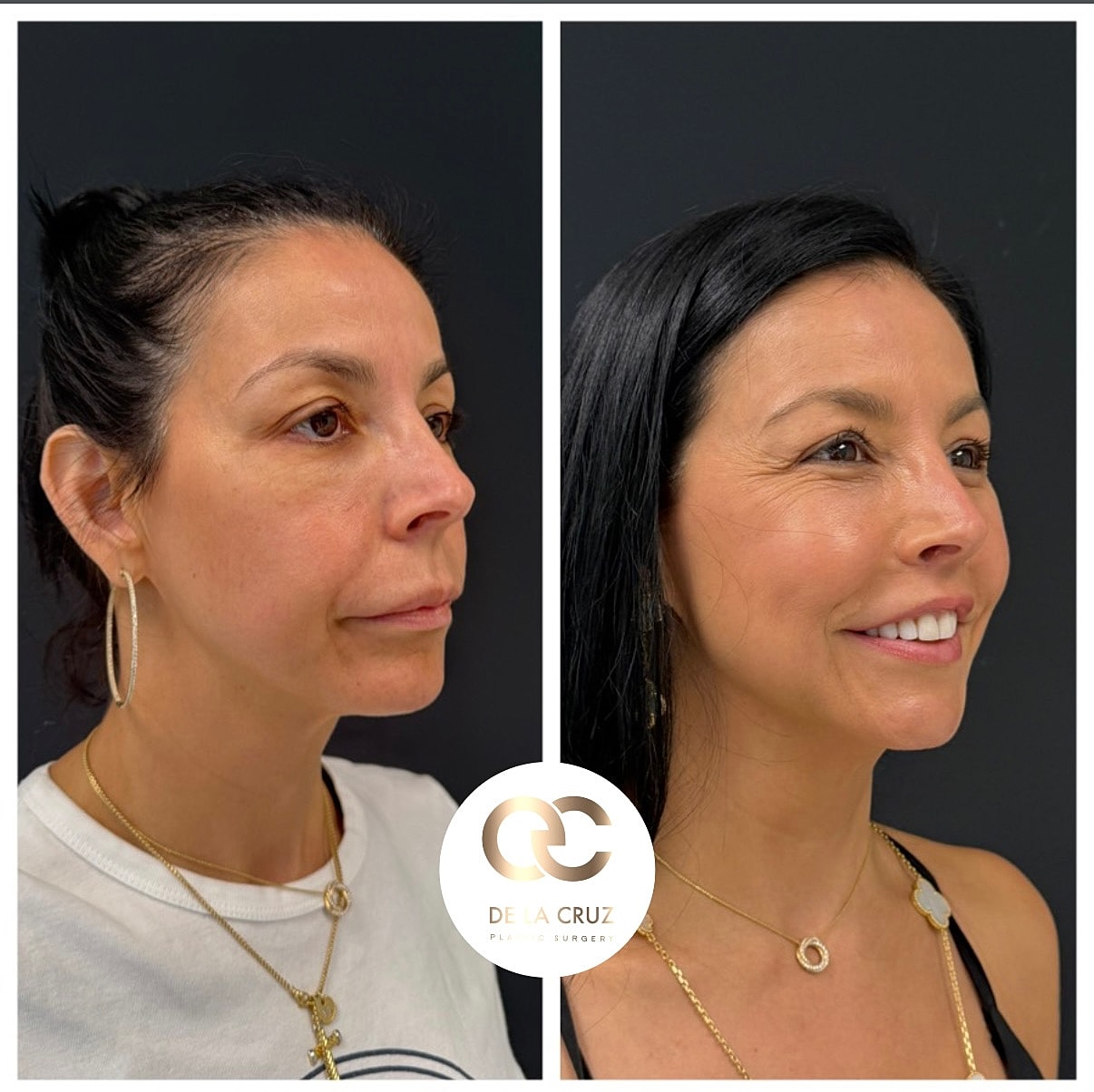
Precision. Experience. Natural Results.
At De La Cruz Plastic Surgery:
👉 The goal is not to look different.👉 The goal is to look like a refined version of yourself.


👉 Swelling is the #1 reason patients think they are not “done” yet
Learn more: Facelift Swelling Timeline
For optimal results, a facelift is often combined with:
👉 This creates a comprehensive rejuvenation strategy
A facelift is one of the most effective ways to restore a youthful, natural appearance.
It addresses:
👉 It does NOT replace:
The Bottom Line
👉 A facelift is not about changing your face👉 It is about restoring what time has altered
When performed correctly:
The result is subtle, refined, and unmistakably natural
10–14 days socially, 3–6 months full healing
Around 2 weeks socially, with continued refinement
Usually mild to moderate discomfort
Several weeks, with subtle swelling for months
Light activity: 2 weeksFull exercise: 4–6 weeks