Facelift Risks Explained: Hematoma, DVT, Nerve Injury & How to Avoid Complications
Medically Reviewed by Dr. Emmanuel De La Cruz, MD Double Board-Certified Plastic Surgeon in Houston, Texas
Medically Reviewed by Dr. Emmanuel De La Cruz, MD Double Board-Certified Plastic Surgeon in Houston, Texas
Facelift surgery is one of the most powerful procedures for restoring a youthful, natural appearance. However, like all surgical procedures, it carries risks.
The difference between an average result and an exceptional outcome often lies in how well complications are prevented—not just treated.
In this guide, you will learn:
This is not just a list of complications.This is a strategy for safer surgery and superior outcomes.
For a comprehensive overview of facelift surgery, techniques, recovery, and results, explore our Ultimate Facelift Guide.
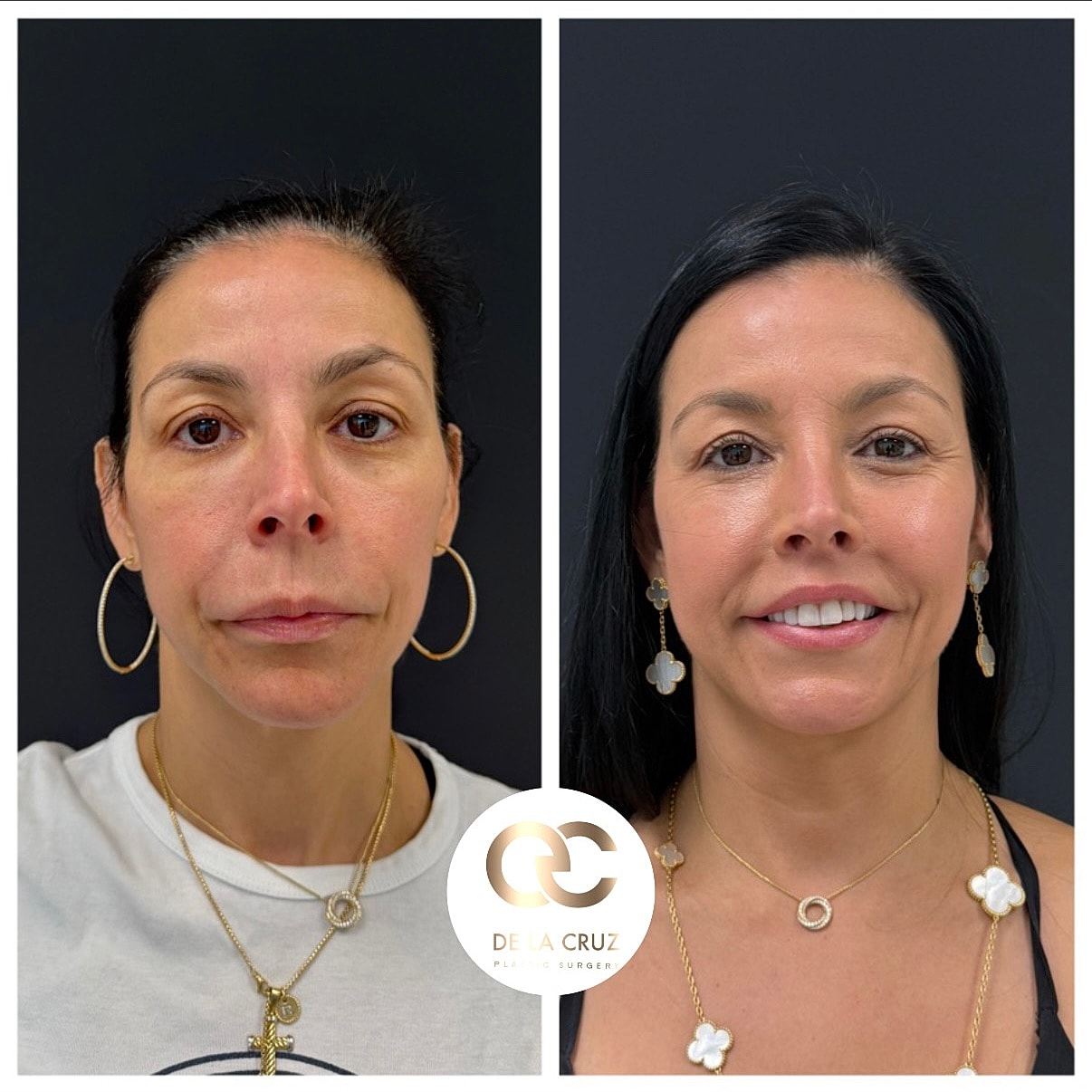
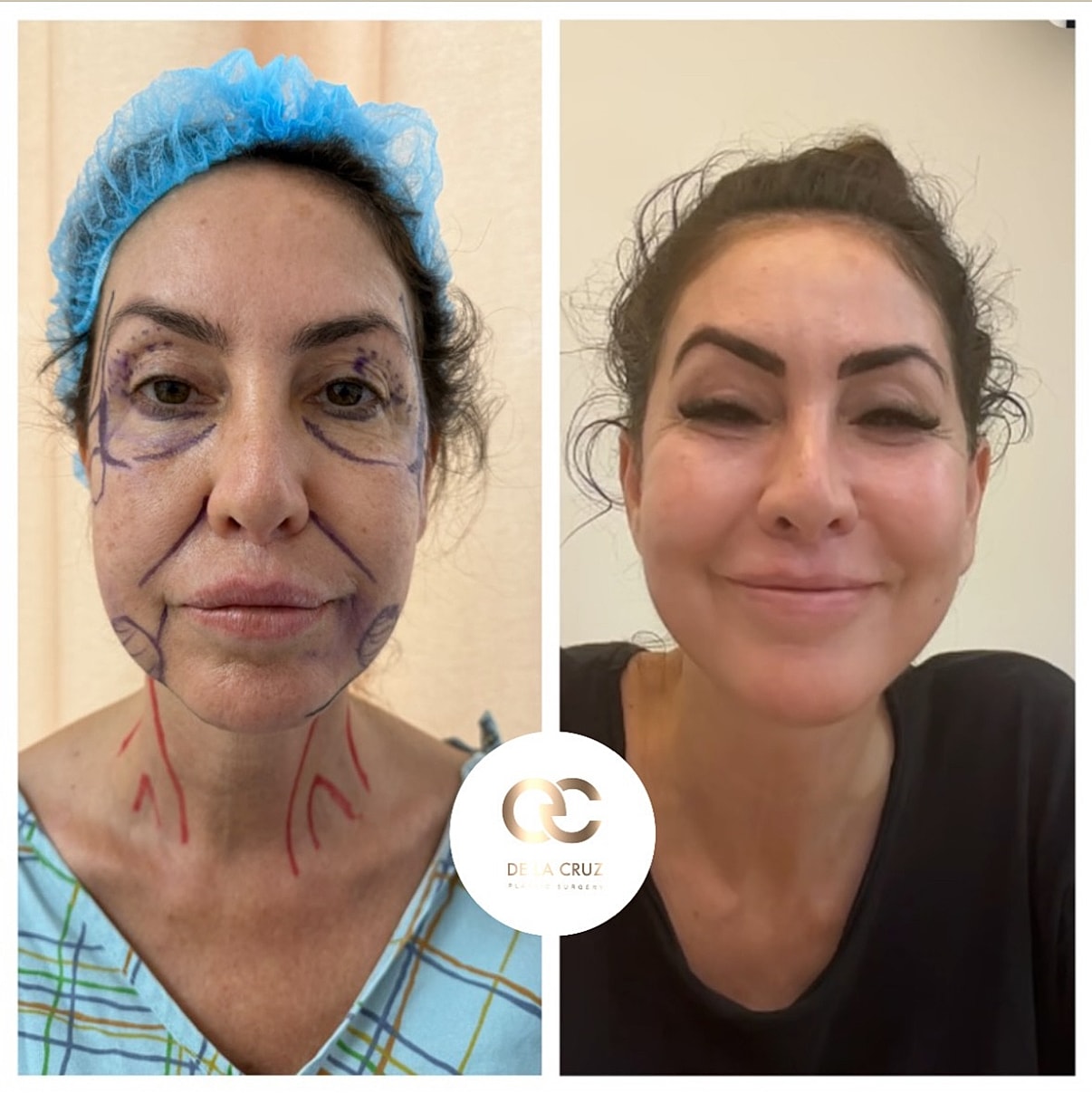
Patients undergoing a deep plane facelift can expect a structured facelift recovery timeline with progressive improvement in swelling and contour. Select patients may benefit from a ponytail facelift, which emphasizes vertical lifting with less downtime. Many procedures are also combined with facial fat transfer to restore youthful volume and enhance overall results.
1 of 2
Patients often search:
The reality:
The goal is not to eliminate risk entirely—it is to systematically reduce it at every stage:
Learn more about facelift recovery timeline, facelift swelling stages, what a facelift fixes, and the best age for facelift surgery to make an informed decision about your procedure.
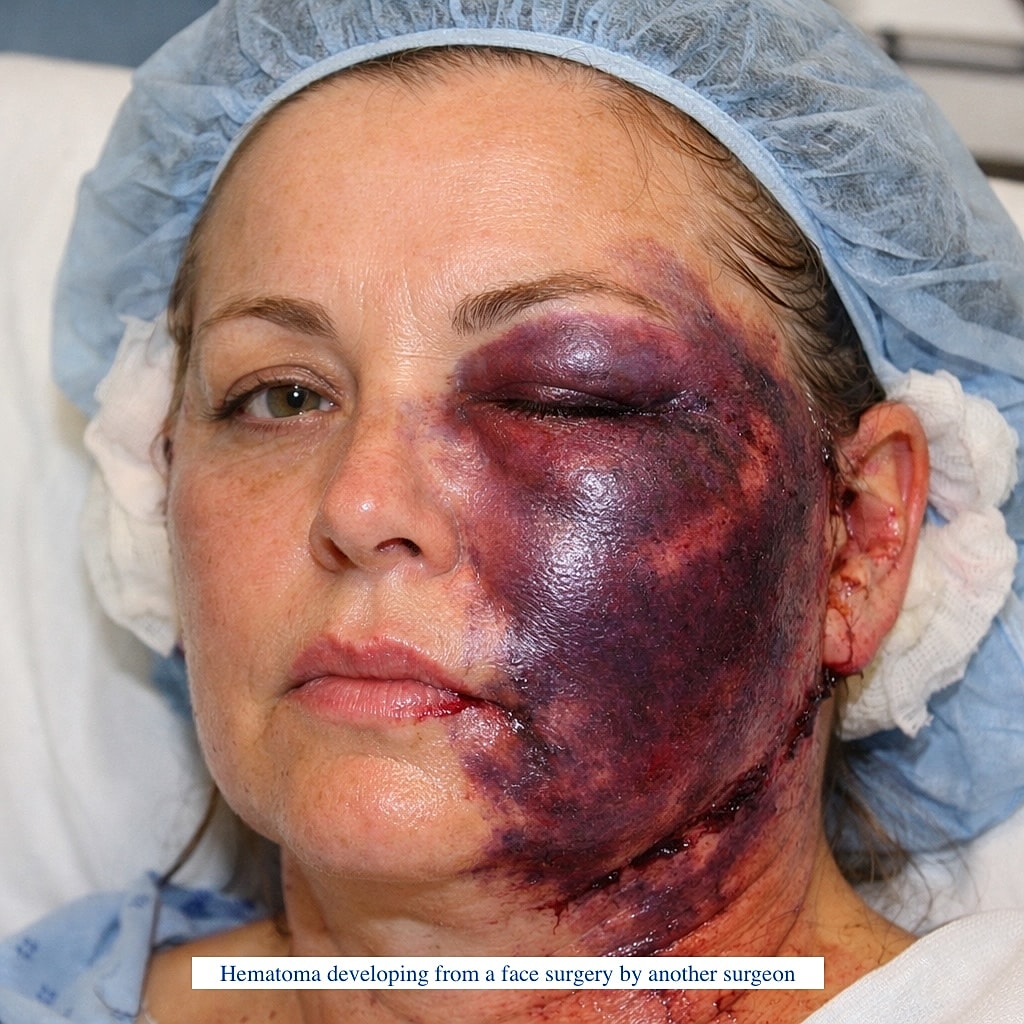
Hematoma remains the most common significant complication following facelift surgery, with reported incidence rates ranging from approximately 1% to 3% in the literature. It typically presents within the first 24 hours postoperatively and may manifest as acute swelling, pain, and asymmetry.
The clinical significance of hematoma extends beyond the need for evacuation; untreated or severe hematomas may compromise flap perfusion and increase the risk of secondary complications, including skin necrosis and infection.
A modern, prevention-focused approach includes:
How Dr. De La Cruz Prevents Bleeding with modern, prevention-focused approach that includes:

Cutaneous flap necrosis is an uncommon but clinically significant complication, typically associated with compromised vascular perfusion to elevated skin flaps. The risk is increased in patients with a history of smoking, vascular disease, or excessive tension on wound closure.
The pathophysiology involves disruption of the subdermal plexus and inadequate perfusion, which may result in partial- or full-thickness tissue loss, most commonly in the postauricular or preauricular regions.
Preventative strategies are centered on:
Injury to the facial nerve represents one of the most feared complications in facelift surgery. The facial nerve and its branches—temporal, zygomatic, buccal, marginal mandibular, and cervical—are responsible for dynamic facial expression and must be preserved during surgical dissection.
Nerve injury may be:
Clinical manifestations may include:
Risk mitigation is highly dependent on surgeon expertise and includes:
Surgeons with advanced training in microsurgery and peripheral nerve repair possess an enhanced understanding of nerve anatomy and injury mechanisms, which may further reduce risk and improve outcomes in the rare event of nerve compromise.
How Dr. De La Cruz Minimizes Risk
👉 This level of training provides a distinct advantage in avoiding and managing nerve-related complications.
Wound dehiscence, or separation of the surgical incision, is a multifactorial complication influenced by mechanical tension, tissue perfusion, and patient-related factors such as nutritional status.
In facelift surgery, optimal wound healing is achieved through:
In addition, perioperative nutritional optimization plays a critical role. Adequate protein intake is essential for collagen synthesis and tissue repair. Supplementation with formulations containing arginine, glutamine, and β-hydroxy β-methylbutyrate (HMB)—such as Juven—may further support wound healing and reduce the risk of dehiscence.
This integrative approach reflects an understanding that surgical outcomes are influenced not only by technique, but also by the biological environment of healing.
Deep vein thrombosis (DVT) and pulmonary embolism (PE), collectively referred to as venous thromboembolism (VTE), represent rare but potentially life-threatening complications following aesthetic surgery, including rhytidectomy (facelift). Although the overall incidence of VTE in facelift procedures is low, its consequences necessitate a rigorous emphasis on prevention, early recognition, and risk stratification.
Incidence and Clinical Context
The reported incidence of VTE following facelift surgery remains low across the literature. Early survey data demonstrated an overall DVT incidence of approximately 0.35%, with a disproportionately higher occurrence in patients undergoing procedures under general anesthesia. In this cohort, while less than half of procedures were performed under general anesthesia, the majority of thromboembolic events were associated with its use.
Role of Anesthesia Type
While anesthesia type alone is not an independent determinant of VTE, multiple observations suggest that facelifts performed under local anesthesia or MAC-style sedation may be associated with a lower thromboembolic risk compared to general anesthesia. This relationship is likely multifactorial rather than causal.
Procedures performed under general anesthesia are often associated with:
In contrast, procedures performed under local anesthesia or MAC sedation typically involve:
These factors collectively contribute to a lower overall VTE risk profile, rather than the anesthesia modality itself being the sole driver.
At De La Cruz Plastic Surgery, a comprehensive and individualized approach is employed to minimize thromboembolic risk:
Pharmacologic prophylaxis is considered selectively, balancing the risk of bleeding and hematoma—the most common complication in facelift surgery—against the patient’s individualized VTE risk.
Clinical Perspective
It is critical to emphasize that DVT and PE after facelift surgery are rare events, particularly when procedures are performed in healthy patients with appropriate perioperative protocols. Current evidence suggests that the overall risk is low and can be further minimized through thoughtful surgical planning, anesthesia selection, and adherence to evidence-based preventive strategies.
Infection following facelift surgery is uncommon due to the robust vascularity of facial tissues. When it occurs, it is typically superficial and responsive to oral antibiotic therapy.
Scar formation is an expected outcome of any surgical procedure; however, in facelift surgery, scars are strategically placed within natural creases and hair-bearing areas to maximize concealment. Scar quality is influenced by:
Meticulous incision design and closure remain the cornerstone of optimal aesthetic outcomes.
The contemporary approach to facelift surgery is defined not solely by aesthetic outcome, but by risk mitigation through precision, planning, and perioperative optimization.
While complications such as hematoma, flap necrosis, nerve injury, and wound healing disturbances are well-described in the literature, their incidence can be significantly reduced through:
Ultimately, the safety and success of facelift surgery are determined less by the procedure itself and more by the systematic application of these principles by the operating surgeon.
About the Medical Reviewer Dr. Emmanuel De La Cruz is a double board-certified plastic surgeon specializing in advanced facial rejuvenation and body contouring procedures. 👉 [Learn more about Dr. Emmanuel De La Cruz]

Choosing the right surgeon determines both your results and safety. Dr. Emmanuel De La Cruz offers a rare combination of advanced surgical training and artistic precision.
Double Board-Certified Expertise
Board-certified in Plastic Surgery and General Surgery, ensuring the highest standards of safety, technique, and outcomes.
Microsurgery & Nerve Expertise
Fellowship-trained in Hand and Microsurgery, where he repairs delicate nerves under magnification.
Why this matters:
Trained by World Leaders
This allows for advanced, natural-looking facelift techniques tailored to each patient.
Artist’s Eye for Natural Results
Classically trained sculptor and painter, mentored by a world-renowned French sculptor.
Result:
Precision-Driven Technique
Safety-First, Natural Outcomes
Every procedure is designed to:
The Difference
A facelift is not just surgery—it is precision + artistry.
Dr. De La Cruz combines:Microsurgical expertise + world-class training + artistic vision
→ For results that look natural, not operated.

Yes. Facelift surgery is generally safe when performed by an experienced, board-certified plastic surgeon. The risk of serious complications is low, especially with proper technique and patient selection.
The most common significant complication is a hematoma (a collection of blood under the skin), which typically occurs within the first 24 hours after surgery.
Hematoma risk is reduced through:
Temporary nerve weakness can occur but is uncommon and usually resolves over time. Permanent nerve injury is rare, especially when surgery is performed with precise anatomical dissection and advanced training in nerve preservation.
Flap necrosis is a loss of skin due to reduced blood supply. It is uncommon and more likely in smokers or when excessive tension is placed on the skin. Proper technique and patient optimization significantly reduce this risk.
Blood clots are rare in facelift surgery but can be serious. Prevention includes:
Yes, but it is uncommon. This is minimized by:
Infection is rare due to the excellent blood supply of the face. When it occurs, it is usually mild and treatable with antibiotics.
All surgery creates scars, but facelift incisions are carefully placed around the ears and hairline to be well hidden. Proper technique and healing typically result in thin, inconspicuous scars.
You can improve safety by:
About the Author
Dr. Emmanuel De La Cruz, MD is a double board-certified plastic surgeon in Houston, Texas, certified by the American Board of Plastic Surgery and the American Board of Surgery. He specializes in advanced facial rejuvenation procedures, including deep plane facelift, ponytail facelift (endoscopic facelift), neck lift, eyelid surgery, and facial fat transfer.
He has trained with internationally recognized leaders in facial surgery, including Chia Chi Kao in Beverly Hills and Giovanni Botti in Italy, allowing him to offer both minimally invasive and structural facelift techniques tailored to each patient.
In addition to his surgical expertise, Dr. De La Cruz is a portrait sculptor and painter, bringing an artistic understanding of facial balance, proportion, and harmony to his work. His approach focuses on achieving natural, refined, and undetectable results in facial rejuvenation.