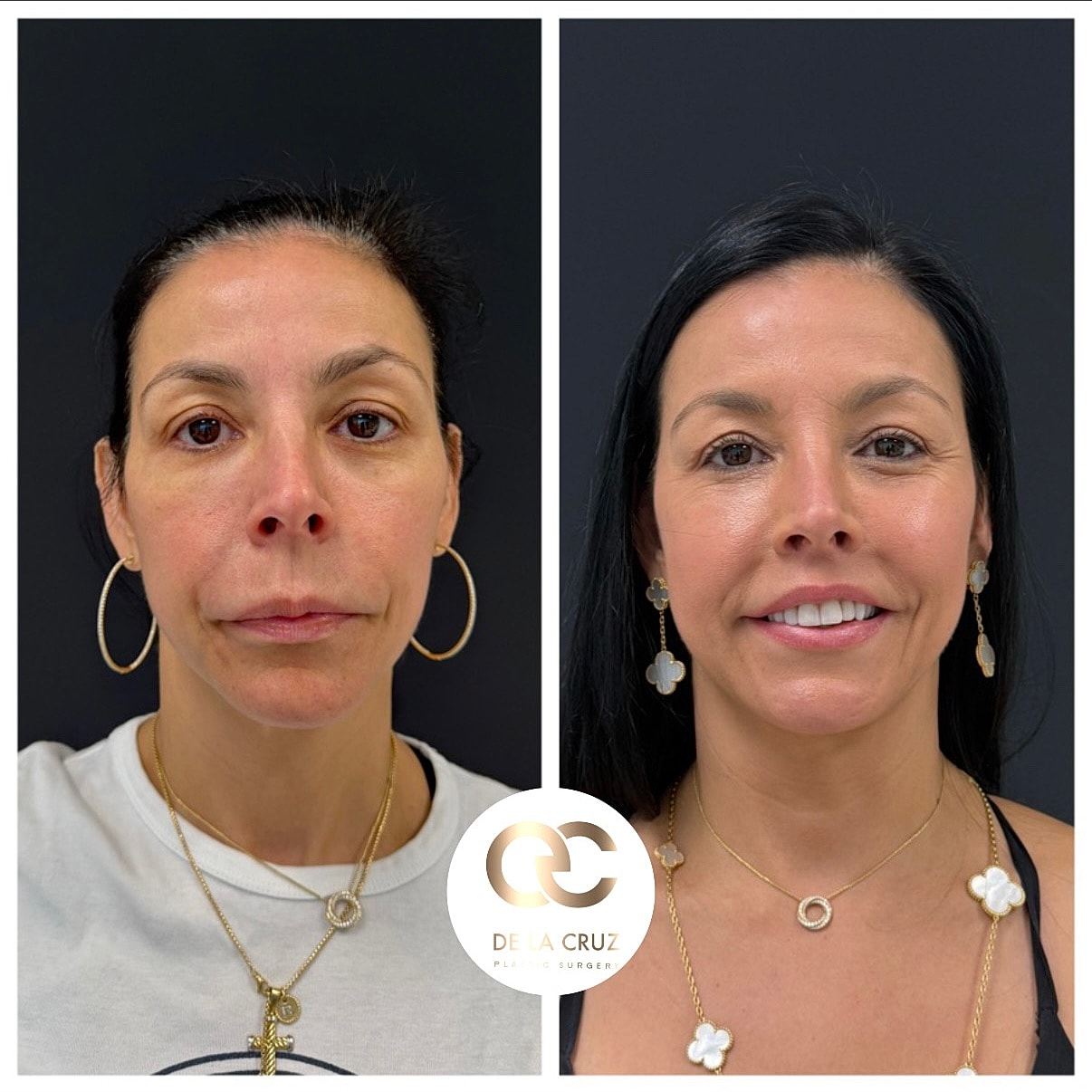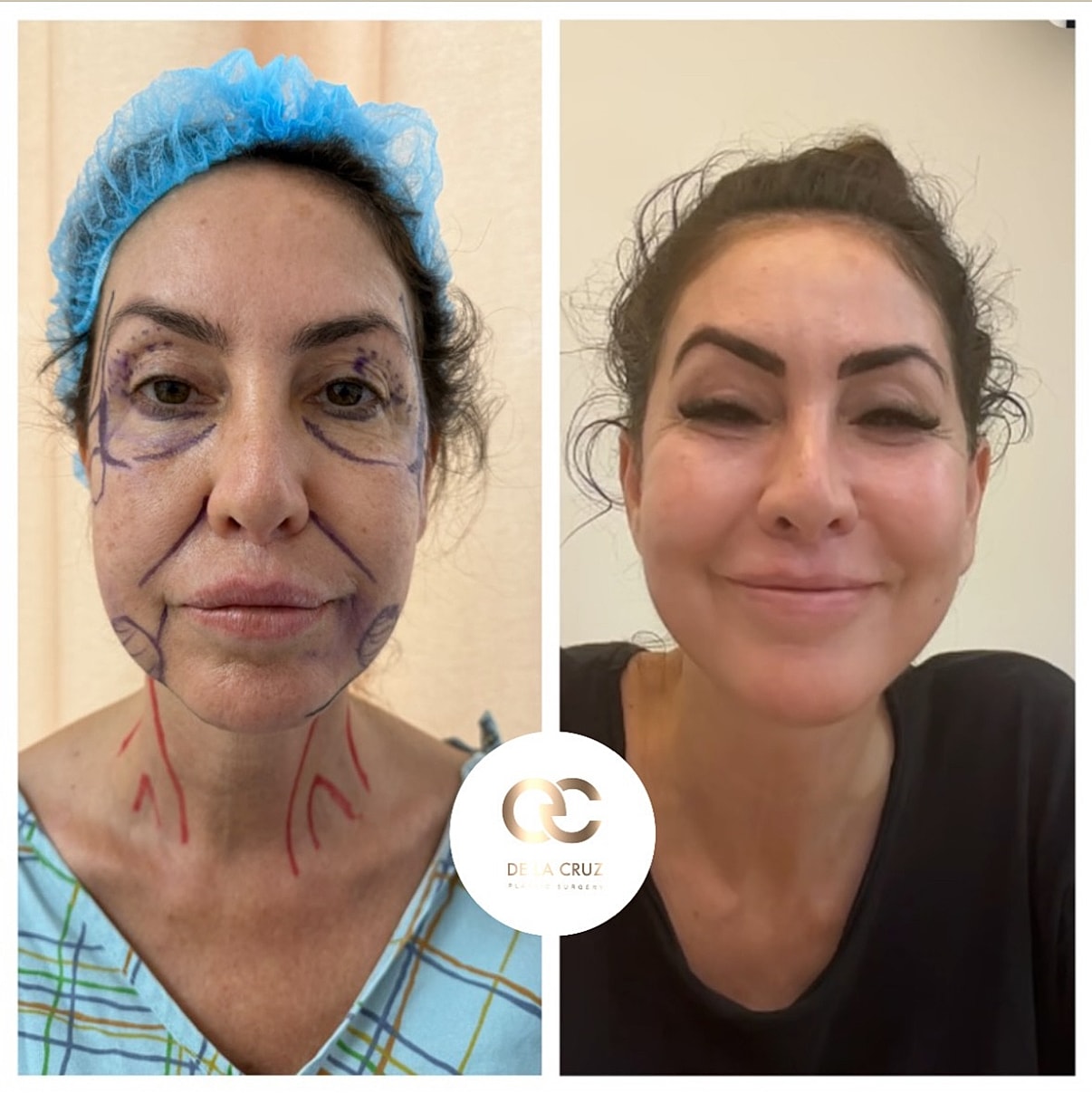
The primary difference between a deep plane facelift vs SMAS facelift lies in how the underlying facial structures are lifted.
👉 The result: Deep plane facelifts typically produce more natural, longer-lasting results, particularly in the midface and jawline.
1 of 2
The SMAS (Superficial Musculoaponeurotic System) is the key structural layer responsible for facial support.
Aging affects:
👉 Effective facial rejuvenation requires restoring structure—not just tightening skin
The SMAS facelift is one of the most commonly performed techniques worldwide.
Advantages:
Limitations:
👉 Best suited for:
The deep plane facelift represents a more advanced evolution of facial rejuvenation.
Instead of pulling tissues, it:
👉 Repositions the face as a single anatomical unit
Advantages:
Why it matters:
Aging occurs at the level of:
👉 Deep plane surgery directly addresses these changes

One of the most common questions:
Which facelift lasts longer—SMAS or deep plane?
Answer:
Why?
Longevity is not just about time—it’s about how naturally the face ages afterward

There is no one-size-fits-all answer.
However:
For patients seeking:
The deep plane facelift is often superior
For patients with:
A SMAS facelift may be appropriate
The difference between a good result and an exceptional one is not just technique—it is execution.
Deep plane surgery requires:
Outcomes are highly surgeon-dependent
Patients seeking a deep plane facelift in Houston choose Dr. De La Cruz for his unique combination of:
Delivering comprehensive, harmonious results


Exceptional facelift results are not achieved through technique alone—they require artistic judgment.
Dr. Emmanuel De La Cruz is both a double board-certified plastic surgeon and a classically trained sculptor, mentored by world-renowned French sculptor Philippe Faraut. As a portrait artist, he has developed a deep understanding of proportion, light, and contour—elements that define a natural, balanced face.
He approaches facial surgery not as a series of procedures, but as:
The sculpting of living anatomy
Every detail is refined with intention to restore natural harmony, balanced proportions, and results that appear effortless and timeless.
The goal is simple: you don’t look “done”—you look like yourself, refreshed.

A common misconception is that deeper surgery leads to more aggressive or unnatural results. In reality, the opposite is true. When performed with precision and expertise, a deep plane facelift produces more natural outcomes—not more aggressive ones. Rather than pulling the skin, the deeper structures of the face are carefully repositioned to their original anatomical position. This allows the face to appear refreshed and youthful without the tension or “overdone” look often associated with older techniques.
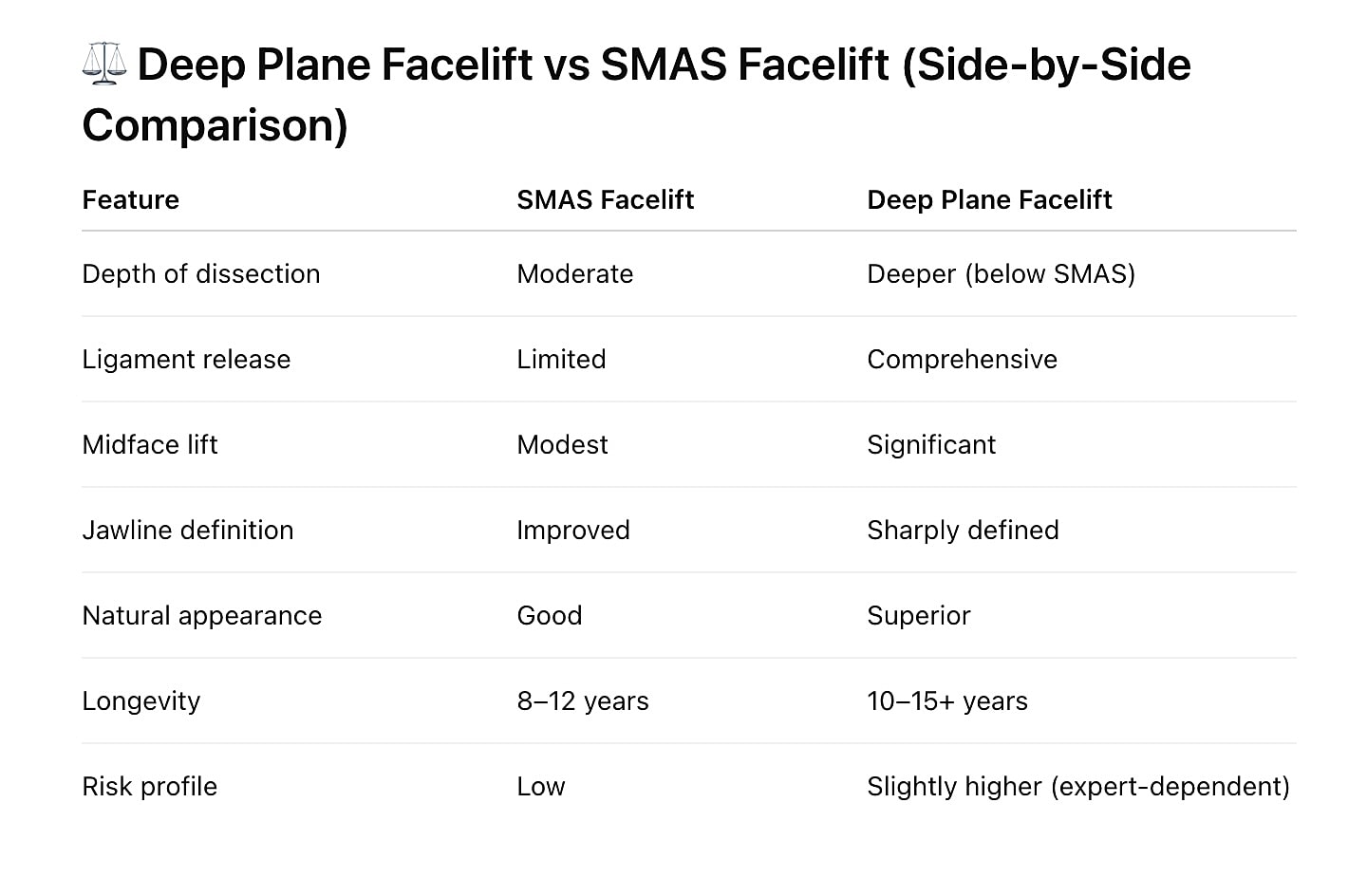
A SMAS facelift lifts and tightens the superficial muscle layer, while a deep plane facelift releases deeper ligament structures and repositions the face as a single unit. This allows for more natural and comprehensive rejuvenation.
It depends on the patient. However, deep plane facelifts are often considered superior for more advanced aging because they provide more natural, longer-lasting results, especially in the midface.
Deep plane facelifts typically last 10–15+ years, while SMAS facelifts last around 8–12 years, depending on skin quality and aging.
Yes. Because the deeper tissues are repositioned rather than pulled, deep plane facelifts tend to produce a more natural, “non-operated” appearance.
Both procedures are safe when performed by an experienced, board-certified plastic surgeon. However, deep plane facelifts require more advanced surgical expertise.
Patients with moderate to advanced facial aging, including jowls, midface descent, and deep folds, are often ideal candidates for a deep plane facelift.
Patients with mild to moderate aging who want improvement in the jawline and neck without extensive midface correction may benefit from a SMAS facelift.
Recovery is generally similar for both procedures. However, swelling may last slightly longer with deep plane facelifts due to the deeper level of dissection.
Yes. Deep plane facelifts provide significantly better midface lifting, including improvement in the cheeks and nasolabial folds.
Deep plane facelifts are technically more complex and require advanced training. Many surgeons are more comfortable performing SMAS techniques, which are less technically demanding.
Yes. Patients who previously had a SMAS facelift can often undergo a deep plane facelift later to achieve more comprehensive rejuvenation.
For many patients seeking natural, long-lasting, and more complete facial rejuvenation, a deep plane facelift is considered worth the investment.
Deep plane facelifts are widely regarded as the best technique for achieving natural-looking results because they restore anatomy rather than tightening skin.
Yes. By lifting the midface, deep plane facelifts can significantly soften nasolabial folds more effectively than SMAS techniques.