Facelift Swelling Timeline: What to Expect After Surgery
Medically Reviewed by Dr. Emmanuel De La Cruz, MD Double Board-Certified Plastic Surgeon in Houston, Texas
Medically Reviewed by Dr. Emmanuel De La Cruz, MD Double Board-Certified Plastic Surgeon in Houston, Texas
How long does swelling last after a facelift?
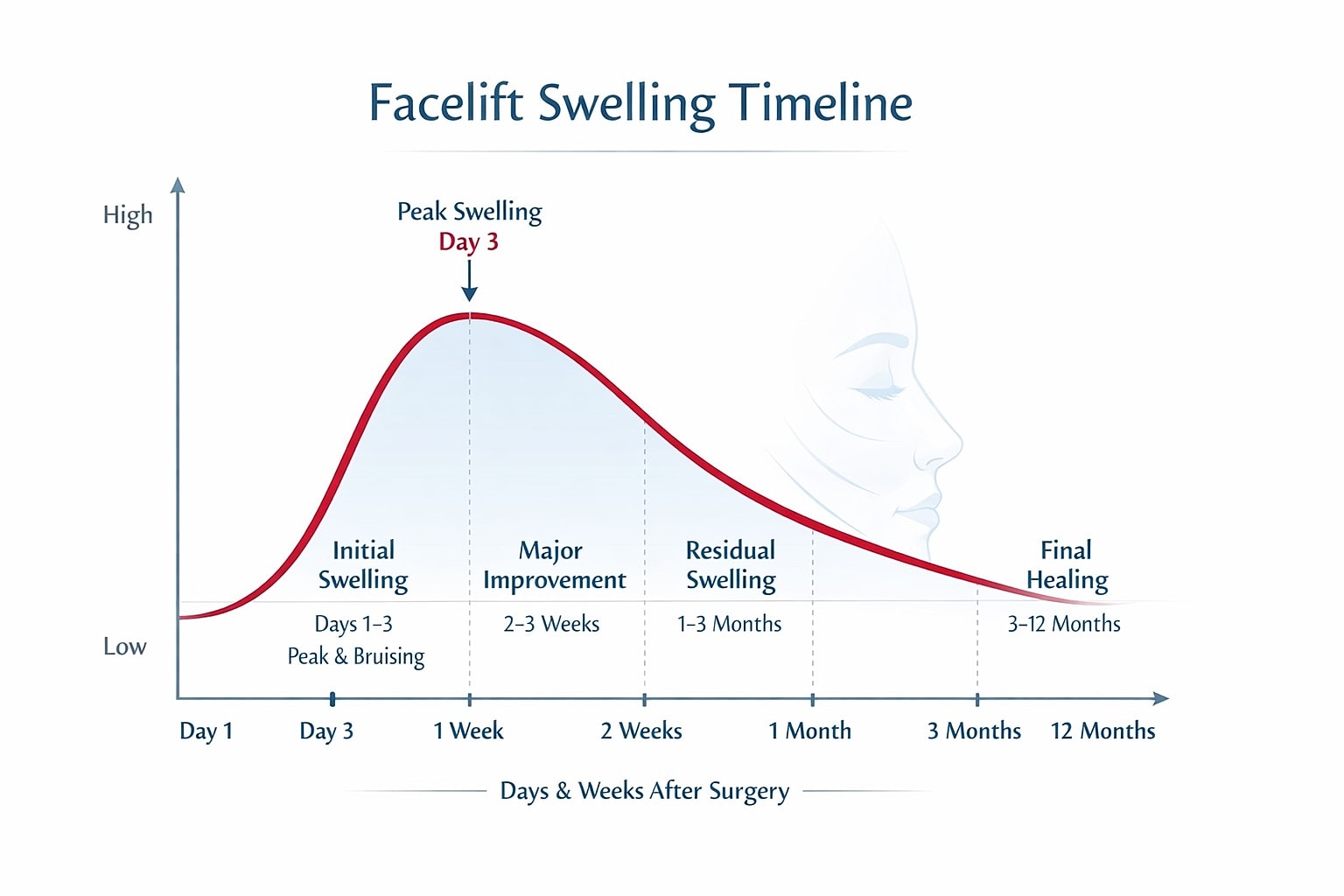
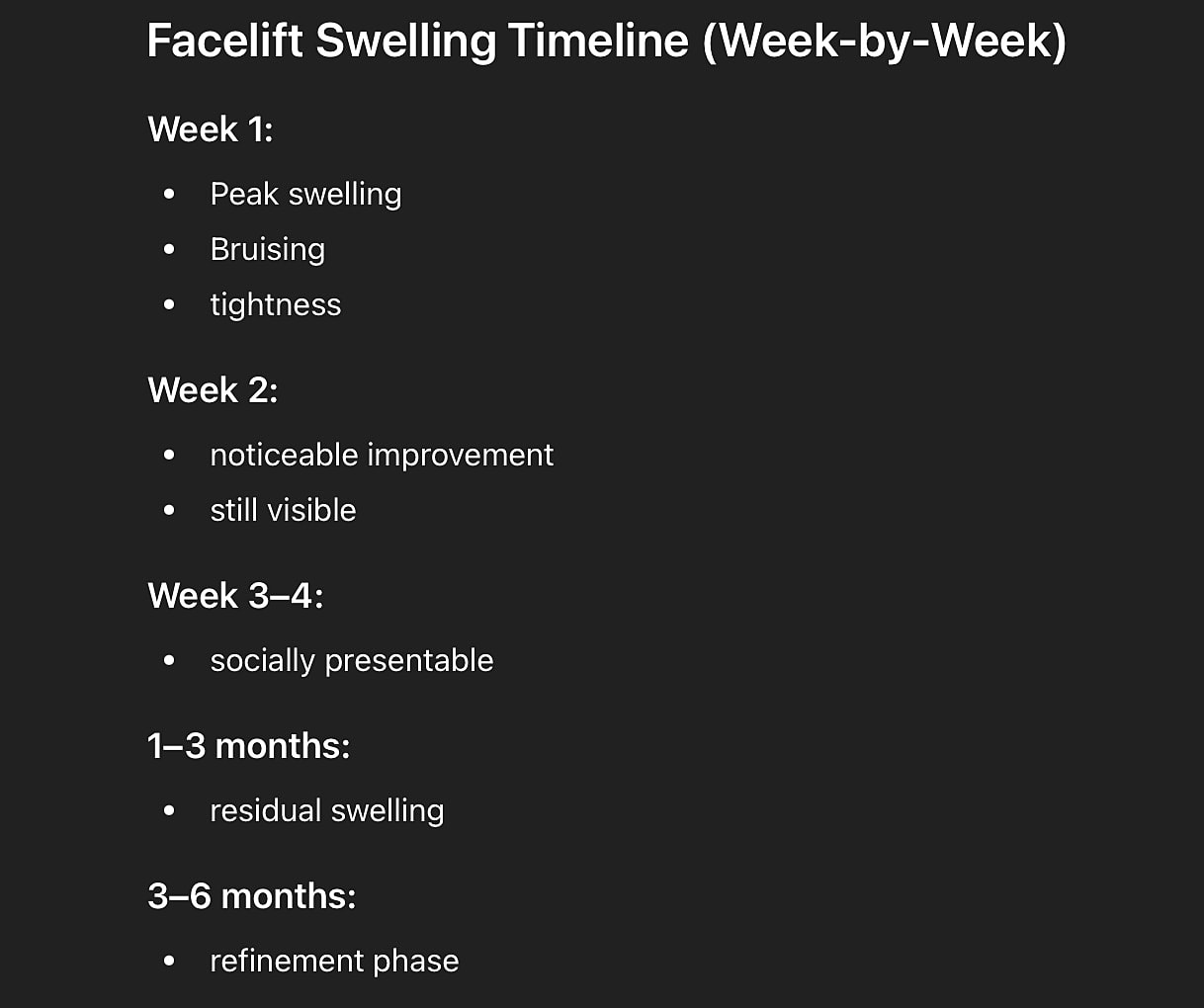
Swelling after a facelift in Houston typically lasts 2 to 3 weeks for most visible swelling, with residual swelling improving over 3 to 6 months. Final refinement can continue for up to one year, as tissues fully heal and settle.
Facelift swelling is one of the most common—and most misunderstood—parts of recovery.
While patients often focus on bruising or downtime, swelling is the single most important factor influencing how quickly your final results appear.
The key insight: Swelling does not resolve linearly. It follows a predictable biologic timeline.
Understanding this timeline allows patients to:
1 of 2
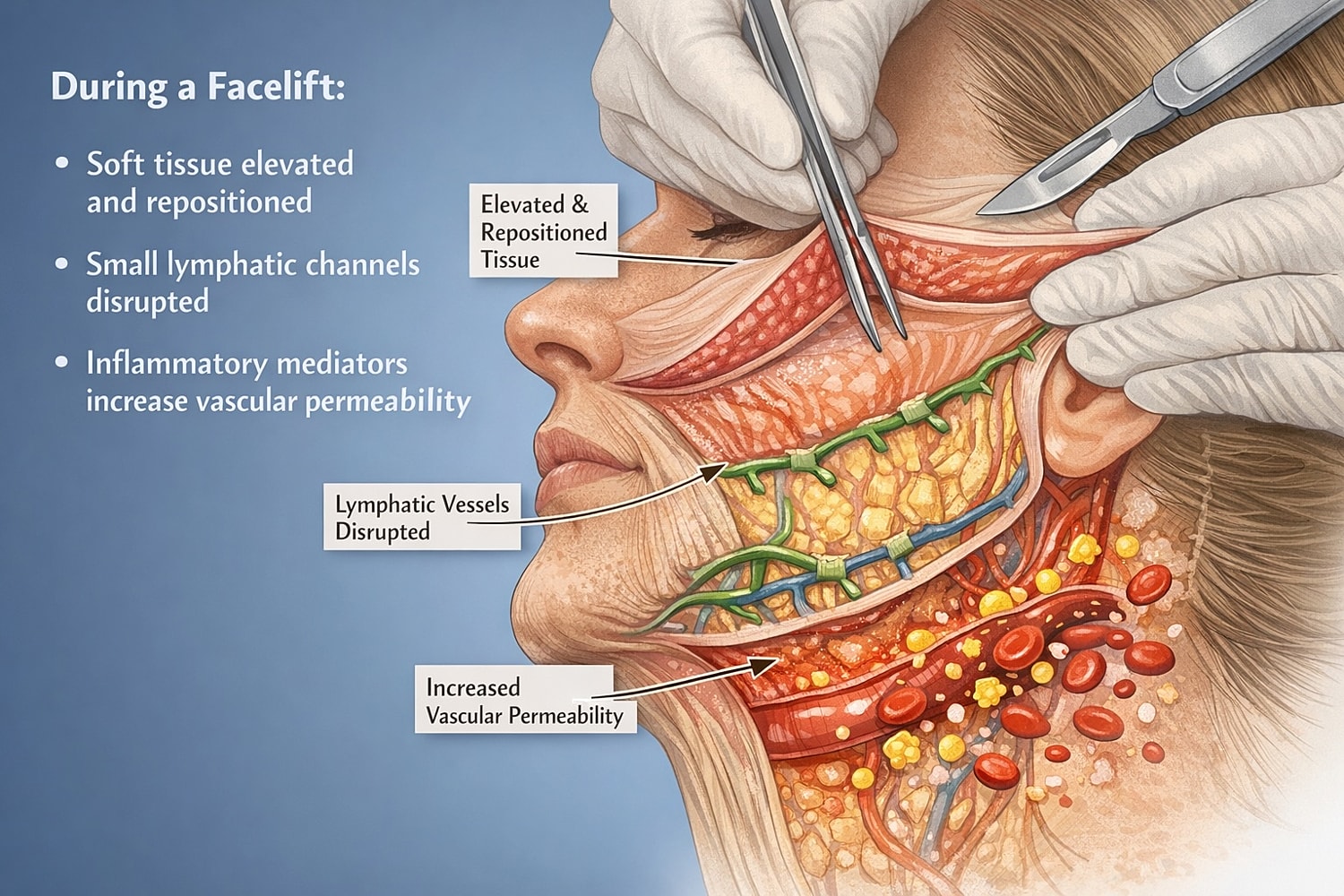
Swelling (postoperative edema) occurs as part of the body’s natural healing response.
During a facelift:
This leads to:
Importantly: Swelling is not a complication—it is a sign of healing.
This is when swelling is at its maximum.
What to expect:
Clinical insight: Swelling often peaks at 48–72 hours postoperatively, not immediately after surgery.
🔬 Clinical Breakdown
⚠️ Why This Happens
Peak swelling occurs due to:
Swelling begins to decrease, but remains noticeable.
What to expect:
Patient milestone:Most patients feel significantly better by the end of the first week.

This is a critical turning point.
What to expect:
Key takeaway:Most patients are socially presentable at 10–14 days.
Swelling continues to decrease steadily.
What to expect:
Clinical note:This is when patients begin to appreciate the true structural changes of the facelift.
Although patients look “normal,” healing is still ongoing.
What to expect:
Important concept:Up to 20–30% of swelling may still be present at 6–8 weeks.
This is when final refinement occurs.
What to expect:
Surgeon-level insight:The difference between a “good result” and an exceptional result often becomes apparent during this phase.
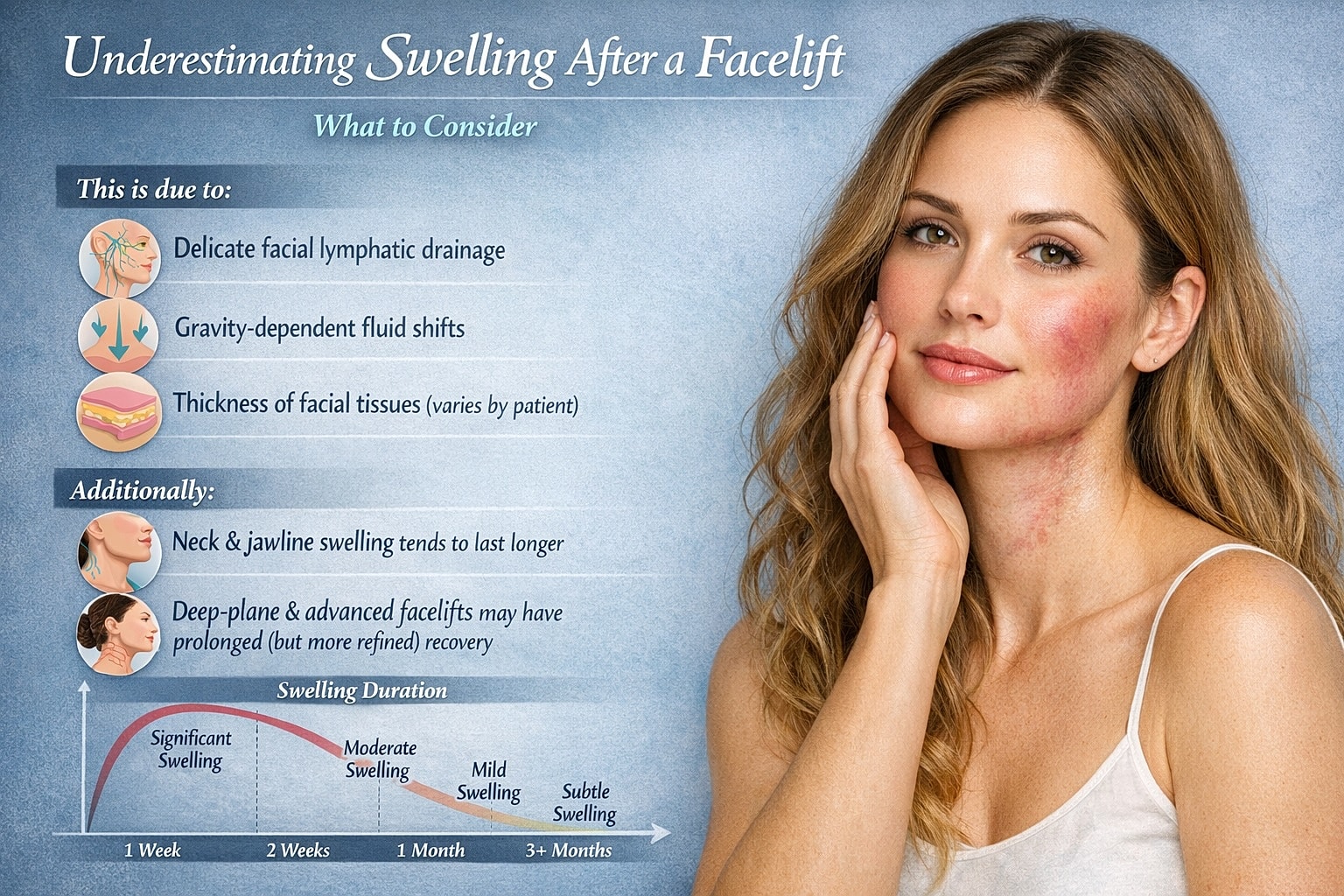
Many patients underestimate how long swelling persists.
This is due to:
Additionally:
Not all patients heal the same.
Key variables include:
Patient Factors
Surgical Factors
Postoperative Care

Evidence-based strategies to optimize recovery:

Sleep with head elevated for at least 2 weeks
Reduces fluid accumulation

First 48 hours
Helps minimize inflammatory swelling

Both increase fluid retention

Your plastic surgeon may prescribe steroid medications and/or a diuretic to reduce the swelling.

Can accelerate resolution in later phases
One of the most common concerns after facelift surgery is not just how long swelling lasts—but when it begins to look normal to others.
In most patients:
However, it is important to understand that:
👉 “Normal” does not mean fully healed
At this stage:
These changes are part of the natural healing process, not complications.
“Why is one side more swollen than the other?”
Mild asymmetry is completely normal and expected.
“Why does swelling come and go?”
Swelling fluctuates throughout the day due to:
“When will I look completely normal?”
Most swelling after a facelift follows a predictable, gradual pattern. However, abnormal swelling requires prompt attention, as it may indicate a complication.
Signs of Abnormal Swelling
You should contact your surgeon immediately if you experience:
Why Early Evaluation Matters
Timely recognition is critical. Early intervention can:
When in Doubt
If swelling feels:
It is always safer to contact your surgeon.
For patients researching facelift swelling timeline in Houston, it is critical to understand:
Swelling is influenced not just by healing—but by surgical precision.
Advanced techniques:
This results in:
About the Medical Reviewer Dr. Emmanuel De La Cruz is a double board-certified plastic surgeon specializing in advanced facial rejuvenation and body contouring procedures. 👉 [Learn more about Dr. Emmanuel De La Cruz]
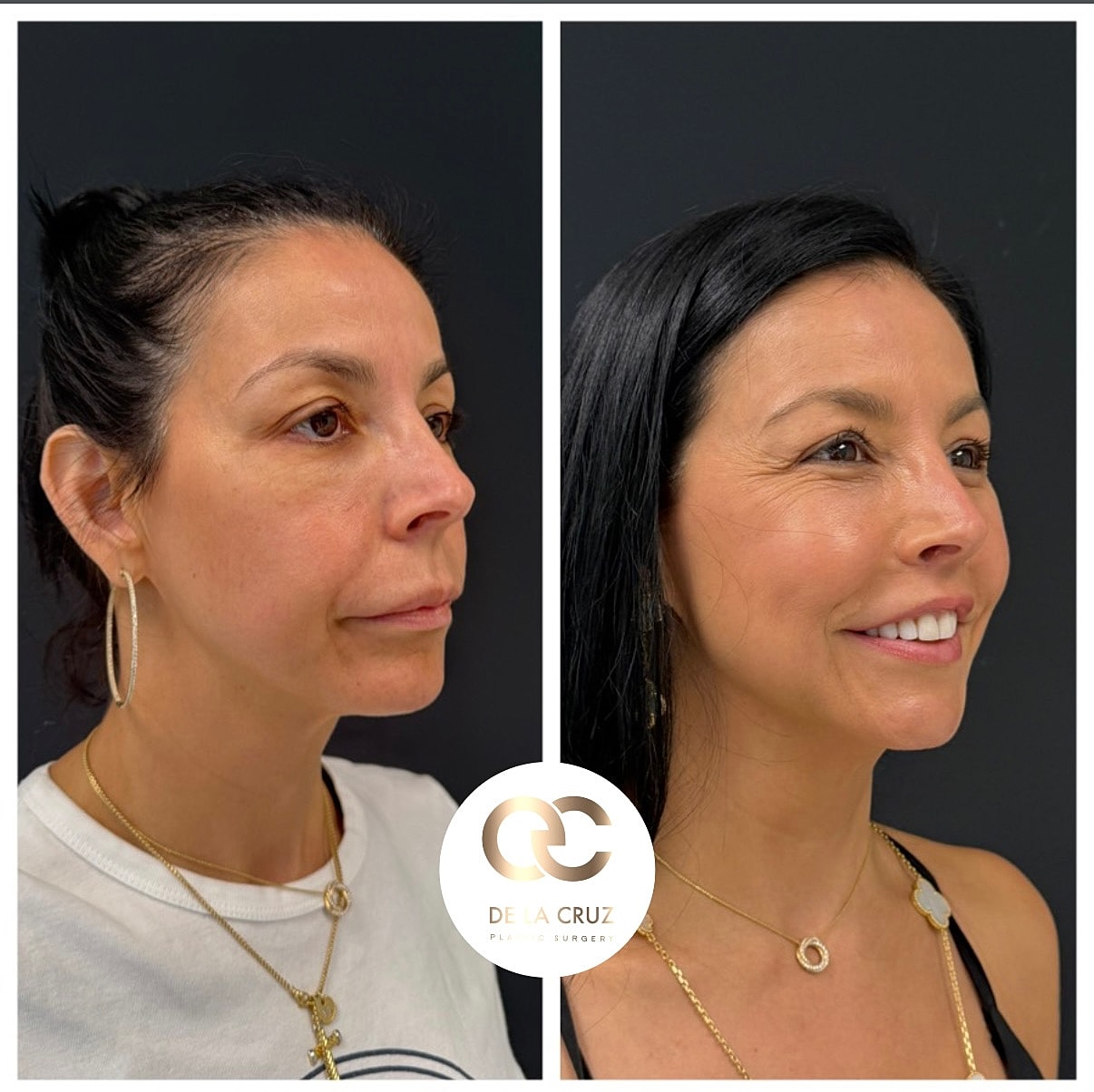
Both the deep plane facelift and ponytail facelift are among the most advanced procedures in facial rejuvenation—but achieving truly natural, refined results depends on elite training, technical mastery, and artistic vision.
The ponytail facelift, despite being minimally invasive, is one of the most technically demanding procedures in aesthetic surgery. It requires exceptional precision, advanced endoscopic expertise, and a deep understanding of facial anatomy.
Dr. Emmanuel De La Cruz trained directly under Chia Chi Kao in Beverly Hills—the innovator of the ponytail facelift—gaining firsthand experience in this highly specialized technique. He further refined his expertise in facial rejuvenation with Giovanni Botti in Italy, one of Europe’s leading authorities in the deep plane facelift.
What sets his work apart is the integration of his background as a portrait sculptor. By combining advanced surgical training with an artist’s eye for proportion, contour, and balance, he approaches each procedure as a form of three-dimensional facial sculpting.
👉 The result is not simply a lifted face—but a naturally restored, balanced, and timeless appearance.

Most swelling improves within 2 to 3 weeks, but subtle swelling can persist for 3 to 6 months as tissues fully heal.
Swelling typically peaks at 48 to 72 hours after surgery, not immediately after the procedure.
Yes. Mild swelling at 4 weeks is completely normal, especially in the jawline and neck.
Asymmetrical swelling is common due to differences in healing, fluid accumulation, and sleeping position.
Swelling varies, but most patients experience:
Yes. Residual swelling at 3 months is normal and part of the deeper healing process.
You can reduce swelling by:
Swelling fluctuates due to:
It is often worse in the morning and improves during the day.
Socially normal: 10–14 days
Mostly healed: 6–8 weeks
Final results: 3–6 months
Not usually. Persistent mild swelling is normal unless accompanied by:
Yes. Advanced techniques like deep plane facelift may have slightly longer swelling initially but often produce more natural, longer-lasting results.
Yes. Sleeping flat or on your side can worsen swelling. Patients should sleep with head elevated and on their back for at least 2 weeks.
About the Author
Dr. Emmanuel De La Cruz, MD is a double board-certified plastic surgeon in Houston, Texas, certified by the American Board of Plastic Surgery and the American Board of Surgery. He specializes in advanced facial rejuvenation procedures, including deep plane facelift, ponytail facelift (endoscopic facelift), neck lift, eyelid surgery, and facial fat transfer.
He has trained with internationally recognized leaders in facial surgery, including Chia Chi Kao in Beverly Hills and Giovanni Botti in Italy, allowing him to offer both minimally invasive and structural facelift techniques tailored to each patient.
In addition to his surgical expertise, Dr. De La Cruz is a portrait sculptor and painter, bringing an artistic understanding of facial balance, proportion, and harmony to his work. His approach focuses on achieving natural, refined, and undetectable results in facial rejuvenation.