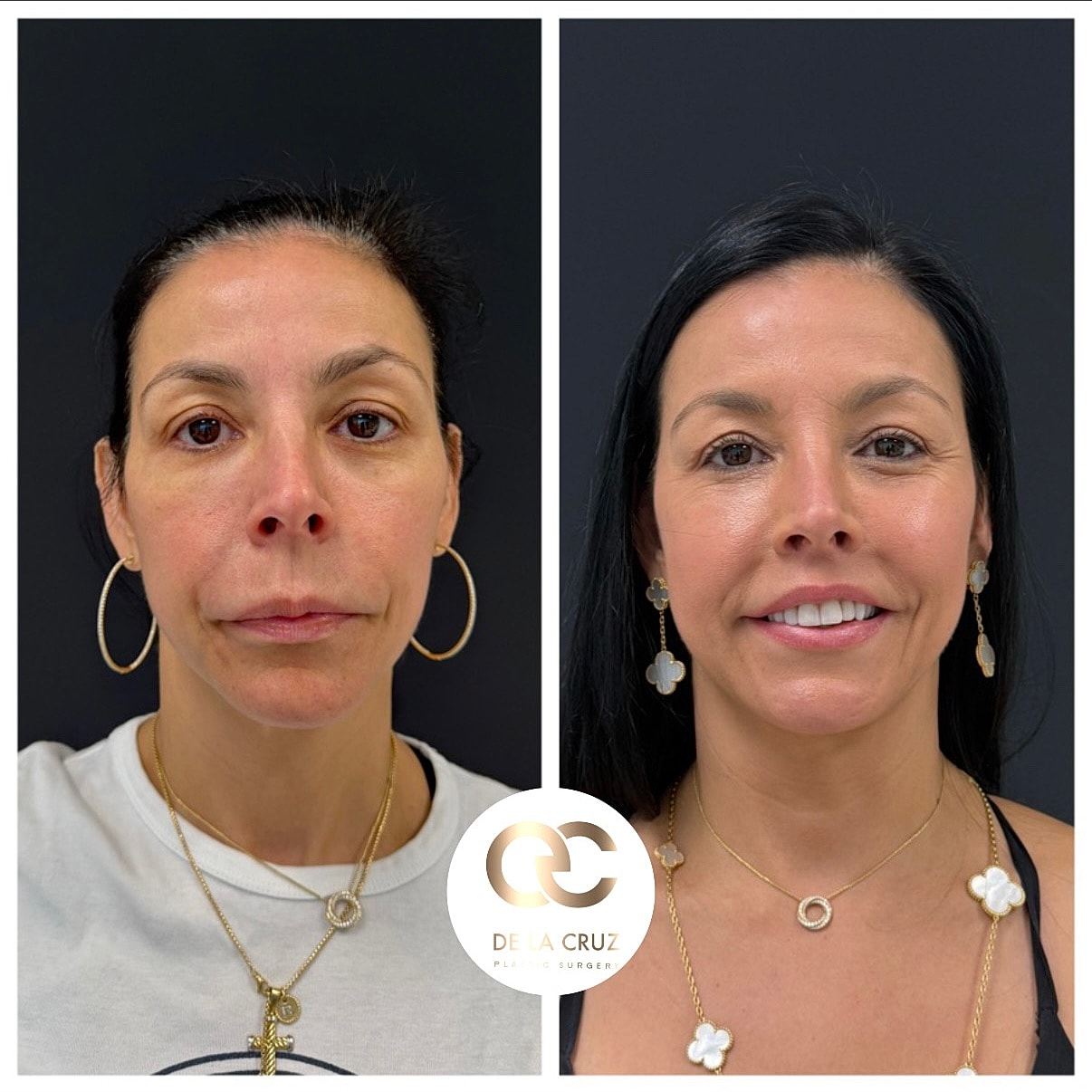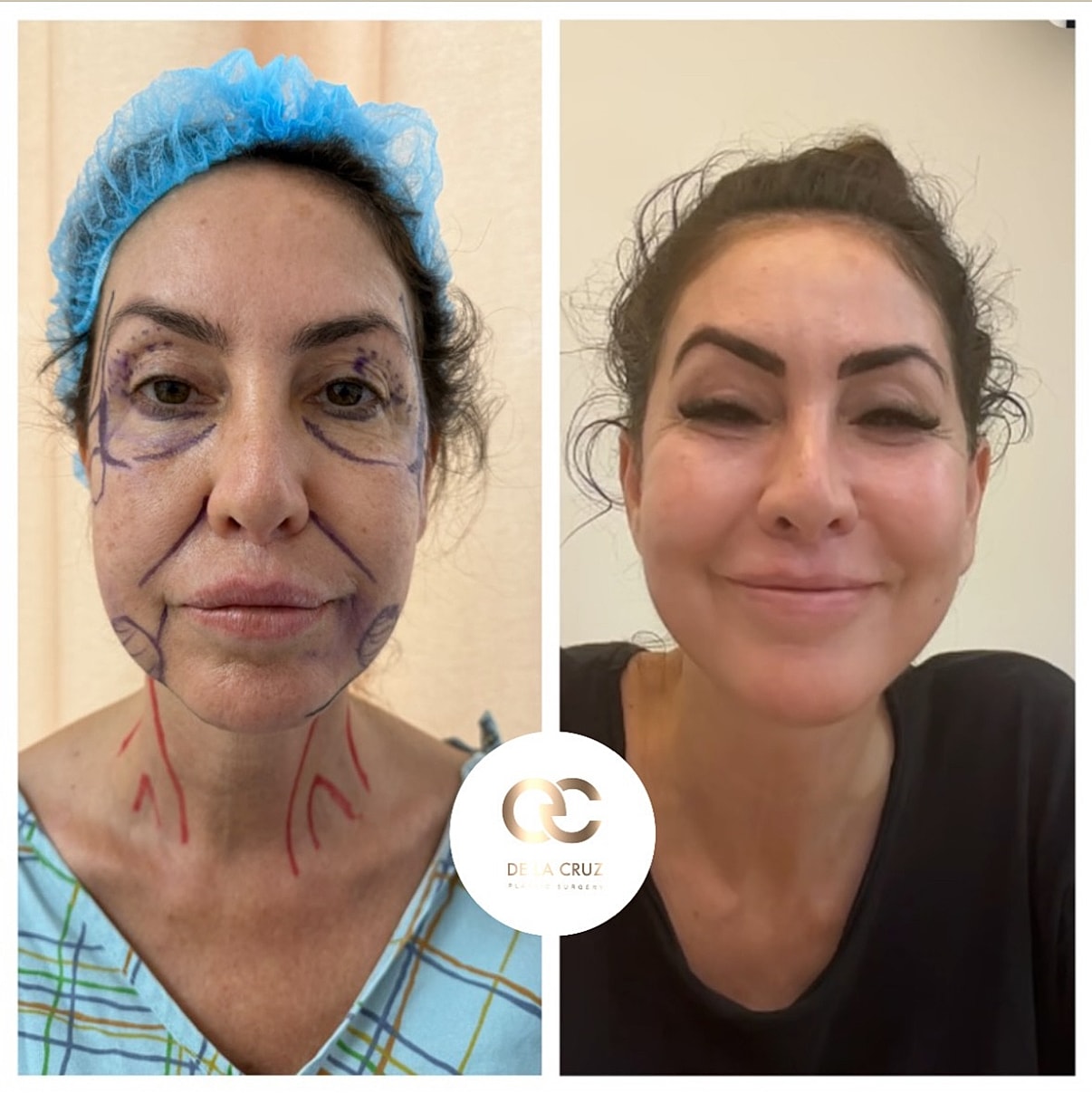
Facelift Recovery Timeline (Day-by-Day Guide) | Houston Facelift Expert
Medically Reviewed by Dr. Emmanuel De La Cruz, MD
Double Board-Certified Plastic Surgeon – Houston
Medically Reviewed by Dr. Emmanuel De La Cruz, MD
Double Board-Certified Plastic Surgeon – Houston
A facelift (rhytidectomy) is one of the most powerful procedures for restoring a youthful, natural facial appearance. Understanding the recovery timeline is critical for optimal healing, minimizing complications, and achieving the best aesthetic outcome.
This guide outlines a realistic, medically accurate timeline based on advanced facelift techniques, including deep plane and SMAS facelifts.
1 of 2
What to Expect
Key Instructions
What Happens
Clinical Insight
This phase reflects inflammatory response + fluid shifts, not complications.
Progress
Patient Milestone

What to Expect
Return to Life
Improvements
Key Insight
At this stage, most people won’t know you had surgery—they’ll just think you look refreshed.

What Happens
Clinical Note
This is when true surgical artistry becomes visible
Final Outcome
Longevity
Results typically last:
Evidence-Based Strategies for Optimal Healing
Facelift recovery is not solely dependent on surgical technique—it is profoundly influenced by postoperative behavior and physiologic support.
While healing follows a predictable biologic course, patients who adhere to evidence-based recovery strategies can experience:
Below are the most impactful, medically supported interventions.


Why It Matters
After surgery, fluid accumulation (edema) is driven by gravity and inflammatory changes. Elevating the head reduces hydrostatic pressure, promoting venous and lymphatic drainage.
Clinical Impact
How to Do It Properly

Why It Matters
Compression garments help eliminate “dead space” between tissues, allowing the skin to re-drape smoothly over underlying structures.
Clinical Benefits
Important Considerations

Why It Matters
Nicotine causes vasoconstriction, reducing blood flow to healing tissues. In facelift surgery, where skin viability is critical, this can have serious consequences.
Clinical Risks of Nicotine Use
Evidence-Based Recommendation
Key Insight
This is one of the most important modifiable risk factors in facelift recovery.

Why It Matters
Healing requires protein for:
Clinical Benefits
Practical Recommendations
Advanced Insight
Protein deficiency—even mild—can delay healing and prolong swelling.

Why It Matters
The lymphatic system plays a central role in clearing postoperative fluid and inflammatory byproducts.
Clinical Benefits
Important Considerations
Hydration
Adequate fluid intake supports circulation and cellular repair.
Activity Modification
Sun Protection
UV exposure can worsen scars and prolong redness.
Medication Compliance
Take all prescribed medications exactly as directed.
Facelift recovery is not uniform. While timelines provide a general framework, individual outcomes are shaped by a combination of surgical precision, biologic factors, and patient behavior.
Understanding these variables allows patients to set realistic expectations—and more importantly—optimize their results.
The technique used during a facelift is one of the most significant determinants of both recovery speed and aesthetic outcome.
Deep Plane vs. Traditional (SMAS) Facelift
Clinical Insight
Modern, anatomically precise techniques minimize:
This translates to:
Skin is not merely a covering—it is a dynamic, biologic organ that determines how well results are expressed.
Key Factors
Clinical Implications
Patients with:
Advanced Insight
Skin with preserved elasticity adapts more efficiently to repositioned structures, leading to:
Healing is a systemic process—not just a local one.
Influential Variables
Clinical Impact
Key Principle
A healthy 60-year-old may heal better than an unhealthy 40-year-old.
4. Postoperative Compliance: The Patient’s Role in the Outcom
Even the most technically perfect facelift can be compromised by poor postoperative care.
Critical Behaviors
Clinical Reality
Patients who strictly follow postoperative instructions experience:
High-Impact Insight
Postoperative compliance is one of the most controllable—and most underestimated—factors in recovery.
Perhaps the most important variable is the surgeon performing the procedure.
What Defines Expertise
Clinical Impact
An experienced surgeon can:
Outcome Difference
The distinction is not subtle—it is often the difference between:
Precision. Experience. Natural Results.
Choosing a facelift surgeon is one of the most important decisions a patient will make. The difference is not simply in the procedure—it is in the judgment, technique, and artistry behind it.
At its highest level, a facelift should not look like surgery. It should look like you—refreshed, refined, and naturally rejuvenated.
Double Board Certification: A Higher Standard of Training
Dr. Emmanuel De La Cruz is double board-certified in both:
This distinction reflects:
In aesthetic surgery, where millimeters matter, depth of training translates directly into precision and outcomes.
Advanced Facelift Techniques: Beyond Traditional Methods
Not all facelifts are performed the same.
Dr. De La Cruz specializes in advanced techniques, including:
Why This Matters
Modern techniques allow for:
The goal is not to “pull” the face—but to reposition underlying structures in a way that restores youthful anatomy.
A Reputation Built on Results and Trust
Patients choose Dr. De La Cruz not only for technical expertise—but for:
Facelift surgery is both science and artistry. Mastery requires both.

Modern facelift techniques are designed to:
The difference is not just in the result—but in how smoothly a patient arrives there.
About the Medical Reviewer Dr. Emmanuel De La Cruz is a double board-certified plastic surgeon specializing in advanced facial rejuvenation and body contouring procedures. 👉 [Learn more about Dr. Emmanuel De La Cruz]
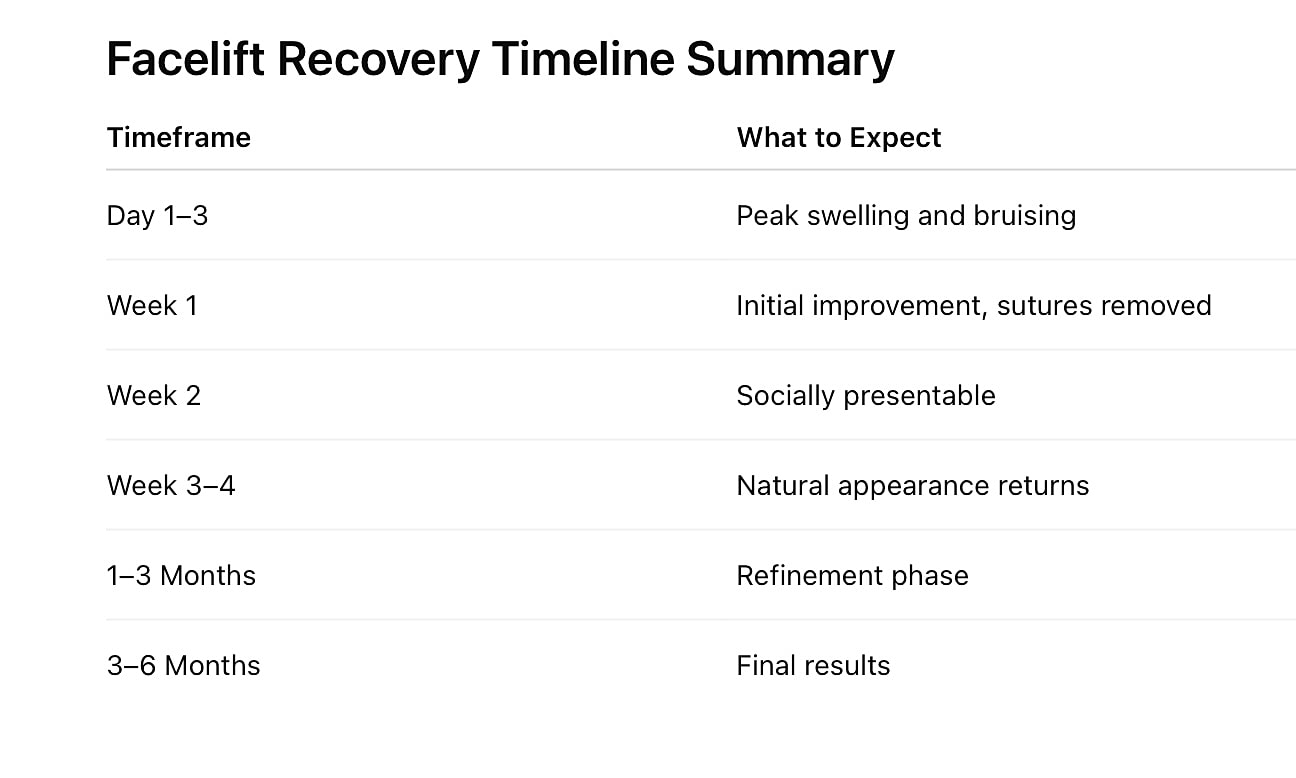
Most visible swelling improves within 2–3 weeks, while subtle swelling may persist up to 3 months.
Most patients return to non-physical work within 10–14 days.
A socially natural appearance typically occurs by 2–3 weeks.
Final results are usually appreciated between 3–6 months.
Discomfort is typically mild to moderate and well controlled with prescribed medication.
About the Author
Dr. Emmanuel De La Cruz, MD is a double board-certified plastic surgeon in Houston, Texas, certified by the American Board of Plastic Surgery and the American Board of Surgery. He specializes in advanced facial rejuvenation procedures, including deep plane facelift, ponytail facelift (endoscopic facelift), neck lift, eyelid surgery, and facial fat transfer.
He has trained with internationally recognized leaders in facial surgery, including Chia Chi Kao in Beverly Hills and Giovanni Botti in Italy, allowing him to offer both minimally invasive and structural facelift techniques tailored to each patient.
In addition to his surgical expertise, Dr. De La Cruz is a portrait sculptor and painter, bringing an artistic understanding of facial balance, proportion, and harmony to his work. His approach focuses on achieving natural, refined, and undetectable results in facial rejuvenation.