Deep Plane Facelift vs Ponytail Lift: Key Differences, Results, and Best Option in Houston
Medically Reviewed by Dr. Emmanuel De La Cruz, MD Double Board-Certified Plastic Surgeon in Houston, Texas
Medically Reviewed by Dr. Emmanuel De La Cruz, MD Double Board-Certified Plastic Surgeon in Houston, Texas
Facial aging occurs in predictable patterns, but the rate, severity, and areas affected vary from patient to patient. Some individuals experience early midface descent and brow heaviness, while others develop deeper structural changes such as jowling and neck laxity.
Two of the most advanced facial rejuvenation procedures available today are the deep plane facelift and the ponytail lift.
At De La Cruz Plastic Surgery in Houston, Texas, patients frequently ask:
👉 Which procedure is better? 👉 Which one looks more natural? 👉 Which one do I actually need?
The answer depends on your anatomy, aging pattern, and long-term goals.
1 of 2
Facial aging is not a single problem—it is a multidimensional process involving:
Yet many procedures address only one layer of aging.
At De La Cruz Plastic Surgery in Houston, Texas, the philosophy is different:
👉 Facial rejuvenation is not a single procedure—it is a customized, comprehensive strategy.
This is where the distinction between a standard facelift and a true transformation becomes evident.
Where Surgery Meets Art
What distinguishes exceptional facial rejuvenation from average results is not just technique—it is artistic vision.
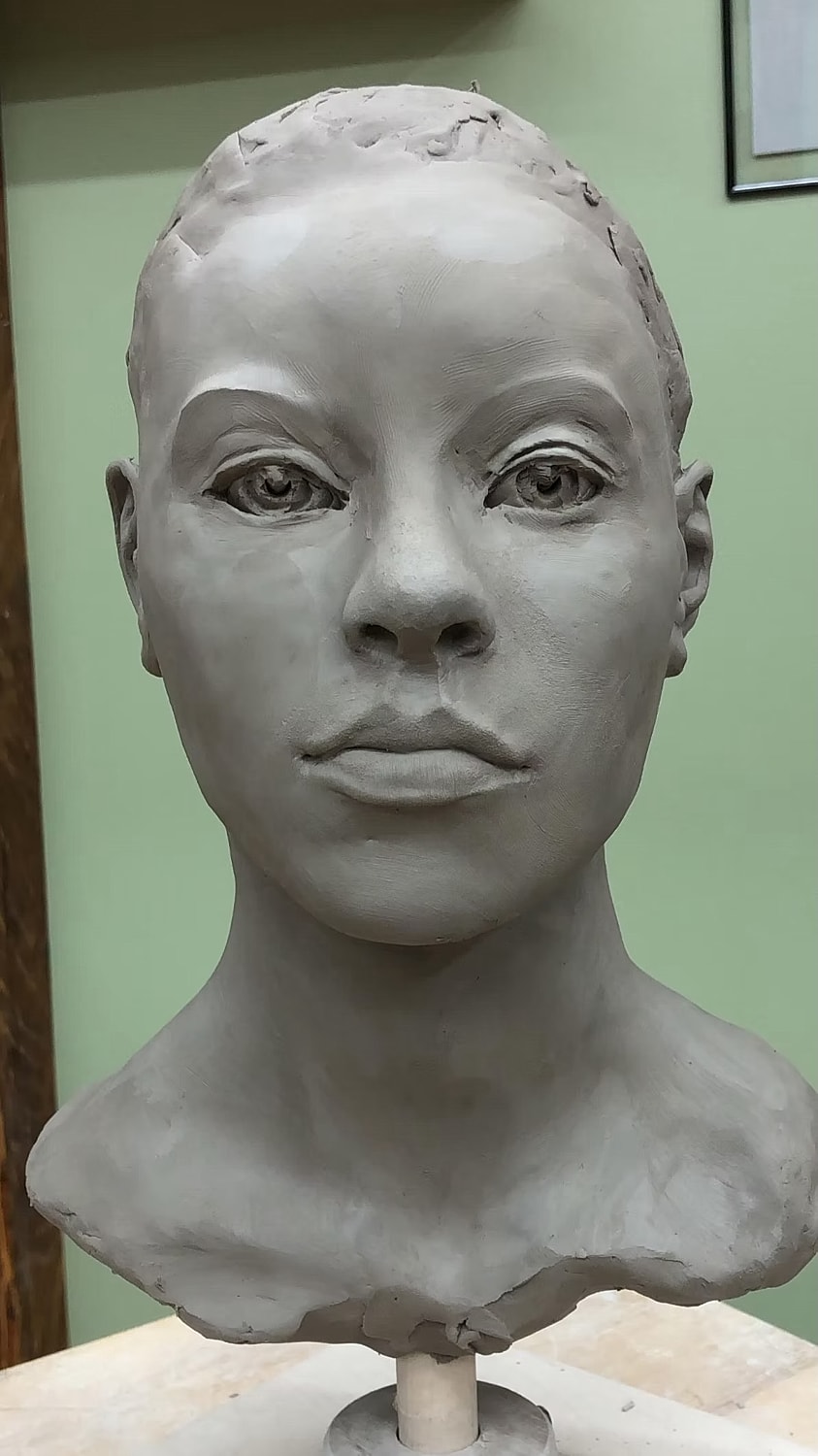
Dr. Emmanuel De La Cruz is not only a double board-certified plastic surgeon—he is also a trained artist.
This artistic training allows him to approach facial surgery differently:
👉 Not as a series of procedures 👉 But as the sculpting of living anatomy
Every contour, highlight, and transition is carefully considered to achieve:
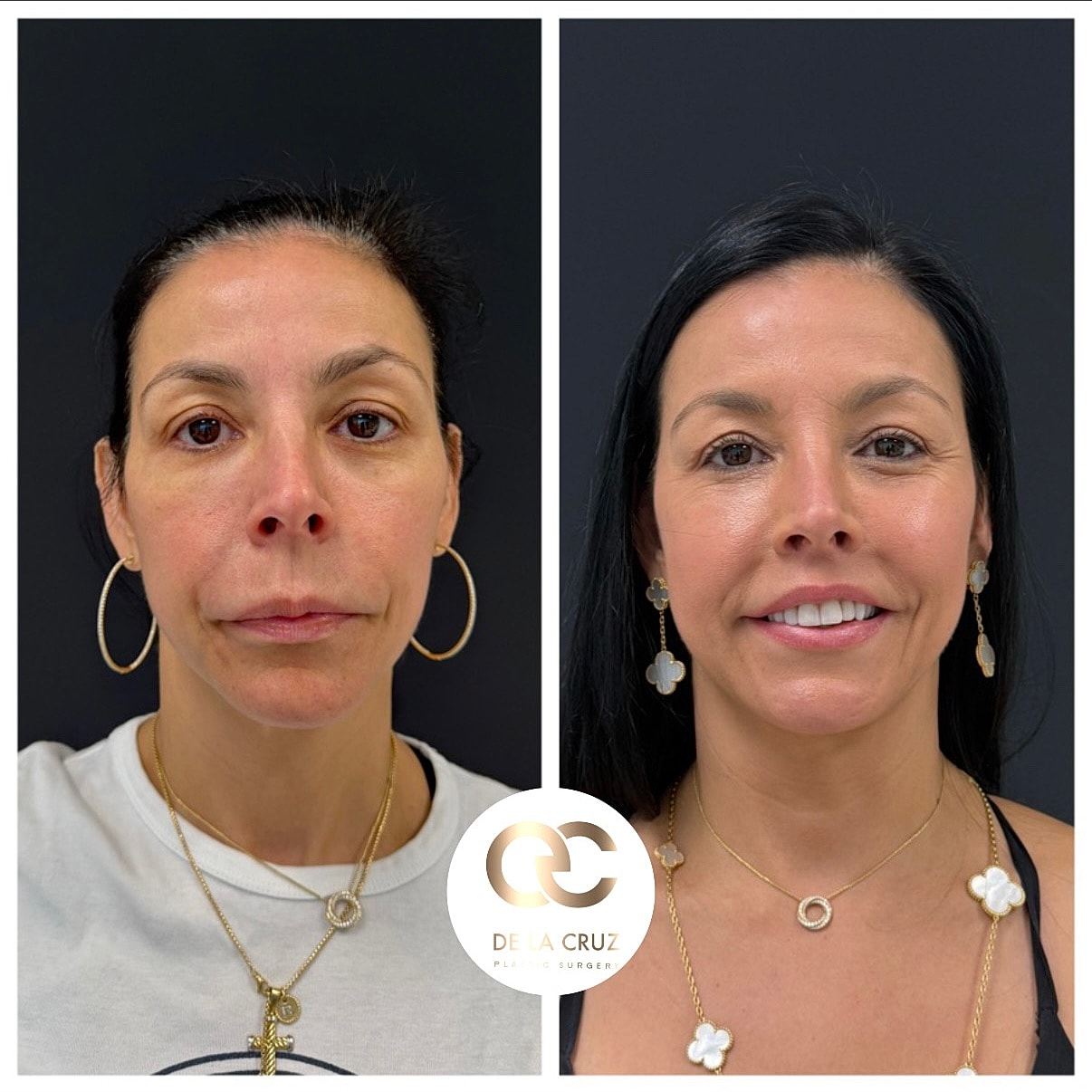
A deep plane facelift is an advanced surgical technique that lifts and repositions the deeper structures of the face—not just the skin.
Unlike traditional facelifts that pull the skin tighter, the deep plane approach works at a deeper level by:
This allows the face to be lifted as a natural, unified layer, resulting in:
Because the deeper tissues are repositioned rather than simply tightened, patients avoid the “pulled” or overdone look.
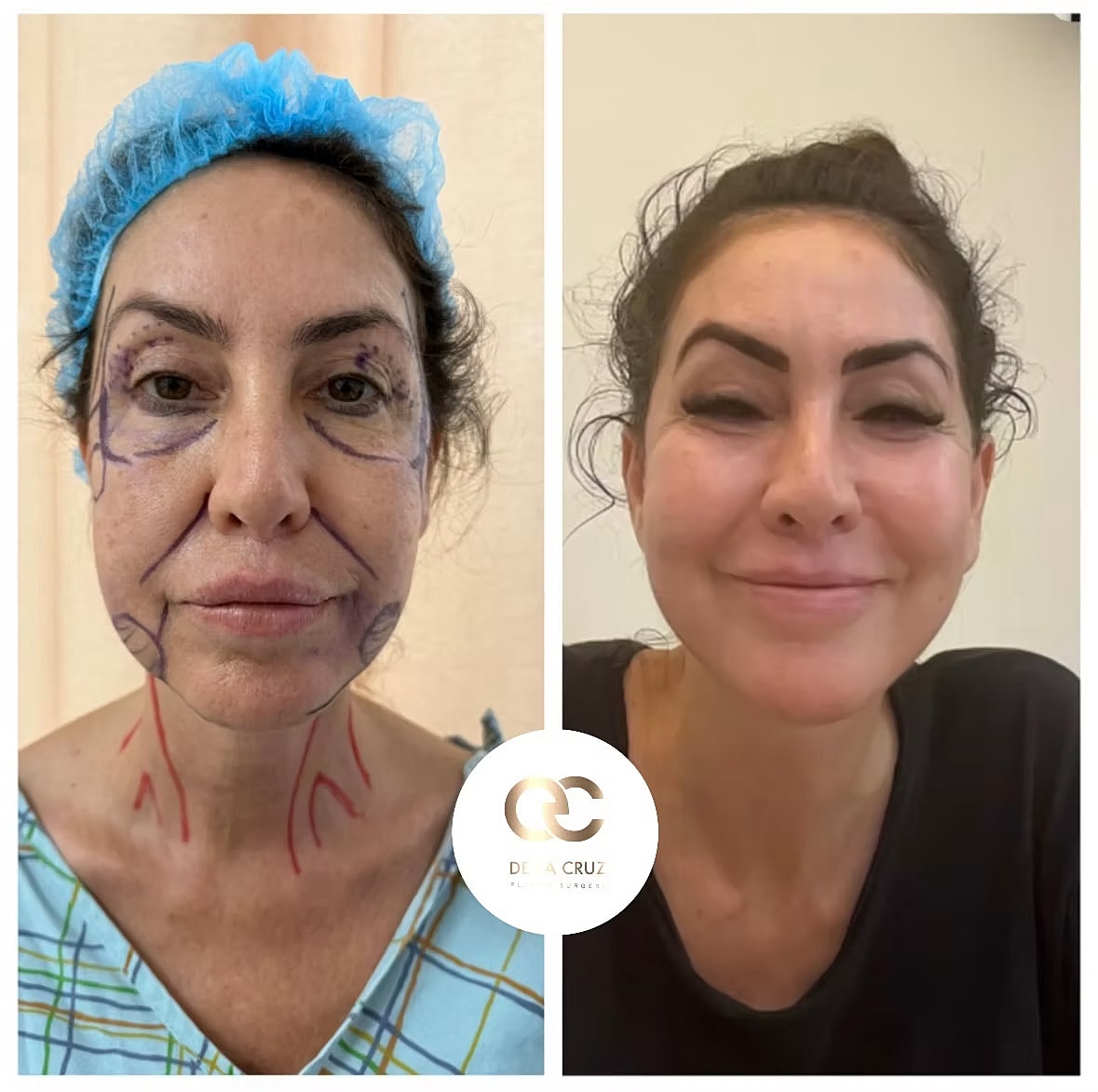

While the deep plane facelift addresses structural aging, facial aging also involves volume loss, skin quality changes, and periorbital aging.
For this reason, Dr. Emmanuel De La Cruz often combines the deep plane facelift with:
👉 This transforms the procedure from a single operation into a comprehensive facial restoration, addressing all layers of aging for a more natural and balanced result.
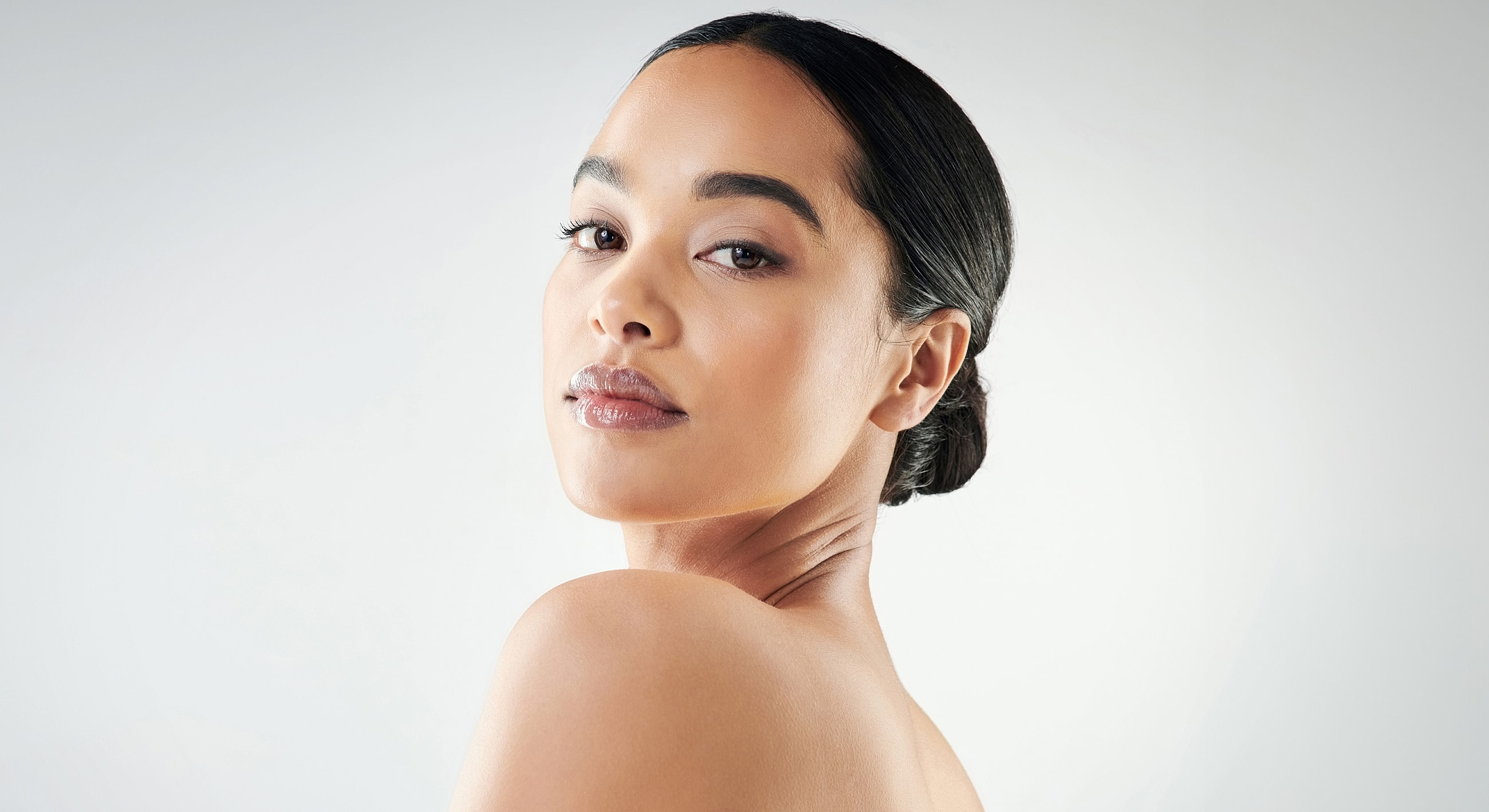

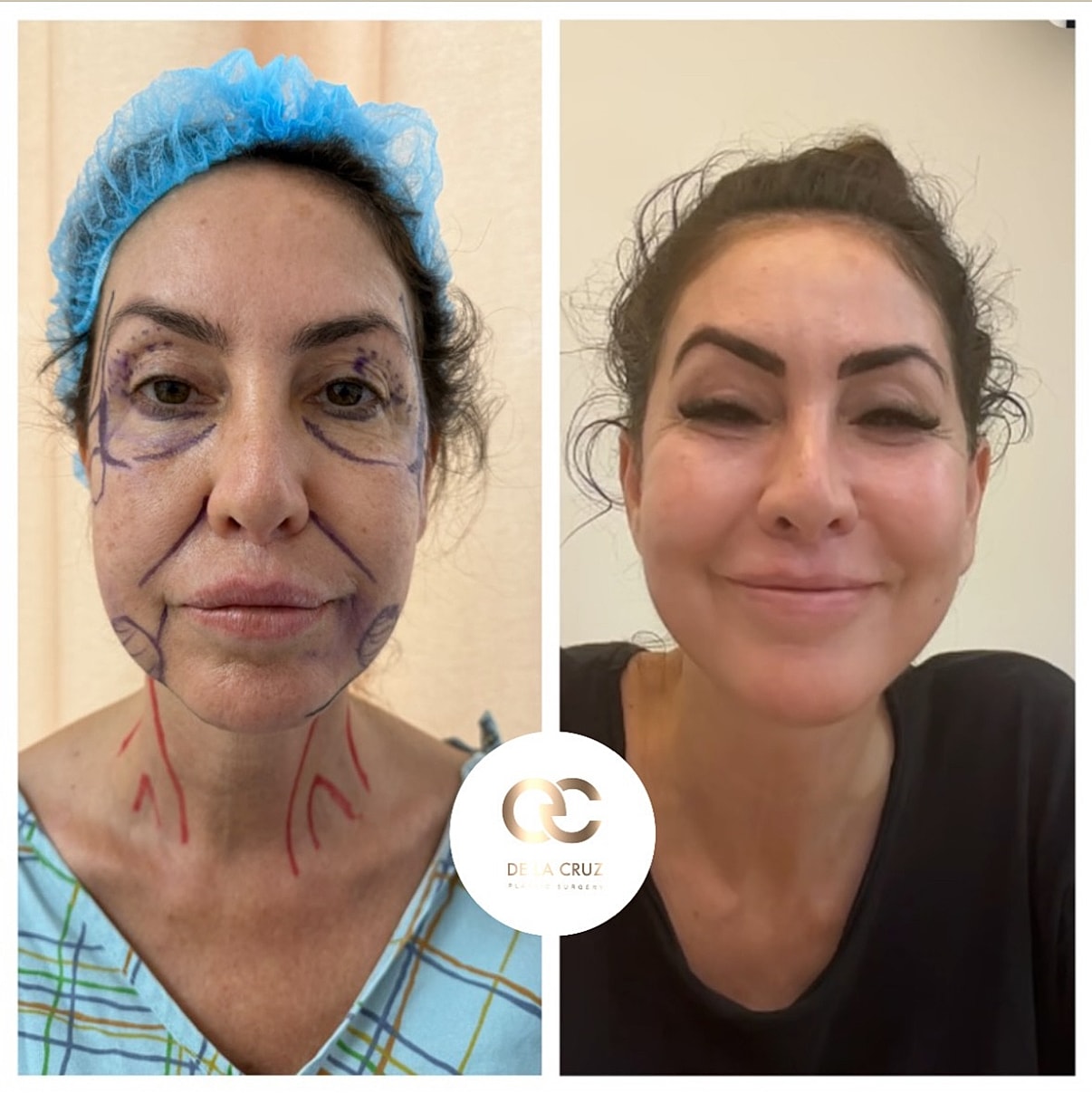
The ponytail facelift is a highly innovative, minimally invasive approach to facial rejuvenation performed using endoscopic techniques.
Unlike traditional facelifts, which require incisions around the ears, the ponytail facelift is performed through small, hidden incisions within the scalp. This means:
This technique focuses on vertical elevation of the face—lifting the cheeks, midface, and brow upward in a natural direction, similar to the effect seen when the hair is pulled back into a ponytail.
What Makes It Different
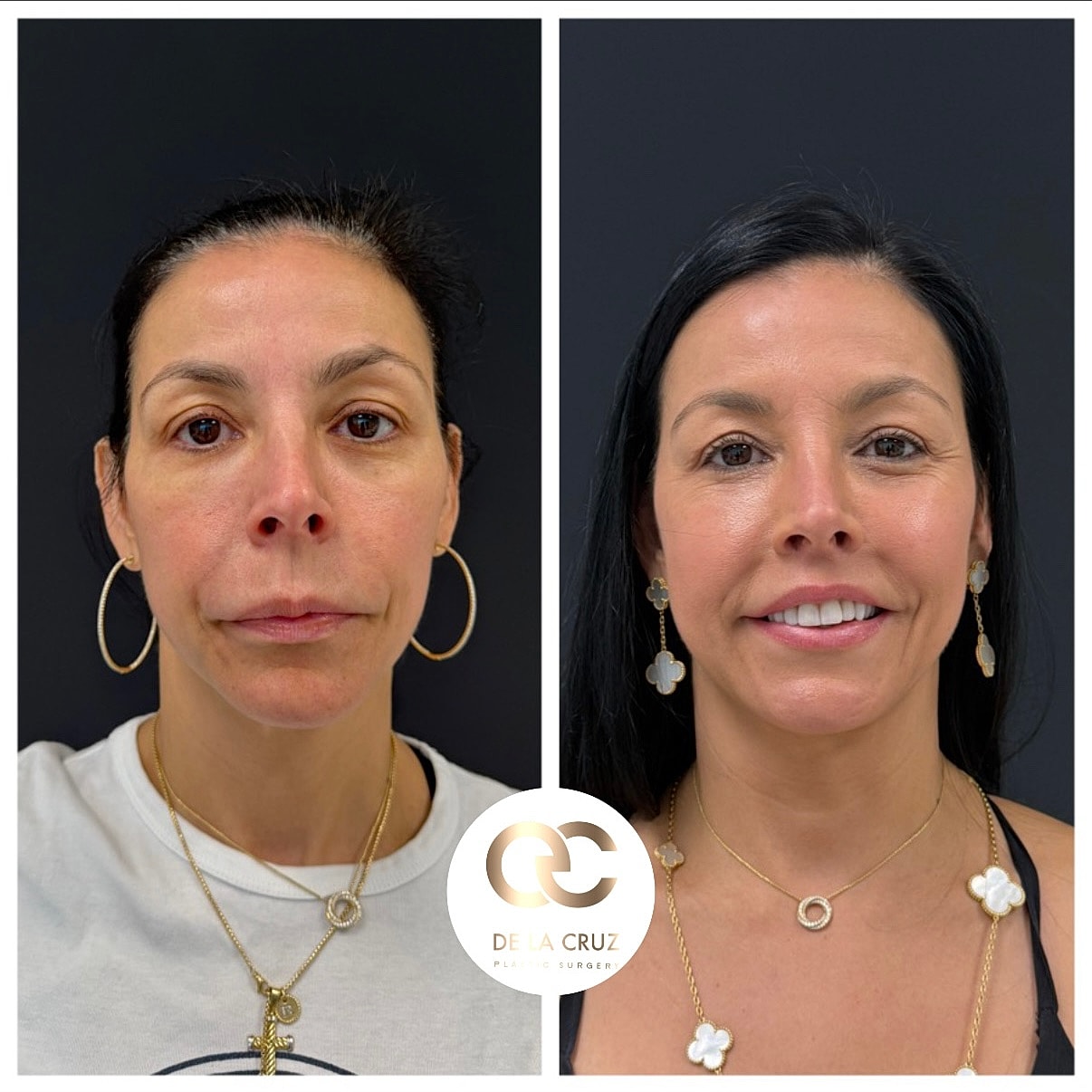
While the ponytail facelift provides elegant lifting, Dr. Emmanuel De La Cruz enhances results by combining it with:
👉 This approach addresses not only lift, but also volume, skin quality, and overall facial harmony, resulting in a more complete and natural rejuvenation.
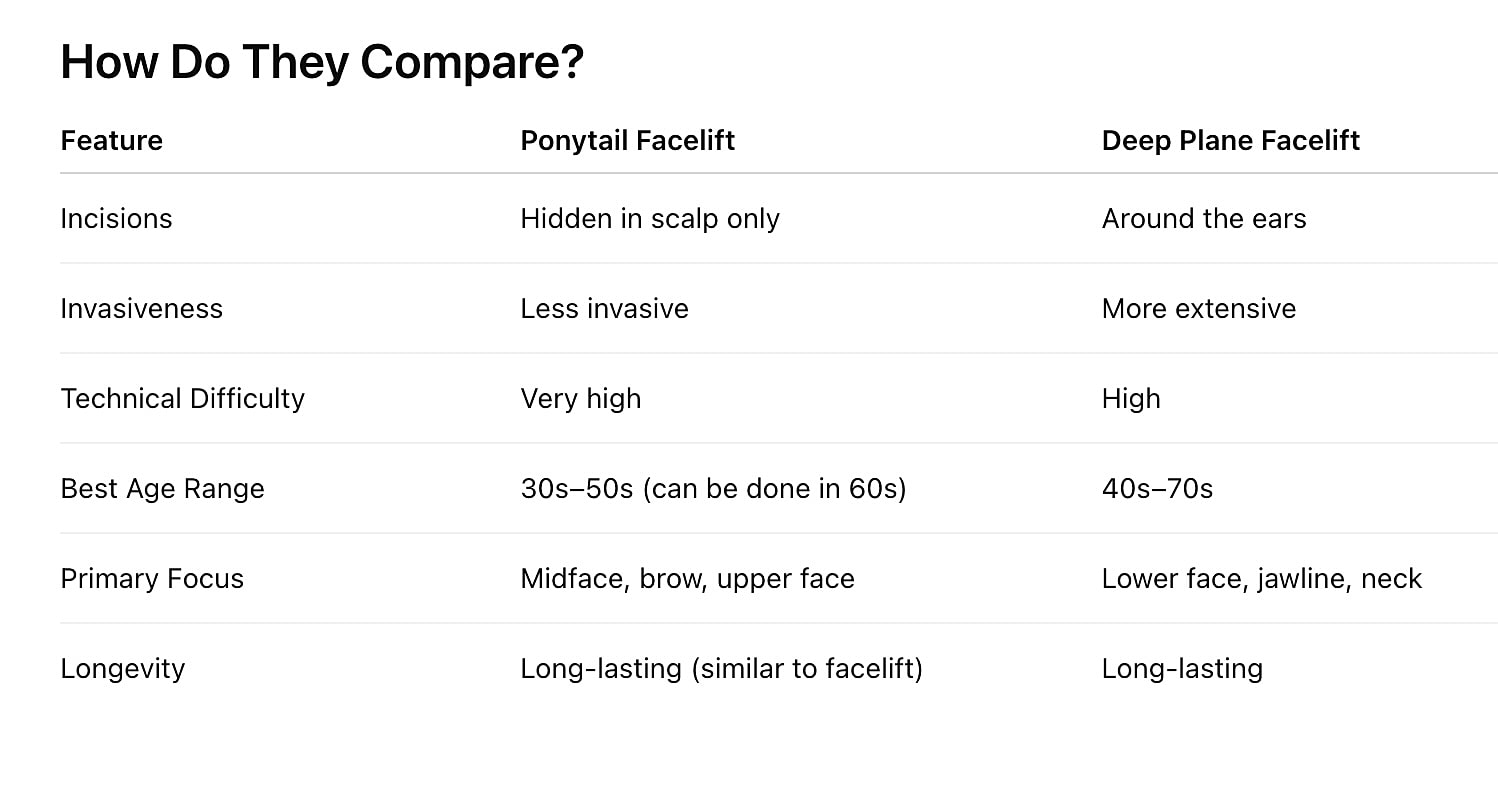
The deep plane facelift and ponytail facelift are both advanced facial rejuvenation techniques—but they differ in approach, invasiveness, and technical complexity.
Ponytail Facelift Houston (Endoscopic Approach)
The ponytail facelift is a highly specialized, endoscopic technique performed through small incisions hidden within the scalp, with no incisions around the ears.
Dr. Emmanuel De La Cruz was personally trained by Chia Chi Kao, the innovator of the ponytail facelift technique, reflecting a high level of specialized expertise.
Deep Plane Facelift in Houston
The deep plane facelift is a structural lifting procedure that repositions deeper facial tissues through incisions around the ears.
Both the deep plane facelift and ponytail facelift are among the most advanced procedures in facial rejuvenation—but achieving truly natural, refined results depends on elite training, technical mastery, and artistic vision.
The ponytail facelift, despite being minimally invasive, is one of the most technically demanding procedures in aesthetic surgery. It requires exceptional precision, advanced endoscopic expertise, and a deep understanding of facial anatomy.
Dr. Emmanuel De La Cruz trained directly under Chia Chi Kao in Beverly Hills—the innovator of the ponytail facelift—gaining firsthand experience in this highly specialized technique. He further refined his expertise in facial rejuvenation with Giovanni Botti in Italy, one of Europe’s leading authorities in the deep plane facelift.
What sets his work apart is the integration of his background as a portrait sculptor. By combining advanced surgical training with an artist’s eye for proportion, contour, and balance, he approaches each procedure as a form of three-dimensional facial sculpting.
👉 The result is not simply a lifted face—but a naturally restored, balanced, and timeless appearance.

Most facelift techniques focus on:
Dr. De La Cruz approaches facial rejuvenation as:
👉 Three-dimensional sculpting of the face
This includes:
The result is not a “tightened face”—but a naturally rejuvenated one.
Deep Plane Facelift Combination:
Ponytail Facelift Combination:
Patients seeking facelift surgery in Houston or advanced facial rejuvenation benefit from:
At De La Cruz Plastic Surgery, the goal is not simply to perform surgery—but to achieve facial harmony and natural beauty.
About the Medical Reviewer Dr. Emmanuel De La Cruz is a double board-certified plastic surgeon specializing in advanced facial rejuvenation and body contouring procedures. 👉 [Learn more about Dr. Emmanuel De La Cruz]
Because facial rejuvenation is not just technical—it requires understanding proportion, symmetry, and balance.
in many cases, yes. It allows for complete facial rejuvenation rather than partial correction.
Yes. The focus is on refinement and balance, not exaggeration.
The best procedure is the one tailored to your anatomy and goals.
Neither is universally “better.” The ponytail facelift is ideal for early aging and subtle lifting, while the deep plane facelift is better for more advanced aging involving the jawline and neck. The best procedure depends on your anatomy and goals.
Both techniques can produce natural results when performed correctly. Natural outcomes depend more on surgical expertise and proper technique than the specific procedure itself.
No visible scars around the ears. Incisions are hidden within the scalp, making them discreet and difficult to detect.
Incisions are typically placed around the ear and hairline, and are carefully designed to heal well and remain minimally visible.
Yes, it is less invasive in terms of skin dissection. However, it is technically more complex and demanding to perform.
Recovery varies depending on the combination of procedures performed.
Both procedures offer long-lasting results, typically around 10 years or more, depending on aging, lifestyle, and skin quality.
No, the ponytail facelift has limited effect on the neck. Patients with neck laxity often benefit more from a deep plane facelift with neck lift.
Yes. Many patients choose a ponytail facelift earlier and transition to a deep plane facelift as aging progresses.
Because facial aging involves multiple layers:
Combining procedures creates a more complete and natural result.
Both procedures are safe when performed by an experienced surgeon. The ponytail facelift is less invasive, but its technical complexity requires advanced expertise.
Because even small differences in technique can significantly affect:
👉 In facial surgery, millimeters matter.
About the Author
Dr. Emmanuel De La Cruz, MD is a double board-certified plastic surgeon in Houston, Texas, certified by the American Board of Plastic Surgery and the American Board of Surgery. He specializes in advanced facial rejuvenation procedures, including deep plane facelift, ponytail facelift (endoscopic facelift), neck lift, eyelid surgery, and facial fat transfer.
He has trained with internationally recognized leaders in facial surgery, including Chia Chi Kao in Beverly Hills and Giovanni Botti in Italy, allowing him to offer both minimally invasive and structural facelift techniques tailored to each patient.
In addition to his surgical expertise, Dr. De La Cruz is a portrait sculptor and painter, bringing an artistic understanding of facial balance, proportion, and harmony to his work. His approach focuses on achieving natural, refined, and undetectable results in facial rejuvenation.