(832) 776-1134 Schedule a Consultation

Paradoxical Adipose Hyperplasia (PAH) Treatment in Houston

We provide a path to restoration for those affected by the unexpected complications of "fat freezing." Dr. De La Cruz employs advanced surgical techniques to meticulously remove PAH tissue and restore the smooth, natural contours you originally desired.

Model posing in neutral-colored lingerie.
De La Cruz Logo

What Is Paradoxical Adipose Hyperplasia?

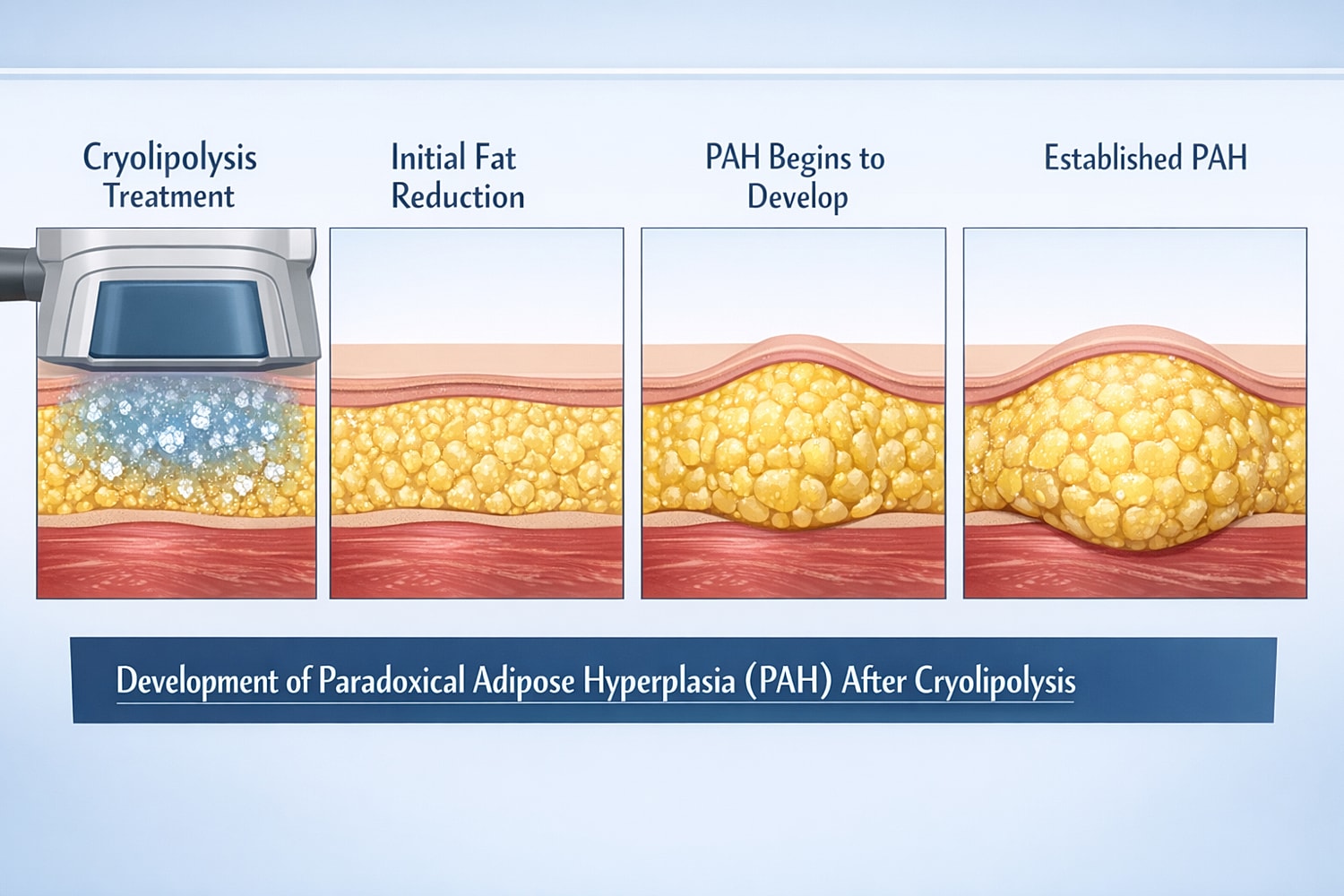
Paradoxical adipose hyperplasia (PAH) is a rare complication that can occur after cryolipolysis treatments such as CoolSculpting, a non-surgical fat reduction procedure. Instead of shrinking, the treated fat tissue gradually becomes larger, firmer, and more prominent in the area where the treatment was performed.

PAH typically develops several months after the procedure, often between two and five months following cryolipolysis. Patients may notice a firm bulge or enlarged fat in an area previously treated with cryolipolysis, sometimes described as fat becomes larger after CoolSculpting instead of smaller. Unlike the expected outcome of fat reduction, the affected tissue becomes thickened and resistant to diet or exercise.

Although the exact cause of paradoxical adipose hyperplasia is not fully understood, it is believed that exposure to extreme cold may trigger hypertrophy and expansion of fat cells rather than fat breakdown in susceptible individuals. While PAH is uncommon, the condition has been increasingly recognized as a potential complication of cryolipolysis treatments.

Importantly, paradoxical adipose hyperplasia does not typically resolve on its own. Treatment often involves liposuction or surgical body contouring procedures designed to remove the enlarged fatty tissue and restore normal body contour.

Patients who develop unusual firmness, enlargement, or bulging after cryolipolysis should seek evaluation by a board-certified plastic surgeon experienced in the diagnosis and treatment of paradoxical adipose hyperplasia to determine the most appropriate treatment options.

Patients who notice unusual firmness, enlargement, or a persistent bulge after cryolipolysis should seek evaluation by a board-certified plastic surgeon experienced in the diagnosis and treatment of paradoxical adipose hyperplasia. At De La Cruz Plastic Surgery in Houston, Texas, patients from Houston, Cypress, Katy, Sugar Land, The Woodlands, and throughout the United States travel for consultation and treatment of PAH using advanced body contouring techniques.

Woman in lace lingerie posing indoors.

Why is my fat bigger after CoolSculpting?

What Causes Paradoxical Adipose Hyperplasia?

The exact cause of paradoxical adipose hyperplasia (PAH) is not fully understood, but it is believed to represent an uncommon biological response following cryolipolysis treatments, a non-surgical fat reduction technique that uses controlled cooling to reduce localized fat deposits. In most patients, cryolipolysis works by triggering gradual breakdown of fat cells, which are then naturally eliminated by the body over time.

In rare cases, however, patients may notice that the fat becomes larger rather than smaller after cryolipolysis treatments such as CoolSculpting®. This phenomenon is known as paradoxical adipose hyperplasia, in which the treated area may gradually develop a firm bulge or enlargement instead of the expected fat reduction.

Although the precise mechanism is still being studied, researchers believe that cold exposure during cryolipolysis may stimulate hypertrophy and expansion of adipose tissue in certain individuals. Rather than undergoing normal fat-cell breakdown, the adipose tissue in the treated area may become thicker, more fibrotic, and more prominent, creating a visible contour change. The reason this response occurs in some patients but not others remains unclear.

Several factors have been proposed as possible contributors to the development of PAH, including individual biological responses to cold exposure, genetic predisposition, and differences in tissue metabolism. While the condition is considered rare, awareness has increased as the number of cryolipolysis procedures performed worldwide has grown.

Although paradoxical adipose hyperplasia is uncommon, it is important for patients to recognize that persistent enlargement or firmness in a previously treated area should be evaluated by a board-certified plastic surgeon experienced in diagnosing and treating PAH, so that appropriate treatment options can be discussed.

Solid dark background with no discernible image content.

Key Facts About Paradoxical Adipose Hyperplasia

Rare complication of cryolipolysis

Causes fat to enlarge instead of shrink

Often appears months after treatment

Usually corrected with liposuction.

Why Fat Can Become Enlarged After Cryolipolysis

Paradoxical adipose hyperplasia (PAH) is an uncommon condition in which fatty tissue enlarges rather than shrinks following cryolipolysis treatments, a non-surgical fat reduction technique often referred to as fat freezing. Although cryolipolysis is designed to reduce localized fat deposits by exposing fat cells to controlled cooling, in rare cases the treated adipose tissue may respond differently.

The exact cause of PAH is not fully understood. Researchers believe the condition may result from an abnormal biological response of fat cells to cold exposure. Instead of undergoing gradual breakdown and absorption by the body, the adipose tissue in the treated area may expand, thicken, or become more fibrotic, leading to a visible enlargement of the treated region.

Several mechanisms have been proposed to explain why paradoxical adipose hyperplasia occurs, including:

  • Hypertrophy of adipocytes, where fat cells increase in size rather than decreasing
  • Fibrotic changes in adipose tissue, which may cause the treated area to feel firm or dense
  • Altered tissue response to cold exposure, affecting how the body processes the treated fat cells

Patients who develop PAH often notice a firm bulge or enlargement in the area that previously underwent cryolipolysis treatment. Because surrounding tissues may respond normally to the procedure, the enlarged region can become more noticeable and create a contour irregularity.

While paradoxical adipose hyperplasia is considered uncommon, it is a recognized condition following cryolipolysis treatments. When PAH occurs, surgical body contouring procedures such as liposuction are often used to remove the enlarged adipose tissue and restore smoother body contours.

Fat Bulge After Coolsculpting

Signs and Symptoms of Paradoxical Adipose Hyperplasia

Unlike typical fat deposits, the tissue affected by paradoxical adipose hyperplasia (PAH) often feels firm, dense, or rubbery and may gradually become more noticeable over time. In some cases, patients notice that the fat in a previously treated area appears larger rather than smaller after cryolipolysis treatments such as CoolSculpting®. Because surrounding areas may respond normally to fat-freezing, the enlarged region can appear more prominent and create a visible contour irregularity.

PAH symptoms may develop gradually following cryolipolysis treatment. Patients often notice a persistent bulge or firm area in the treated region that was not present immediately after the procedure.

Common signs and symptoms of paradoxical adipose hyperplasia may include:

  • A visible bulge or enlargement in an area previously treated with cryolipolysis or CoolSculpting
  • Firm, dense, or rubbery fatty tissue beneath the skin
  • Enlargement that develops gradually after a fat-freezing procedure
  • A bulge that may mirror the shape of the cryolipolysis applicator
  • Fat tissue that does not improve with weight loss, diet, or exercise
  • A progressive increase in size or prominence of the treated area over time

Because paradoxical adipose hyperplasia typically does not resolve on its own, patients who notice persistent enlargement or a firm bulge after cryolipolysis should seek evaluation by a board-certified plastic surgeon experienced in diagnosing and treating PAH. Treatment often involves liposuction or advanced body contouring techniques designed to remove the enlarged adipose tissue and restore a smoother, more natural body contour.

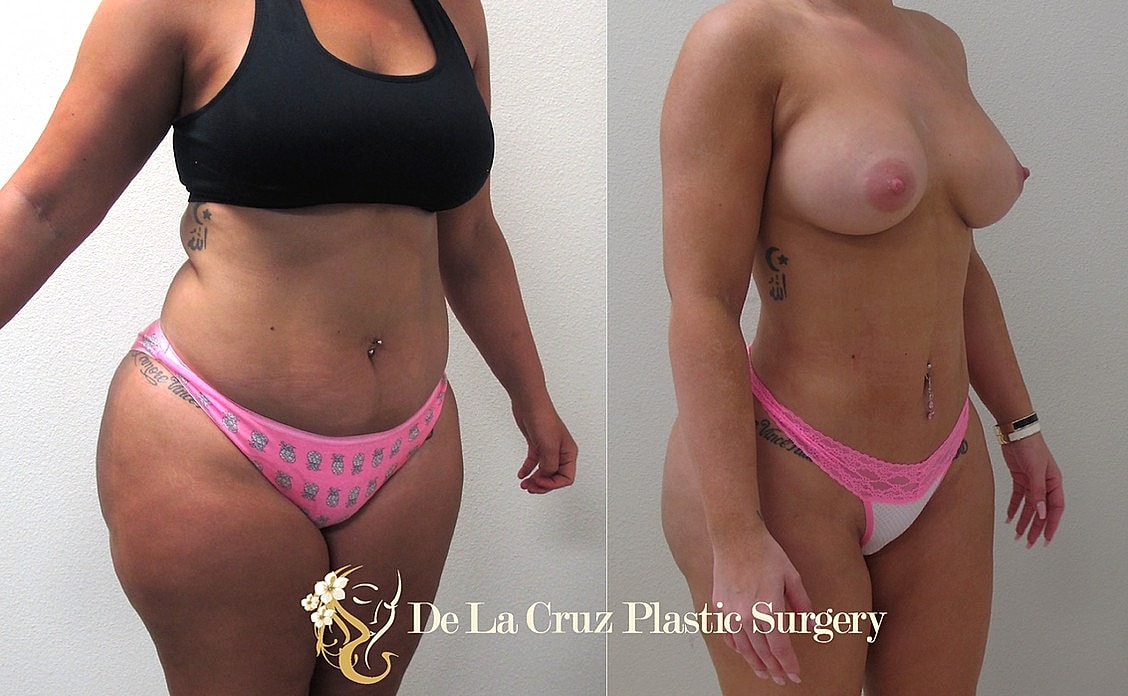
Before and after plastic surgery transformation.

Figure 1. Before-and-after results following advanced liposuction and body contouring performed by Dr. Emmanuel De La Cruz, Houston plastic surgeon, shown 2 months after surgery.

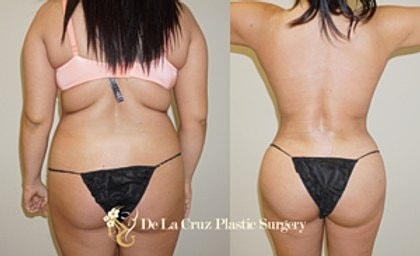
Before and after plastic surgery results.

Figure 2. Before-and-after results of 4D VASER liposuction of the back, shown 2 months after surgery by Dr. Emmanuel De La Cruz, Houston plastic surgeon.

Why is my fat bigger after CoolSculpting?

How Is Paradoxical Adipose Hyperplasia (PAH) Diagnosed?

Paradoxical adipose hyperplasia (PAH) is typically diagnosed through a clinical evaluation by a board-certified plastic surgeon experienced in evaluating complications that may occur after cryolipolysis treatments, including fat-freezing procedures such as CoolSculpting®. Diagnosis is based on a patient’s treatment history, symptoms, and physical examination findings.

During the evaluation, the surgeon carefully examines the treated area for the characteristic enlargement of fatty tissue that may develop after cryolipolysis. Patients often notice a firm bulge or enlargement in an area previously treated with fat-freezing, which may feel dense or rubbery and create a visible contour irregularity.

In most patients, diagnosis of paradoxical adipose hyperplasia is clinical, meaning the condition can be identified through physical examination and a review of the patient’s history of cryolipolysis treatment. In certain situations, imaging studies such as ultrasound or MRI may be used to evaluate the underlying adipose tissue and rule out other causes of swelling, such as fluid collections or benign fatty growths.

How Is Paradoxical Adipose Hyperplasia Treated?

Multimodal Treatment for Paradoxical Adipose Hyperplasia

Treatment for paradoxical adipose hyperplasia (PAH) requires a careful and strategic surgical approach. At De La Cruz Plastic Surgery, Dr. Emmanuel De La Cruz utilizes a comprehensive multimodal treatment strategy designed to safely remove the enlarged fatty tissue while restoring smooth and natural body contours.

Paradoxical adipose hyperplasia often involves dense, fibrotic adipose tissue, which can make treatment more challenging than traditional fat removal procedures. Conventional liposuction techniques alone may increase the risk of contour irregularities, bleeding, or incomplete fat removal because the affected tissue is typically more fibrous and resistant.

To address these challenges, Dr. De La Cruz incorporates advanced body contouring technologies that allow for more precise and controlled treatment of PAH. Techniques such as VASER ultrasound-assisted liposuction, combined with radiofrequency-assisted skin tightening technologies like Renuvion and/or Quantum RF, help break down fibrotic fat tissue and improve contour refinement. This multimodal approach is designed to enhance fat removal, improve skin contraction, and restore a smoother, more natural body contour.

The treatment protocol for paradoxical adipose hyperplasia correction may include a combination of the following advanced techniques:

VASER Liposuction

This advanced ultrasonic-assisted liposuction technique utilizes ultrasonic energy to selectively emulsify and remove adipose tissue. VASER liposuction is known for its ability to minimize blood loss, reduce contour irregularities, and provide precise fat removal, resulting in improved body contouring. By emulsifying the fatty tissues and thick fibrous tissues, VASER liposuction allows for precise and controlled removal of excess fat

MicroAire Power Assisted Liposuction

Complementing VASER liposuction, the use of MicroAire Power Assisted liposuction can further enhance the treatment of PAH. This technique utilizes a vibrating cannula to gently break up fibrous tissue and facilitate the removal of excess fat. By reducing trauma to the surrounding tissues, MicroAire Power Assisted liposuction ensures a more precise and controlled fat removal process.

Renuvion or Quantum RF

Renuvion® (also known as J-Plasma®) and Quantum RF with Morpheus8 are advanced technologies that may be used alongside VASER ultrasound-assisted liposuction or MicroAire power-assisted liposuction to improve surgical outcomes during body contouring procedures, including treatment for paradoxical adipose hyperplasia (PAH).

Renuvion combines radiofrequency energy with helium plasma to precisely heat the subdermal tissue layers. This controlled energy delivery helps stimulate collagen remodeling and skin contraction, which can improve skin tightness following fat removal.

Quantum RF with Morpheus8 is a next-generation radiofrequency platform designed to deliver energy deeper into the tissue. By targeting multiple tissue layers, it stimulates collagen production and tissue remodeling, which may enhance skin tightening and contour refinement after liposuction.

When used as part of a multimodal body contouring approach, these technologies may help address skin laxity after fat removal and contribute to smoother, more natural body contours following treatment.

Hi-Definition Liposuction Technique

Dr. Emmanuel De La Cruz specializes in advanced liposuction techniques designed to treat complex body contour deformities, including paradoxical adipose hyperplasia (PAH). Correcting PAH requires precise surgical planning because the affected fat tissue is often dense and fibrotic, making it more challenging to remove than typical fat deposits.

Using high-definition liposuction and advanced body contouring techniques, Dr. De La Cruz carefully removes the abnormal fatty tissue while restoring smooth and natural body contours. By selectively targeting the areas affected by paradoxical adipose hyperplasia after cryolipolysis, he tailors the procedure to each patient’s unique anatomy and treatment goals. This precision-based approach helps reduce contour irregularities and improves overall body balance following PAH correction.

Advanced liposuction technologies and contouring techniques allow for more controlled fat removal and refined sculpting, helping restore a natural appearance after fat enlargement caused by cryolipolysis complications such as PAH.

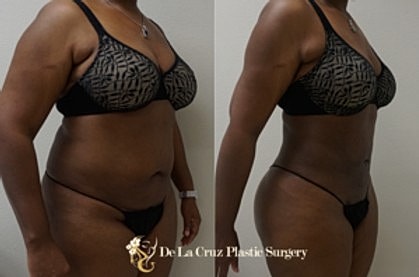
Before and after body side profile comparison

Figure 3. Before-and-after photos of 4D VASER liposuction demonstrating body contouring results (oblique view) 2 months after surgery, performed by Dr. Emmanuel De La Cruz, MD.

Solid dark background with no discernible features.

Personalized Treatment Approach for Paradoxical Adipose Hyperplasia (PAH)

Paradoxical adipose hyperplasia (PAH) is an uncommon but recognized response following cryolipolysis treatments, in which the treated adipose tissue becomes enlarged rather than reduced. When this condition occurs, surgical body contouring procedures such as liposuction are commonly used to remove the enlarged fatty tissue and restore a more natural body contour.

Using a comprehensive multimodal treatment approach, Dr. Emmanuel De La Cruz develops a personalized surgical plan for patients with paradoxical adipose hyperplasia. Management of PAH often requires more than simple fat removal. In addition to removing the abnormal adipose tissue, treatment may also address skin retraction and overall body contour refinement to restore smoother and more balanced body contours.

Paradoxical adipose hyperplasia can present unique surgical challenges because the affected tissue is often dense and fibrotic, which may reduce the effectiveness of traditional liposuction techniques. Advanced body contouring technologies, including VASER ultrasound-assisted liposuction combined with radiofrequency-assisted skin tightening technologies such as Renuvion, may help improve fat removal, enhance contour precision, and support skin contraction. By integrating these advanced techniques, treatment can be tailored to each patient’s anatomy and treatment goals. This multimodal approach to paradoxical adipose hyperplasia treatment aims to safely remove the enlarged fatty tissue while minimizing the risk of contour irregularities and restoring natural body contours.

Recovery Timeline After Paradoxical Adipose Hyperplasia (PAH) Treatment

Treatment of paradoxical adipose hyperplasia (PAH) with VASER liposuction and advanced body contouring techniques involves a gradual healing process as swelling resolves and tissues recover. While recovery varies between patients, most individuals can expect the following general timeline.

Day 1 (First 24 Hours) • Mild swelling, bruising, and soreness are common • Compression garments are placed immediately after surgery • Light walking is encouraged • Lymphatic drainage massage therapy begins approximately 24 hours after surgery

Days 2–7 • Swelling and bruising are most noticeable • Compression garments continue to support healing • Lymphatic massage helps reduce fluid buildup • Most patients can return to work after about 7 days

Weeks 2–3 • Bruising fades and swelling gradually improves • Early body contour improvements become visible • Light exercise may be resumed with surgeon approval

Weeks 4–6 • Most swelling has resolved • Body contours appear more defined • Patients usually return to full physical activity

Months 2–3 • Residual swelling continues to improve • Skin contraction progresses • Final contour results become more visible

Patients typically notice a smoother and more natural body contour following correction of paradoxical adipose hyperplasia.

Long-Term Results

Because the enlarged adipose tissue associated with PAH is removed during surgery, results are generally long-lasting. Maintaining a stable weight and healthy lifestyle helps preserve the improved body contour.

De La Cruz Logo

Why Choose Dr. De La Cruz for Your PAH Treatment?

Treatment of paradoxical adipose hyperplasia (PAH) requires advanced surgical expertise because the affected tissue is often dense and fibrotic, making correction more complex than traditional fat removal procedures. Dr. Emmanuel De La Cruz is a double board-certified plastic surgeon recognized for his expertise in advanced liposuction and body contouring techniques.

Patients choose Dr. De La Cruz for PAH treatment because of:

  • Double board certification in Plastic Surgery and General Surgery
  • Specialized expertise in advanced liposuction and complex body contouring
  • Use of VASER ultrasound-assisted and power-assisted liposuction for precise fat removal
  • A multimodal surgical approach designed to treat fibrotic adipose tissue and contour deformities
  • Procedures performed in a fully accredited ambulatory surgical facility with surgeon-directed care
  • At De La Cruz Plastic Surgery in Houston, treatment plans are individualized to restore smooth, natural body contours following paradoxical adipose hyperplasia. Patients travel from across Texas and the United States seeking consultation for advanced PAH correction and body contouring procedures.

Patients from Houston, Cypress, Katy, Sugar Land, The Woodlands, and throughout Texas and the United States travel to De La Cruz Plastic Surgery for consultation and treatment of complex body contouring conditions, including PAH after cryolipolysis.

Model in olive green bikini by window

Patient Safety During Paradoxical Adipose Hyperplasia (PAH) Treatment

At De La Cruz Plastic Surgery, patient safety is a central priority when performing paradoxical adipose hyperplasia (PAH) treatment with advanced liposuction techniques. Because the affected adipose tissue is often dense and fibrotic, careful surgical planning and strict safety protocols are followed to ensure optimal outcomes and minimize potential risks.

Preoperative Evaluation All patients undergo a comprehensive medical evaluation prior to surgery. Patients with certain medical conditions—such as diabetes, obstructive sleep apnea, or cardiovascular disease—may require medical or cardiac clearance before undergoing PAH treatment. Moreover, Dr. Emmanuel De La Cruz may request cardiology clearance to ensure that surgery can be performed safely.

Infection Prevention During surgery, perioperative intravenous antibiotics are administered to reduce the risk of infection. Careful sterile surgical techniques and postoperative monitoring further help minimize the risk of complications.

DVT (Blood Clot) Prevention Patient safety protocols include evaluation of each patient’s Caprini score, a validated tool used to assess the risk of deep vein thrombosis (DVT). During surgery, patients wear sequential compression devices to improve circulation. In selected patients, medications such as heparin or Lovenox may be administered to further reduce the risk of blood clots.

Advanced Liposuction Techniques. Dr. De La Cruz uses VASER ultrasound-assisted liposuction, which has been shown in clinical studies to be associated with less intraoperative bleeding compared with traditional liposuction techniques. This technology allows for more precise removal of fibrotic adipose tissue commonly seen in paradoxical adipose hyperplasia.

Additional Bleeding Control Measures Medications such as tranexamic acid (TXA) may be used during surgery to help reduce bleeding and support safer liposuction procedures.

  1. Through careful patient selection, advanced surgical techniques, and comprehensive safety protocols, Dr. De La Cruz aims to provide safe and effective treatment for paradoxical adipose hyperplasia while restoring natural body contours.
Solid black background with no objects or text.

How Long Does Recovery Take After PAH Treatment?

Recovery after paradoxical adipose hyperplasia (PAH) treatment with liposuction varies depending on the extent of the procedure and the areas treated. Most patients are able to return to work and normal daily activities within about 7 days, once they feel comfortable.

During the first few days after surgery, it is common to experience mild swelling, bruising, and temporary discomfort in the treated areas. These symptoms typically improve gradually and can be managed with pain medication, compression garments, and postoperative lymphatic massage therapy.

Patients are encouraged to walk and resume light activities early to support circulation and healing. However, strenuous exercise and heavy physical activity should generally be avoided for several weeks to allow the treated tissues to heal properly.

Swelling will continue to improve over time, and most patients begin to see noticeable contour improvements within several weeks, with final results becoming more visible as healing progresses over the following months.

De La Cruz Logo

Safety of Liposuction for Correction of Cryolipolysis Complications

Liposuction is a commonly performed body contouring procedure and is generally considered safe when performed by a qualified, board-certified plastic surgeon. When used to correct cryolipolysis complications such as paradoxical adipose hyperplasia (PAH), liposuction can effectively remove the enlarged adipose tissue and restore smoother body contours.

Most patients experience minimal downtime and only temporary side effects, such as swelling, bruising, or mild discomfort during the early stages of recovery. These symptoms typically improve as healing progresses.

As with any surgical procedure, however, there are potential risks. Possible complications may include infection, bleeding, scarring, fluid collections (hematoma or seroma), contour irregularities, or reactions to medications or anesthesia. Careful patient evaluation, meticulous surgical technique, and appropriate postoperative care help minimize these risks.

When performed by an experienced plastic surgeon, liposuction remains one of the most widely performed and well-established procedures in aesthetic surgery, with a strong safety profile and a low rate of serious complications.

Patients can reduce these risks by choosing an experienced doctor, such as a plastic surgeon, to perform their procedure and by following their doctor’s instructions before and after treatment.

Schedule your Liposuction Consultation with Dr. De La Cruz today by calling (832) 776-1134

Woman in lace lingerie posing indoors.

Paradoxical Adipose Hyperplasia Frequently Asked Questions (FAQ)

Patients with PAH typically notice a firm enlargement or bulge in the treated area that develops gradually after cryolipolysis. The tissue may feel dense or rubbery and may resemble the shape of the treatment applicator. Unlike normal fat deposits, the enlarged tissue usually does not improve with diet, exercise, or weight loss. A board-certified plastic surgeon can evaluate the area and determine whether PAH is present.

In rare cases, the treated fat tissue may respond differently to the cooling process and become enlarged rather than reduced. This condition is known as paradoxical adipose hyperplasia. The exact cause is not fully understood, but it is believed to involve an abnormal response of fat cells to cold exposure, resulting in expansion and thickening of the adipose tissue.

Paradoxical adipose hyperplasia is considered uncommon. Published studies suggest that the condition occurs in a small percentage of cryolipolysis treatments, though awareness of the condition has increased as more procedures are performed.

PAH typically does not resolve spontaneously. Because the enlarged fat tissue is often dense and fibrotic, the condition usually persists unless treated. For many patients, liposuction or advanced body contouring procedures are used to remove the enlarged adipose tissue and restore normal contours.

Treatment for PAH most commonly involves liposuction or advanced body contouring techniques designed to remove the enlarged fatty tissue. Specialized approaches such as VASER ultrasound-assisted liposuction and power-assisted liposuction may be used to address the dense, fibrotic tissue associated with PAH and restore smoother body contours.

Recovery after PAH correction with liposuction varies depending on the extent of the procedure. Most patients can return to work and normal activities within about one week, while strenuous exercise should be avoided for several weeks. Swelling and bruising gradually improve over time, with final contour results becoming more visible over the following months.

PAH is primarily considered a cosmetic contour issue rather than a medical emergency. However, the visible enlargement of the treated area can be distressing for patients and may require surgical treatment to restore normal body contours.

Because the exact cause of paradoxical adipose hyperplasia is not fully understood, there is no guaranteed way to prevent it. However, patients considering body contouring procedures should consult with an experienced physician to discuss treatment options and potential risks before undergoing any cosmetic procedure.

If you notice a persistent bulge, firmness, or enlargement in an area previously treated with cryolipolysis, it is advisable to seek evaluation by a board-certified plastic surgeon experienced in body contouring procedures. Early evaluation can help confirm the diagnosis and determine the most appropriate treatment options.